Every year, thousands of Singapore homeowners ask the same question: is solar worth it? They encounter conflicting information — from enthusiastic installers promising impossible savings to sceptics parroting outdated figures from 2018.
This article is neither. It is a rigorous, numbers-first financial analysis of solar for Singapore landed homes in 2026 — showing exactly when solar delivers exceptional returns, modest ones, and when it is not worth it at all.
The honest answer upfront: yes, solar is worth it for most Singapore landed homeowners in 2026 — and the math has never been more compelling. But not for every home, and not if you choose the wrong system or the wrong plan. The difference between a well-optimised installation and a poorly planned one can be S$80,000 or more over the system's lifetime.

The Financial Case in 5 Numbers
Before we go deep, here is the entire solar investment thesis distilled into five figures that matter:
- System cost: S$14,000–S$25,000 for a typical semi-detached home (8–15 kWp system)
- Annual savings: S$3,500–S$10,000 depending on system size, consumption pattern, and electricity plan
- Payback period: 4–8 years
- System lifespan: 25–30 years (with performance warranty)
- Total lifetime value: S$60,000–S$200,000+
Even at the conservative end — a smaller system on a terrace house — that is a S$60,000 net return on a S$14,000 investment. At the upper end, a well-optimised GCB system with battery storage and an EV can return over S$200,000. No fixed deposit, T-bill, or CPF top-up comes close.
Where your home lands in that range depends on factors we will dissect below. For a complete pricing breakdown, see our solar panel cost guide for 2026.
Why 2026 Is the Strongest Financial Case for Solar — Ever
Solar has been financially viable in Singapore since roughly 2020. But 2026 represents a convergence of factors that make the investment case stronger than it has ever been. Here is why.
Electricity Tariffs Are Rising — and the Trend Is Structural
Singapore's tariffs are rising due to a convergence of structural forces:
- The Q2 2026 tariff increase is imminent. Ongoing Middle East tensions continue to disrupt global LNG supply chains. Singapore imports over 95% of its natural gas, and every spike in global LNG spot prices flows directly into your quarterly tariff adjustment.
- Carbon tax escalation is locked in. Singapore's carbon tax hit S$25/tonne in 2024, rose to S$45/tonne in 2026, and is legislated to reach S$50–S$80/tonne by 2030. This is not a proposal — it is law. Every dollar of carbon tax gets passed through to your electricity bill.
- Grid infrastructure costs are rising. EMA's grid modernisation programme, including smart grid investments and the upcoming regional power imports from Cambodia, Laos, and Indonesia, requires capital expenditure that will be recovered through network charges.
The SP Group regulated tariff has moved from approximately 27 cents/kWh in early 2024 to above 29 cents/kWh in 2026, with OEM peak rates now exceeding 33 cents/kWh. Our OEM electricity plan guide covers how to optimise your plan alongside solar.
Panel Technology Has Peaked at an Accessible Price Point
For years, solar panel efficiency was improving but panels remained expensive. In 2026, we have reached a sweet spot:
- N-type ABC cell technology from manufacturers like AIKO delivers 24.2% module efficiency — a figure that was laboratory-grade just three years ago
- Panel prices have stabilised after years of decline, meaning the cost-per-watt is near its floor
- Manufacturing quality is at an all-time high with 30-year performance warranties now standard from premium manufacturers
You are buying at near-maximum efficiency and near-minimum cost. Prices are unlikely to drop significantly further. Our deep dive on AIKO ABC N-type panels explains the engineering behind 24.2% efficiency.
The Budget 2026 Tailwind
Budget 2026 introduced additional incentives for residential solar, particularly for landed homeowners. The policy direction is unmistakable: the government wants more rooftop solar and is making the economics more favourable. We covered the details in our Budget 2026 solar analysis.
The Electricity Price Trajectory: Why Compounding Makes Solar a Wealth-Builder
This is the section most solar articles get wrong — or omit entirely. They show you Year 1 savings and ask you to multiply by 25. That is not how electricity pricing works.
Electricity tariffs compound. Your savings grow every year, not linearly, but exponentially. Here is a realistic model.
Base Case: 3% Annual Tariff Increase
A 3% annual increase is conservative. Singapore's average tariff increase over the past five years has exceeded 5% annually. But let us use 3% to be rigorous.
- Year 1: You save S$4,000/year at the current tariff of approximately 29 cents/kWh
- Year 5: Your savings grow to S$4,500/year as the tariff reaches approximately 33.6 cents/kWh
- Year 8: Savings reach S$5,070/year at approximately 36.7 cents/kWh
- Year 10: Savings hit S$5,375/year at approximately 38.9 cents/kWh
- Year 15: Savings reach S$6,230/year at approximately 45.1 cents/kWh
- Year 25: Savings reach S$8,375/year at approximately 60.7 cents/kWh
Cumulative savings over 25 years: approximately S$145,000–S$175,000 — from a system that cost S$18,000–S$22,000.
And that model assumes only 3% annual increases. If tariffs rise at the historical rate of 5%, the 25-year cumulative savings exceed S$215,000.
Why This Matters More Than the Payback Period
Most homeowners fixate on the payback period: "How many years until the system pays for itself?" That is the wrong question. The right question is: "What is the total value of this asset over its lifetime?"
A system that pays back in 6 years and runs for 25 years generates 19 years of pure profit. At S$5,000–S$8,000 per year in those later years, the post-payback value dwarfs the initial investment.
This is not speculation. It is arithmetic. The sun will rise tomorrow, your panels will produce electricity, and SP Group will continue increasing tariffs. The only variable is the rate of increase — and every plausible scenario favours solar.
When Solar Is NOT Worth It — The Honest Assessment
There are genuine scenarios where solar does not make financial sense. If any of these apply, we would rather you wait and come back when the conditions are right.
1. You Live in an HDB Flat
HDB rooftops are covered by the SolarNova programme — individual flat owners cannot install their own panels. You benefit indirectly through lower common area costs, but this article's analysis focuses on landed property owners.
2. Your Roof Is Heavily Shaded
Solar panels need direct sunlight. If your roof is significantly shaded by neighbouring buildings, mature trees, or adjacent structures for more than 40% of peak sun hours (roughly 10am to 3pm), the energy yield drops enough to stretch your payback period beyond 10 years.
The mitigation: Panel-level optimisers like SunMax allow each panel to operate independently, recovering 15–30% of otherwise lost production. But if your entire roof is in shadow, optimisers cannot create sunlight. A site assessment — which Sunollo provides free — will give you an honest yield estimate.
3. Your Monthly Electricity Bill Is Below S$150
If you consume very little electricity — typically under 500 kWh per month — the absolute savings from solar are modest. On a S$150/month bill, your annual savings might be S$1,200–S$1,800, which pushes the payback period past 10 years for a typical system.
The exception: If you plan to increase consumption — adding an EV, a home battery, or converting gas cooking to induction — solar can still make sense as future-proofing. But based on current consumption alone, the return is marginal.
4. You Are Planning to Move Within 2 Years
A purchased solar system adds value to your property (more on this below), but realising that value requires either selling the home at a premium or transferring the system's warranty and benefits to the buyer. If you are moving within two years, the transaction cost and uncertainty may not be worth it.
The solution: Sunollo's subscription model eliminates this problem — pay monthly, enjoy savings from day one, and transfer or end the subscription when you move. No stranded asset. See our subscribe vs. buy comparison.
5. Your Roof Needs Replacement Within 5 Years
Installing solar on a roof that needs replacement in a few years is poor sequencing. You will eventually need to remove the panels, replace the roof, and reinstall — adding S$3,000–S$5,000 in unnecessary labour costs.
The advice: Do the roof first, then install solar on a fresh surface that will last 30+ years alongside your panels. Any reputable installer will flag roof condition during the site assessment. Our installation guide covers what to expect.
The Battery Question: Is Solar + Storage Worth the Extra Cost?
This is one of the most common questions we hear, and the answer has changed dramatically in the past 18 months.
The Cost
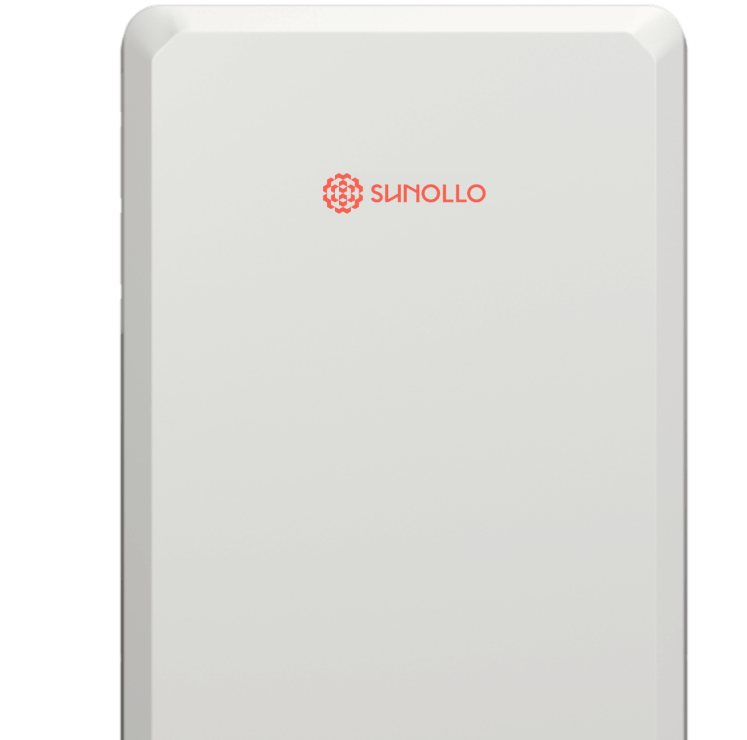
A quality home battery system adds S$8,000–S$12,000 to your solar installation, depending on capacity. The Abundance Pro battery, for instance, provides reliable storage that integrates seamlessly with a solar system.
The Revenue Model
A battery earns its return through self-consumption arbitrage — storing cheap solar energy during the day and discharging during expensive evening peak hours. On a time-of-use plan, the peak/off-peak gap is 17.34 cents/kWh or more. Here is the math for a 10 kWh battery:
- Daily arbitrage value: 10 kWh × S$0.1734 = S$1.73/day
- Annual arbitrage value: S$632/year from rate arbitrage alone
- Avoided export losses: Without a battery, excess solar energy is exported to the grid at roughly 5–7 cents/kWh. With a battery, you use that energy yourself at 29–33 cents/kWh. On a system that would otherwise export 6–8 kWh/day, that is an additional S$500–S$700/year in captured value.
- Total annual battery value: S$1,100–S$1,300/year
- 10-year battery value: S$11,000–S$13,000+ (accounting for rising tariffs)
Against a battery cost of S$8,000–S$12,000, the payback is 6–9 years, with the battery continuing to deliver value for its full 10–15 year warranted life.
The Verdict on Batteries
Yes, a battery is worth it for most landed homes — if you are on a time-of-use electricity plan. The arbitrage opportunity and avoided export losses together create a compelling return. If you are on a flat-rate plan, the case is weaker but still positive if your daytime export would otherwise be significant.
For the full analysis, read our solar battery storage guide.
The EV Multiplier: How Electric Vehicle Ownership Supercharges Solar ROI
If you own an electric vehicle — or plan to buy one in the next few years — solar ROI improves dramatically. This is not a marginal improvement. It is a step-change.

The Numbers
A typical EV driven 15,000 km/year consumes 2,500–3,000 kWh. Here is the cost comparison:
- Public charging: 40–55 cents/kWh = S$1,000–S$1,650/year
- Home charging on grid (off-peak): 16.08 cents/kWh = S$402–S$482/year
- Home charging on solar: Effectively S$0/kWh (marginal cost of solar is zero once installed) = S$0/year
For a two-EV household — increasingly common among landed families — the savings double. Over 10 years, that is S$20,000–S$33,000 in additional value from the same solar system.
The Strategic Play
Sophisticated homeowners are installing solar systems sized slightly larger than current needs, combined with a battery. The "excess" capacity charges their EV during the day or stores in the battery for evening charging. The entire household energy ecosystem — home consumption, battery storage, and vehicle charging — runs on sunlight. This is not futuristic. It is happening in Singapore landed homes right now.
Solar vs Other Investments: The Comparison Nobody Makes
Let us frame solar the way a financial advisor would frame any investment: by comparing risk-adjusted returns.
The Solar Return Profile
Consider a S$20,000 solar system that saves S$4,500 in Year 1, growing at 3–5% annually with tariff increases:
- Year 1 yield: S$4,500 / S$20,000 = 22.5%
- Average annual yield over 25 years: approximately 15–25% (rising over time as tariffs increase)
- Total return: S$145,000–S$200,000 on a S$20,000 investment = 7–10x return
- Tax treatment: Zero. Solar savings are not income. There is no capital gains tax, no income tax, no GST to reclaim or pay.
How Does That Compare?
- CPF OA: 2.5%/year → S$37,200 in 25 years. Locked until retirement.
- CPF SA: 4.0%/year → S$53,300 in 25 years. Even more restricted.
- Singapore T-bills: 3.0–4.0%/year → S$41,800–S$53,300 in 25 years. Requires active reinvestment.
- Fixed deposits: 2.0–3.0%/year → S$32,800–S$41,800 in 25 years. Barely beats inflation.
- STI Index Fund: 6–8%/year → S$86,000–S$137,000 in 25 years. Significant volatility, no guarantees.
- Solar: 15–25% effective annual return → S$145,000–S$200,000+ in value. Tax-free. Guaranteed by physics and government tariff structure. No market risk.
Solar is, objectively, one of the highest risk-adjusted returns available to a Singapore homeowner. The "risk" is almost entirely on the upside — the main variable is how much tariffs increase, and every scenario from flat to aggressive increases favours solar.
The only caveat: solar returns are "illiquid" — you cannot withdraw your panels and spend them. But you receive the return as reduced monthly cash outflows, equivalent to tax-free income. Unlike a stock portfolio, your solar system never has a drawdown.
The Plan Optimisation Layer: Unlocking Hidden Value From the Same Hardware
Here is a nuance that most solar articles miss entirely: two identical solar systems on two identical homes can deliver wildly different returns depending on the electricity plan each homeowner is on.
Singapore's Open Electricity Market offers a range of plan structures — flat rate, time-of-use, peak/off-peak, and discount-off-regulated-tariff. Each interacts differently with your solar production and consumption pattern.
How Plan Optimisation Creates Value
- Time-of-use arbitrage: Use solar during the day, store excess in your battery, discharge during the expensive evening peak — capturing the full 17+ cents/kWh spread.
- Export rate optimisation: Plans with better buy-back rates for excess solar can add S$146/year or more on 8 kWh of daily export.
- Seasonal plan switching: Active management between quarters captures an additional S$200–S$500/year.
Total annual value from plan optimisation: S$1,000–S$4,000/year on top of base solar savings. This requires no additional hardware — just knowledge and the willingness to optimise. Our comprehensive OEM plan guide walks you through exactly how to do this.
Property Value Uplift: The Return You Get Even If You Sell
Research across multiple property markets — including Singapore's emerging data — shows that homes with solar installations sell for a premium. For Singapore landed homes, the estimated value uplift is 3–4% of property value.
Let us put that in context:
- A S$3.5M terrace house: 3–4% uplift = S$105,000–S$140,000 in additional property value
- A S$5M semi-detached home: 3–4% uplift = S$150,000–S$200,000 in additional property value
- A S$15M Good Class Bungalow: 3–4% uplift = S$450,000–S$600,000 in additional property value
Buyers increasingly factor in energy costs, sustainability credentials, and "future-readiness." A property with a modern solar system, EV charging, and smart energy management is objectively more valuable. This also hedges against the "moving soon" concern — even if you sell within 3–5 years, the property premium offsets a significant portion of the system cost. For property-type specific analysis, see our guides for terrace houses, semi-detached homes, and Good Class Bungalows.

The Geopolitical Factor: Why Energy Independence Matters
Singapore imports over 95% of its energy. Every shipment of LNG passes through chokepoints and conflict zones. The relationship between oil prices and Singapore electricity costs is direct and unavoidable — the Russia-Ukraine conflict spiked tariffs in 2022, and Middle East tensions continue adding risk premiums to every LNG cargo in 2024–2026.
Solar panels on your roof are the only energy source in Singapore completely immune to geopolitical risk. They produce electricity from equatorial sunlight — a source no geopolitical actor can disrupt. This is not a feel-good argument. It is a financial risk hedge. Every geopolitical disruption widens the gap between rising grid tariffs and your cost of solar electricity, which remains fixed at zero marginal cost once installed.
The Subscription Alternative: Solar Returns Without the Capital Outlay
Everything above assumes you purchase a solar system outright. But for homeowners who prefer not to deploy S$14,000–S$25,000 upfront, there is another path.

Sunollo's subscription model works differently:
- Zero upfront cost: No capital outlay. The system is installed and maintained by Sunollo.
- Guaranteed savings from month one: You pay a monthly subscription less than your current electricity bill. Read about our savings guarantee to understand exactly how this works.
- Full maintenance included: Panel cleaning, inverter monitoring, warranty claims — all handled by Sunollo.
- Flexibility: If you move, the subscription can be transferred or ended. No stranded asset, no complicated resale negotiations.
When Does Subscription Make More Sense Than Purchase?
- You prefer cash flow certainty over total return: Purchase delivers higher total lifetime value, but subscription delivers immediate positive cash flow with zero risk.
- You may move within 5–7 years: The subscription removes the uncertainty of recouping an upfront investment through a property sale.
- You want professional management: Not all homeowners want to think about panel performance, inverter health, or plan optimisation. The subscription handles everything.
- You have higher-return uses for the capital: If you are a business owner who can deploy S$20,000 at 30%+ returns in your own business, it may make more sense to subscribe for solar and invest the capital elsewhere.
For a detailed comparison of the two models, our subscribe vs. buy guide lays out the numbers side by side.
Smart Home Integration: Maximising Every kWh
Smart thermostats, automated load shifting, intelligent EV charging schedules, and energy monitoring dashboards all boost self-consumption ratios — meaning more solar energy is used directly rather than exported at low buy-back rates. Our guide on smart home upgrades that boost solar ROI covers the most impactful integrations.
What to Do Next: The 3-Step Action Plan
If the numbers in this article resonate with your situation, here is the pragmatic path forward:
Step 1: Get a Professional Roof and Consumption Assessment
Every credible analysis starts with data specific to your home — usable roof area, orientation, shading, structural condition, and your actual electricity consumption patterns over 12 months. Sunollo provides this assessment at no charge, producing a detailed financial model with your projected savings, payback period, and lifetime value using your real numbers.
Step 2: Choose Your Model — Purchase or Subscribe
Based on the assessment, decide whether an outright purchase or subscription best fits your financial situation and timeline. Both deliver positive returns. The difference is the magnitude and structure of those returns.
Step 3: Optimise Your Electricity Plan
Before or immediately after installation, review your OEM electricity plan. The right plan can add S$1,000–S$4,000/year to your solar returns. This is the single highest-impact, lowest-effort optimisation you can make.
For the complete step-by-step process, our complete solar guide for 2026 covers everything from initial assessment through installation and ongoing optimisation.
Frequently Asked Questions
How much do solar panels cost in Singapore in 2026?
For landed homes, a complete solar system (panels, inverter, installation, permits) typically costs between S$14,000 and S$25,000 depending on system size (8–15 kWp). Premium systems with battery storage range from S$22,000 to S$37,000. For a detailed cost breakdown, see our complete cost guide.
What is the payback period for solar panels in Singapore?
Most landed homes see a payback period of 4–8 years, depending on system size, electricity consumption, and the electricity plan chosen. After the payback period, the system generates pure savings for the remaining 17–21 years of its warranted life. Higher-consumption homes and those on optimised time-of-use plans tend to pay back faster.
Do solar panels work in Singapore's cloudy weather?
Yes. Modern N-type panels perform well in diffused light, producing meaningful electricity even on overcast days. Output drops 15–25% compared to full sun, but annual yield calculations already account for Singapore's weather patterns including monsoon season.
Can I sell excess solar electricity back to the grid?
Yes, through SP Group's simplified credit treatment scheme. Excess solar exported to the grid is credited at the prevailing tariff minus grid charges — approximately 5–7 cents/kWh. Since this is far below the 29+ cents/kWh retail rate, maximising self-consumption with a battery delivers far better economics than relying on grid export.
Is solar panel maintenance expensive?
No. Panels have no moving parts. Cleaning costs S$150–S$300 per session, 2–4 times per year. Inverters may need one replacement around Year 12–15 at S$1,500–S$3,000. All maintenance costs are factored into the ROI calculations in this article. Under Sunollo's subscription, all maintenance is included.
Should I wait for solar panel prices to drop further?
Panel prices have largely stabilised — the dramatic cost reductions of 2015–2022 are behind us. A homeowner who delays one year loses S$3,500–S$10,000 in electricity savings while saving perhaps S$500–S$1,000 on slightly cheaper panels (if prices drop at all). The math overwhelmingly favours acting now.
How does solar interact with my OEM electricity plan?
Solar reduces the grid electricity you purchase, while your plan determines what you pay for remaining grid consumption and what you earn from solar exports. The right combination significantly boosts returns. Read our OEM plan optimisation guide for details.
What is the difference between buying and subscribing to solar?
Buying means you own the hardware, pay upfront, and keep 100% of savings — higher total returns. Subscribing means Sunollo owns and maintains the system, you pay a monthly fee below your current electricity cost, and enjoy guaranteed savings from day one with zero capital outlay — lower total returns but zero risk. Both models are financially positive. Our detailed comparison helps you decide.
The Bottom Line: A Rational Assessment
Let us return to the question that brought you here: is solar worth it in Singapore in 2026?
The data says yes — emphatically — for the majority of landed homeowners. A 15–25% annual return, tax-free, from a physical asset with a 25–30 year lifespan is genuinely difficult to match. Add rising tariffs, escalating carbon taxes, property value uplift, and EV charging savings, and the case becomes overwhelming.
We have also been honest about exceptions. If your roof is unsuitable, consumption is very low, or you are moving imminently without using a subscription, the timing may not be right. Solar does not need exaggeration — the unvarnished numbers are compelling enough.
The real question is not whether solar is worth it — for most landed homeowners, that was answered years ago. The real question is: how much value are you leaving on the table by waiting?
Every quarter you delay, you pay full grid tariffs on electricity your roof could be generating for free. A 12-month delay costs S$3,500–S$10,000 in unrecoverable savings. Over three years, that is S$10,500–S$30,000 — real cash leaving your household permanently.
Whether you purchase outright for maximum lifetime returns or subscribe for immediate savings with zero upfront cost, the financial logic points in one direction. Get your personalised assessment. See your numbers. Then decide with data, not emotion.
Further Reading
If the numbers work for your home, the next step is a no-obligation quote — see Sunollo's solar packages for Singapore homes.
Deeper analysis on specific aspects of solar for Singapore homes:
- The Complete Solar Guide for Singapore 2026
- Solar Panel Cost in Singapore 2026
- Solar for Semi-Detached Homes
- Solar for Good Class Bungalows
- Solar for Terrace Houses
- OEM Electricity Plan Optimisation Guide
- Solar Battery Storage Guide 2026
- Abundance Pro Home Battery Guide
- AIKO ABC N-Type Solar Panels
- Sunollo Savings Guarantee
- Solar Panel Installation Guide 2026
- Budget 2026 and Solar for Landed Homeowners
- Oil Prices and Solar in Singapore 2026
- Smart Home Upgrades That Boost Solar ROI
- Subscribe vs. Buy Solar with Sunollo