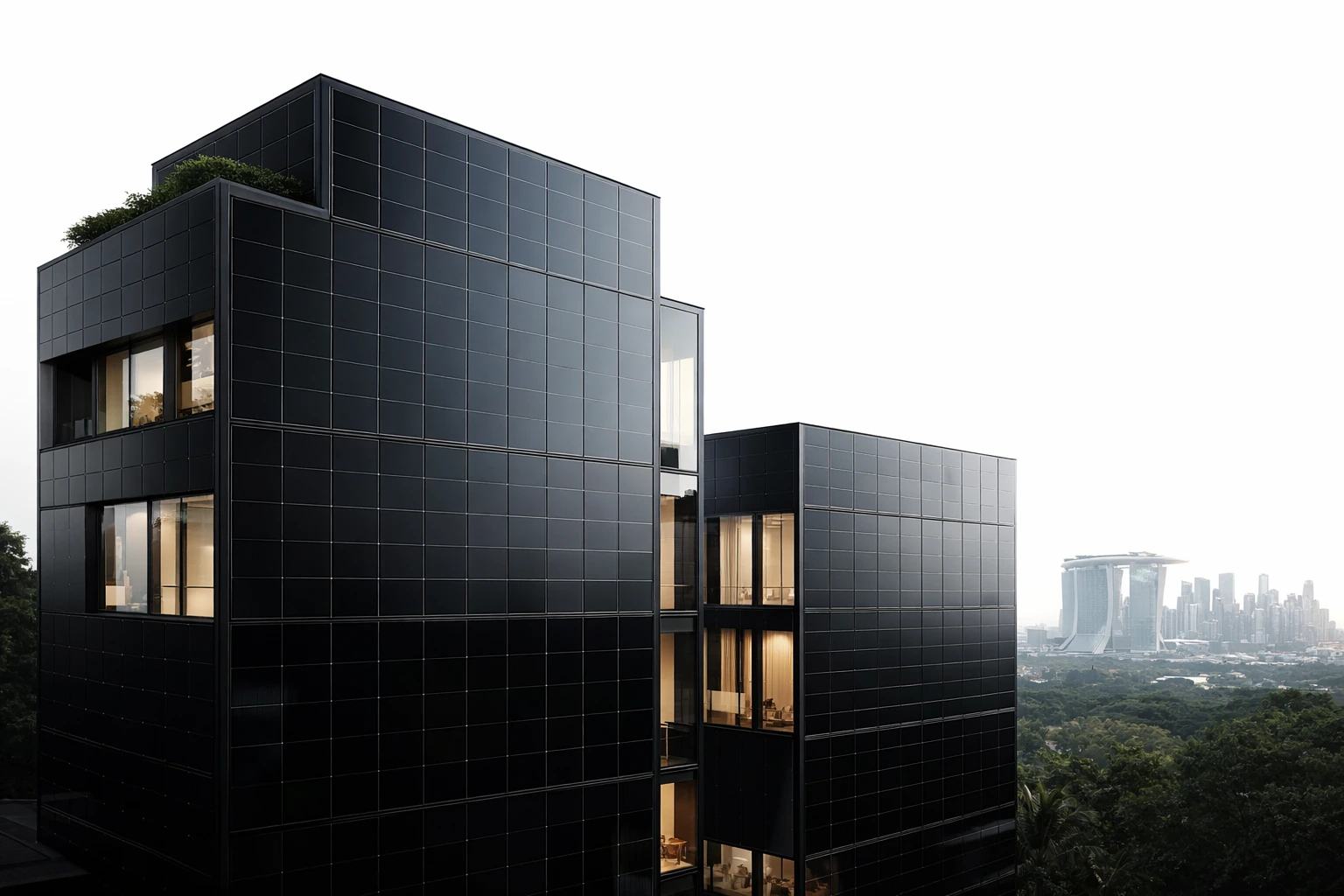
If you own a Good Class Bungalow in Singapore, you already understand the calculus of premium assets: acquire the best, maintain impeccably, and extract maximum long-term value. Solar energy follows the same logic — and GCBs happen to be the single most rewarding property class for rooftop solar in the entire country. No other residential segment combines the roof area, the electricity consumption, and the financial upside that a GCB delivers.
This guide is written specifically for GCB and large detached-home owners who spend S$800 to S$2,500 or more every month on electricity, run four to eight air-conditioning units around the clock, power a swimming pool pump, charge one or two electric vehicles, and maintain a household that includes domestic helpers and sophisticated security systems. If that profile sounds familiar, the returns outlined below will be among the highest available to any residential solar adopter in Singapore in 2026.
For a broader overview of how solar works on Singapore landed homes, start with our Complete Solar Guide for Singapore 2026. This article goes deeper — into the specific economics, system architecture, and lifestyle integration that make GCB solar a class apart.

Why Good Class Bungalows Are the Highest-Return Solar Segment in Singapore
The mathematics are unambiguous. Solar return on investment is driven by three variables: available roof area, electricity consumption, and the gap between grid electricity cost and solar-generated cost. GCBs maximise all three simultaneously.
Roof area. A typical GCB sits on a plot of at least 1,400 square metres, with usable roof area commonly exceeding 300 square metres. Even after accounting for setbacks, ridgelines, and architectural features, most GCBs can accommodate 30 to 60 or more high-efficiency panels — enough to generate 15 to 30 kWp or beyond. Compare that with a typical terrace house at 8 to 12 panels, and the scale advantage becomes obvious.
Electricity consumption. GCB households routinely consume 2,000 to 5,000 kWh per month. Four to eight air-conditioning units running across multiple floors, a pool filtration and heating pump operating 8 to 12 hours daily, two or three refrigerators, a full complement of kitchen appliances, home office equipment, security cameras and access-control systems, landscape lighting, and — increasingly — one or two electric vehicles drawing 30 to 60 kWh per charge. Monthly electricity bills of S$800 to S$2,500 are standard; some GCB owners report bills exceeding S$3,000 in peak months.
The cost gap. Grid electricity from SP Group's regulated tariff currently sits at approximately 32 to 34 cents per kWh. Under an optimised Open Electricity Market (OEM) plan like PacificLight's 9 To 9 tariff, peak rates are 37.50 cents while off-peak rates drop to 16.08 cents. Solar electricity, once the system is paid off, costs effectively zero — and even during the payback period, the blended cost is roughly 8 to 12 cents per kWh when amortised over the system's 25-year lifespan. That gap of 20 to 30 cents per kWh, multiplied across thousands of kilowatt-hours each month, produces savings that dwarf any other residential energy intervention.
There is a fourth factor unique to GCBs: property value. International studies and emerging Singapore market data indicate that a professionally installed solar-plus-battery system can lift a landed home's resale value by 3 to 4 per cent. On a GCB valued at S$20 million, that translates to S$600,000 to S$800,000 in perceived value uplift — a return that dwarfs the system cost many times over. We explore this in detail later in this article.
System Sizing for Good Class Bungalows: 15 kWp to 30+ kWp
Sizing a solar system for a GCB is both an engineering exercise and a lifestyle conversation. The goal is not simply to install the maximum number of panels — it is to match generation capacity to consumption patterns, battery storage requirements, and EV charging schedules so that every kilowatt-hour produced is either consumed directly, stored strategically, or exported at the most favourable rate.
Panel Count and Capacity
Using AIKO ABC panels rated at 490-500 Wp each — the highest-efficiency residential panels available in Singapore at 24.2 per cent cell efficiency — a typical GCB installation looks like this:
- Mid-range system (30-40 panels): 15-20 kWp capacity, generating approximately 18,000-24,000 kWh per year. Suited to GCBs with monthly consumption of 1,500-2,500 kWh and one EV.
- Large system (40-50 panels): 20-25 kWp capacity, generating approximately 24,000-30,000 kWh per year. Ideal for GCBs with higher consumption, pool pumps, and two EVs.
- Maximum system (50-60+ panels): 25-30+ kWp capacity, generating 30,000-36,000 kWh or more per year. Designed for the largest GCBs with the heaviest loads, multiple EVs, and owners seeking near-complete energy independence.
For a detailed comparison of panel technologies and why AIKO ABC panels outperform conventional options, read our guide on the Best Solar Panels in Singapore for 2026.
Detailed Cost Breakdown
GCB solar installations represent a significant but highly rewarding investment. Here is what to expect across the range:
- 15-20 kWp system (30-40 panels): S$35,000-S$50,000 fully installed, including panels, SunMax optimisers, hybrid inverter, mounting, wiring, BCA permits, and commissioning.
- 20-25 kWp system with battery (40-50 panels + 15 kWh LFP battery): S$55,000-S$70,000 fully installed, adding Sungrow battery storage and smart energy management.
- 25-30+ kWp system with battery + dual EV charging (50-60+ panels + 20 kWh battery + 2 smart EV chargers): S$70,000-S$85,000+ fully installed, the complete GCB energy independence package.
These figures include GST, all electrical works, structural assessments, and Sunollo's 10-year Care Package. There are no hidden costs. For GCB owners who prefer a subscription model with zero upfront capital, Sunollo offers the Savings Guarantee subscription, which converts the entire investment into predictable monthly payments while guaranteeing minimum savings from day one.
Real Savings Calculations: What GCB Owners Actually Save
Abstract savings percentages mean little to GCB owners accustomed to evaluating investments on hard numbers. Below are two detailed scenarios based on real consumption patterns and current 2026 electricity tariffs.
Scenario A: Solar Only (No Battery, No EV)
Profile: GCB with 2,500 kWh/month consumption, 4 aircon units, pool pump, S$850/month electricity bill on SP Group tariff.
System: 20 kWp (40 AIKO ABC panels), generating ~24,000 kWh/year (2,000 kWh/month average).
Savings calculation:
- Direct self-consumption during daytime (60-65% of generation): ~1,250 kWh/month offset at grid rate of ~34 cents = S$425/month saved
- Excess exported to grid (~750 kWh/month) at export rate of ~6-8 cents/kWh = S$50-60/month earned
- Remaining grid consumption reduced from 2,500 to ~1,250 kWh at grid rate = S$425/month grid bill remaining
- Net monthly saving: S$475-S$485/month (S$5,700-S$5,820/year)
- With optimised OEM plan shifting non-solar loads to off-peak: S$600-S$750/month (S$7,200-S$9,000/year)
Payback period: 5 to 6 years on a S$45,000 system. After payback, the system generates S$7,200-S$9,000 in annual savings for another 20+ years — a total lifetime return exceeding S$150,000.
Scenario B: Solar + Battery + 2 EVs (Full Energy Independence)
Profile: GCB with 3,500 kWh/month consumption (including 2 EVs charging 400-600 kWh/month combined), 6 aircon units, pool pump, home office, full security system, S$1,400/month electricity bill.
System: 25 kWp (50 AIKO ABC panels) + 20 kWh Sungrow LFP battery + 2 smart EV chargers, paired with PacificLight 9 To 9 OEM plan.
Savings calculation:
- Daytime self-consumption (solar direct): ~1,600 kWh/month offset at 37.50 cents peak rate = S$600/month saved
- Battery arbitrage: Battery charges from solar surplus during day, discharges 15-20 kWh each evening during peak hours. ~450 kWh/month shifted from peak to solar = S$170/month saved
- EV charging optimisation: Both EVs charge overnight at off-peak rate of 16.08 cents instead of peak rate of 37.50 cents. 500 kWh/month × (37.50 - 16.08 cents) saving = S$107/month saved
- Weekend and holiday solar-to-EV direct charging: ~100 kWh/month at zero cost instead of 16.08 cents = S$16/month saved
- Grid export of remaining surplus: ~300 kWh/month at buyback rate = S$20/month
- Total monthly saving: S$900-S$1,100/month (S$10,800-S$13,200/year)
- With aggressive load-shifting and smart scheduling: S$1,050-S$1,300/month (S$12,600-S$15,600/year)
Payback period: 5 to 6.5 years on a S$75,000-S$85,000 system. Lifetime return over 25 years: S$250,000-S$350,000+.
These are conservative estimates. GCB owners with consumption above 4,000 kWh/month or those with three EVs can see annual savings exceeding S$20,000-S$25,000. The pattern is clear: the higher the consumption, the faster the payback and the larger the lifetime return.
Why PacificLight 9 To 9 Is the Optimal Electricity Plan for GCB Solar
Choosing the right OEM electricity plan is not a secondary consideration — it is a core component of GCB solar system design. The PacificLight 9 To 9 plan is, in our assessment, the single best retail electricity plan for solar-equipped GCB owners in Singapore in 2026. Here is why.
The rate structure:
- Peak rate (9am-9pm): 37.50 cents/kWh
- Off-peak rate (9pm-9am): 16.08 cents/kWh
- Solar Charge Transfer (SCT) arbitrage gap: 37.50 − 16.08 = 17.34 cents/kWh net benefit when shifting loads
The genius of this plan for solar owners lies in the alignment of peak pricing with peak solar generation. Your solar panels generate maximum power during peak hours (9am-5pm), precisely when the PacificLight rate is at its highest — 37.50 cents. Every kilowatt-hour your panels produce during this window offsets electricity at the most expensive rate, not a blended average.
Meanwhile, your non-solar loads — EV charging, pool pump scheduling, heavy appliance use — can be shifted to the off-peak window (9pm-9am) at just 16.08 cents. The 17.34-cent gap between peak and off-peak rates is the widest arbitrage opportunity available in Singapore's residential electricity market.
With a battery, the strategy becomes even more powerful. Your battery charges from free solar energy during the day, then discharges during the early evening hours (6pm-9pm) when your household load is heaviest but the PacificLight rate is still at its 37.50-cent peak. Once the clock hits 9pm and the rate drops to 16.08 cents, any remaining evening load draws from the grid at the discounted rate. You have effectively eliminated the most expensive hours of the day from your grid consumption.
For a complete guide to OEM plan optimisation with solar and battery systems, read our Singapore OEM Electricity Plan, Solar & Battery Guide.
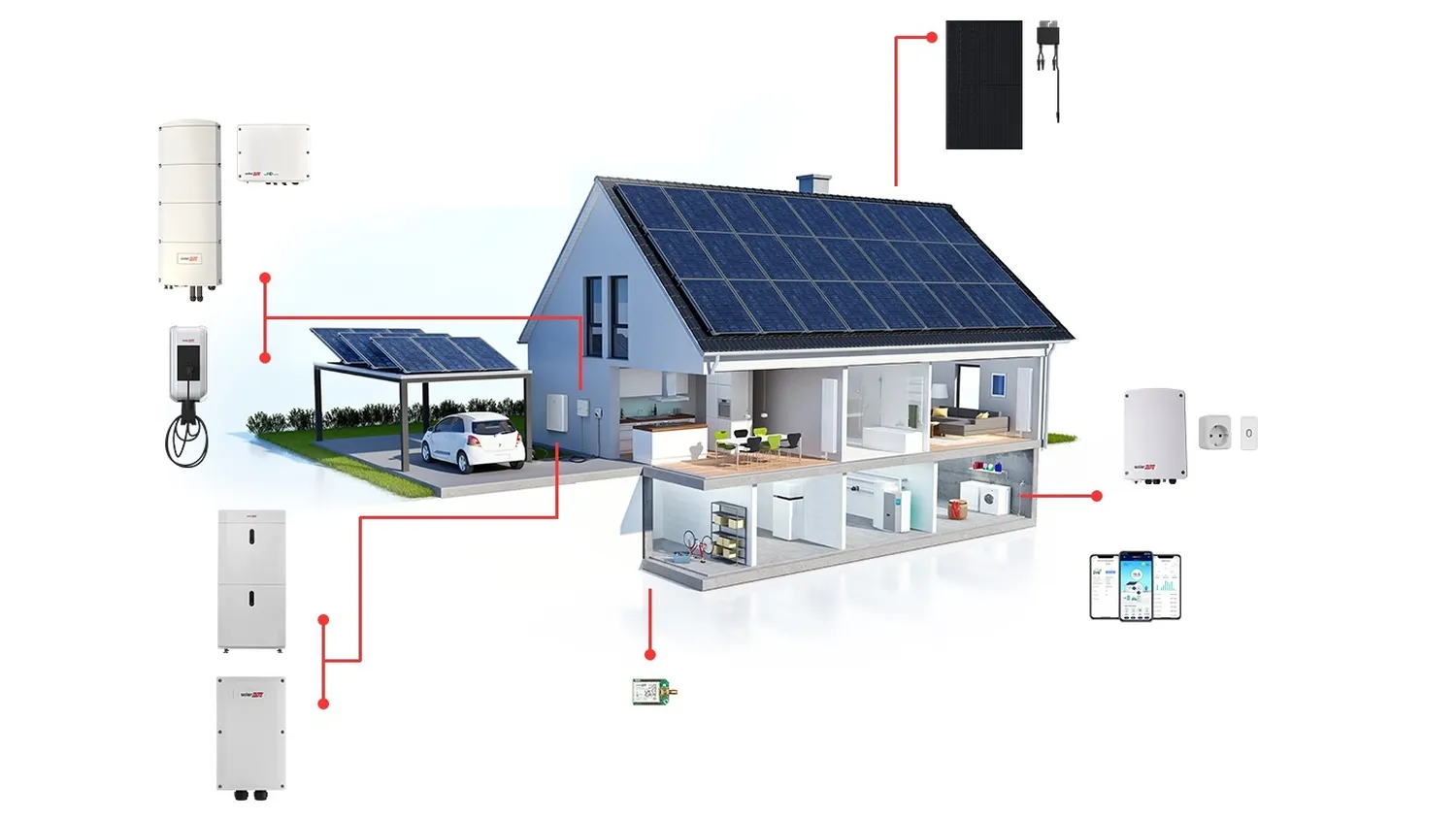
Complete GCB System Components: What Gets Installed
A Sunollo GCB installation is not a collection of commodity parts bolted to a roof. It is an integrated energy system designed to operate as a cohesive whole, with each component selected for performance, longevity, and aesthetic harmony. Here is what goes into a premium GCB system.
AIKO ABC Solar Panels (24.2% Efficiency, N-Type)
AIKO's All Back Contact (ABC) panels represent the current pinnacle of residential solar technology. The ABC design moves all electrical contacts to the rear of the cell, eliminating the silver busbars and gridlines visible on conventional panels. This achieves two critical objectives simultaneously:
- Maximum efficiency: 24.2% cell efficiency with 490-500 Wp output per panel — the highest commercially available for residential use. In Singapore's tropical conditions with high ambient temperatures, this efficiency advantage translates to 8-12% more energy harvested per square metre compared to conventional PERC panels.
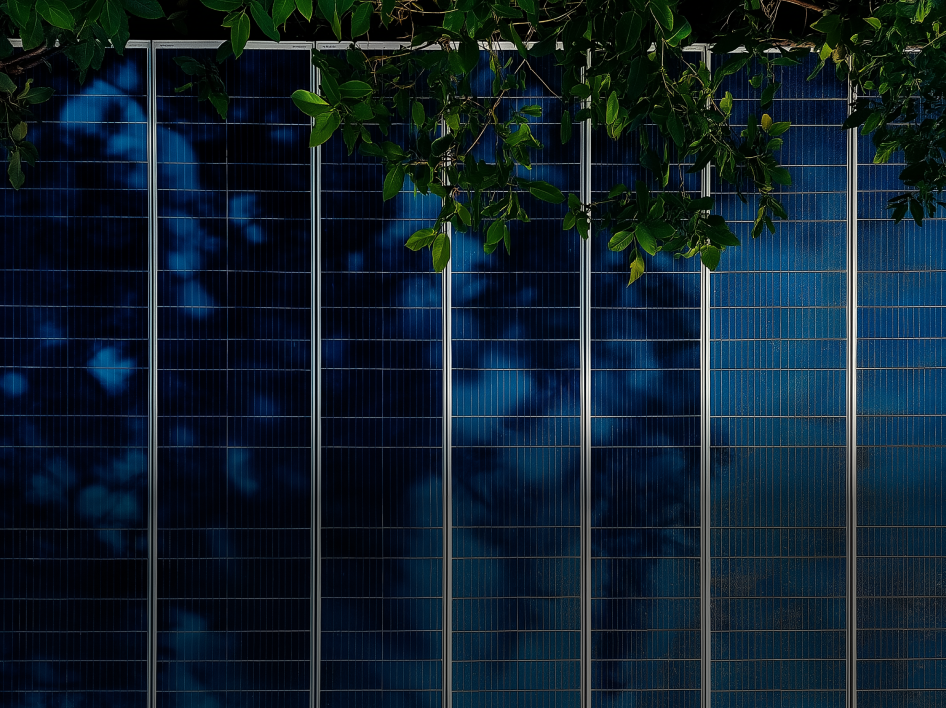
- Uniform black aesthetic: The absence of visible gridlines produces a sleek, all-black appearance that integrates seamlessly with premium GCB architecture. Unlike conventional panels with their silver-grid-on-blue-cell appearance, AIKO ABC panels look like precision-engineered architectural elements. For GCB owners who care deeply about the visual impact on their property — and they should — this is a decisive advantage.
- N-type cell technology: N-type silicon wafers degrade significantly slower than P-type alternatives. AIKO guarantees at least 88.9% of rated output after 30 years, meaning your panels will still be generating substantial power decades from now.
- Superior shade tolerance: The ABC cell architecture handles partial shading better than conventional designs, which matters on complex GCB roofs with dormers, ridgelines, and surrounding trees.
For a deep dive into why AIKO ABC panels outperform alternatives, visit our Best Solar Panels Singapore 2026 comparison.
SunMax Panel-Level Optimisers
GCB roofs are architecturally complex. Multiple roof planes at different angles, dormers, skylights, chimneys, and varying orientations mean that panels across the array receive different levels of irradiance throughout the day. Without panel-level optimisation, the weakest panel in a string dictates the output of the entire string — a phenomenon called mismatch loss.
SunMax optimisers, mounted behind each panel, solve this by enabling each panel to operate at its individual maximum power point. On a GCB with panels spanning three or four different roof planes, SunMax optimisers can recover 10-25% of energy that would otherwise be lost to mismatch.
They also provide panel-level monitoring through iSolarCloud, allowing you to see the exact output of every panel in real time — useful for identifying any underperforming panel before it affects system economics. For multi-angle roof configurations, read our detailed guide on SunMax Optimisers for Multi-Angle Roofs.
Sungrow Hybrid Inverter (15-20 kW)

The hybrid inverter is the brain of the system. For GCB installations, Sunollo deploys Sungrow's 15-20 kW hybrid inverter series — sized to handle the higher power flows that GCB systems demand. Key specifications:
- 15-20 kW continuous AC output: Matched to large GCB solar arrays and capable of simultaneously managing solar input, battery charging/discharging, grid import/export, and EV charger supply.
- Hybrid capability: A single inverter handles both solar-to-AC conversion and battery management, eliminating the need for a separate battery inverter and reducing system complexity.
- Multiple MPPT inputs: Three or more independent Maximum Power Point Tracking inputs allow different roof planes to be managed independently — essential for GCB roof geometries.
- Smart energy management: Built-in algorithms prioritise self-consumption, manage battery charge/discharge cycles based on time-of-use rates, and coordinate with EV charging schedules.
- IP65 rated: Fully weather-sealed for outdoor installation in Singapore's tropical climate.
To understand how all these components work together, read Your Sunollo Solar System Explained.
LFP Battery Storage (15-20 kWh)
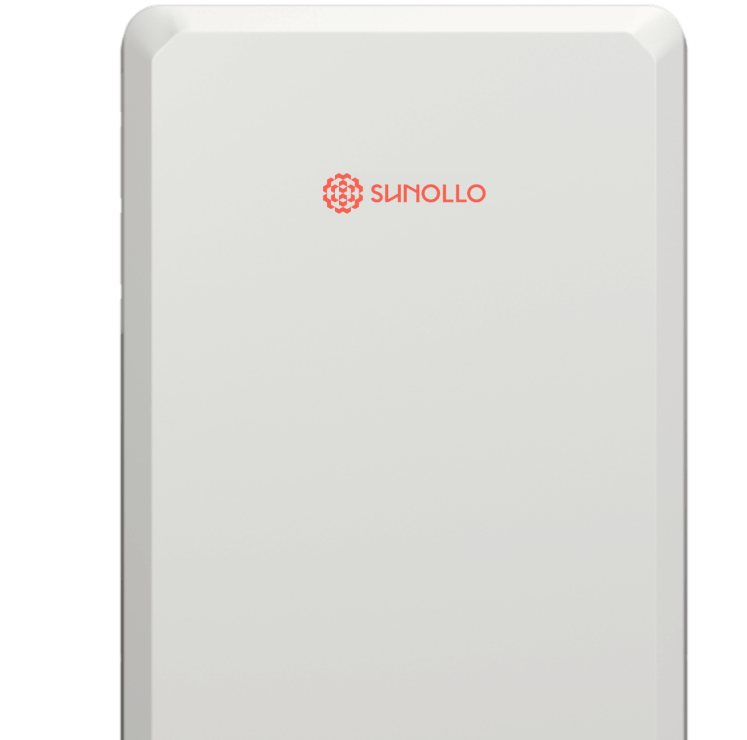
Battery storage transforms a GCB solar installation from a daytime cost-reduction tool into a comprehensive energy management system. For GCBs, we recommend 15-20 kWh of Lithium Iron Phosphate (LFP) battery capacity. Here is the reasoning.
Why 15-20 kWh and not 10 kWh? A typical GCB's evening load — the period between solar generation dropping off (around 5-6pm) and the off-peak rate kicking in (9pm on PacificLight 9 To 9) — is substantial. Four to six air-conditioning units drawing 1.5-2.5 kW each, pool pump at 1-2 kW, lighting across a large home at 0.5-1 kW, security systems, kitchen appliances during dinner preparation: total evening demand can reach 8-15 kW. Over the 3 to 4 hours of peak-rate evening consumption (5pm-9pm), that equates to 24-60 kWh of demand.
A 15-20 kWh battery cannot cover all of this, but it can eliminate 15-20 kWh of peak-rate consumption — saving S$5.60-S$7.50 each evening at 37.50 cents/kWh. Over a month, that is S$168-S$225 in peak-rate avoidance alone. A 10 kWh battery would capture only half that value.
LFP chemistry advantages for GCBs:
- Safety: LFP batteries are inherently non-flammable and thermally stable — a critical consideration when the battery is installed in or near a premium residence. There is no risk of thermal runaway.
- Longevity: 6,000+ charge cycles at 90% depth of discharge, translating to 15-20 years of daily cycling. The battery will outlast many components in the system.
- Consistent performance: LFP maintains steady voltage throughout the discharge curve, delivering reliable power right down to low state-of-charge levels.
- Zero maintenance: No liquid cooling, no active thermal management required in Singapore's climate, no consumables to replace.
For a comprehensive analysis of home battery storage options, read our Singapore Home Battery Guide and our broader Solar Battery Storage Guide for 2026.
Smart EV Chargers (1-2 Units)

GCB households increasingly own two or more electric vehicles — a primary luxury sedan and a second family vehicle, sometimes alongside a plug-in hybrid. Sunollo's smart EV chargers integrate directly with the solar-battery system to optimise charging economics:
- Solar-first charging: When excess solar generation is available during the day (weekends, work-from-home days), the EV charges directly from solar at zero marginal cost.
- Scheduled off-peak charging: For overnight charging, the charger automatically schedules sessions to begin at 9pm when PacificLight's off-peak rate of 16.08 cents kicks in.
- Load balancing: When two EVs are charging simultaneously, the smart charger dynamically allocates available power to avoid overloading the home's electrical system — no expensive switchboard upgrades required.
- 7-22 kW charging speeds: Configurable to match the EV's onboard charger capacity and the home's available electrical headroom.
For a complete guide to EV charging economics with solar, see our Solar EV Charging Singapore 2026 Guide.
iSolarCloud Monitoring & Energy Hub

A GCB energy system generating 20,000-35,000 kWh annually and managing complex load schedules demands professional-grade monitoring. Sungrow's iSolarCloud platform, accessible via smartphone app and web portal, provides:
- Real-time energy flows: See exactly how much solar is being generated, how much is being consumed, how much is going to/from the battery, how much is being exported, and how much grid power is being imported — all updated in real time.
- Panel-level monitoring: Via SunMax optimisers, view the output of each individual panel. Identify shading issues, soiling, or panel faults instantly.
- Historical analytics: Daily, weekly, monthly, and annual generation and consumption data with trend analysis. Track your savings accumulation over time.
- Battery state-of-charge and health: Monitor battery charge levels, cycle counts, and health indicators to ensure peak performance.
- EV charging sessions: Track energy delivered to each EV, charging times, and cost per charge.
- Remote alerts: Receive notifications if any component underperforms or requires attention — before it affects your savings.
Battery Sizing Deep Dive: Why 15-20 kWh Is the GCB Sweet Spot
Battery sizing for GCBs requires a different calculus than for smaller landed homes. The decision is driven by the intersection of evening load profiles, time-of-use tariff windows, and the diminishing marginal return of additional battery capacity.
The evening peak problem. A GCB's heaviest non-solar hours fall between 5pm and 10pm: cooking, entertainment, security lighting, pool pump continuation, and air-conditioning across multiple zones. Total demand during this window routinely reaches 10-15 kW. On the PacificLight 9 To 9 plan, the hours from 5pm to 9pm are still billed at the peak rate of 37.50 cents — this is the window where battery discharge creates maximum value.
The 15-20 kWh calculation:
- 4 hours of peak-rate evening consumption (5pm-9pm) at 10-15 kW demand = 40-60 kWh total demand
- A 15-20 kWh battery can offset 25-50% of this peak-rate evening consumption
- Value of 15 kWh discharged at 37.50 cents peak rate = S$5.63/evening = S$169/month
- Value of 20 kWh discharged at 37.50 cents peak rate = S$7.50/evening = S$225/month
- Annual peak-rate avoidance value: S$2,025-S$2,700
Why not 30 kWh or more? Beyond 20 kWh, the marginal value of additional battery capacity drops sharply for most GCBs. The 9pm-9am off-peak period at 16.08 cents is cheap enough that storing solar for overnight discharge saves only 16.08 cents per kWh rather than 37.50 cents — less than half the value. The additional battery cost (roughly S$8,000-S$12,000 per extra 10 kWh) takes significantly longer to recover. For most GCBs, 15-20 kWh represents the optimal balance of investment and return. Households with exceptional evening loads or those seeking maximum grid independence may justify larger batteries, but this should be assessed case-by-case.
EV Charging Economics: The GCB Advantage
Electric vehicle ownership among GCB residents is accelerating rapidly. The combination of environmental consciousness, premium EV models (Porsche Taycan, Mercedes EQS, BMW iX, Tesla Model S/X), and the practical convenience of home charging makes EVs a natural fit for the GCB lifestyle. Solar integration transforms EV ownership economics dramatically.
The Cost of Charging Without Solar
A typical luxury EV with a 75-100 kWh battery pack driven 15,000-20,000 km per year consumes roughly 3,000-4,000 kWh annually. At SP Group's regulated tariff of ~34 cents/kWh, that is S$1,020-S$1,360 per year per vehicle. For two EVs, the annual charging cost reaches S$2,040-S$2,720 — before accounting for any peak-rate premiums.
The Cost With Solar + PacificLight 9 To 9
Overnight off-peak charging (primary strategy): Both EVs scheduled to charge from 9pm onwards at 16.08 cents/kWh. Combined annual cost: S$480-S$640 per year for two vehicles. Annual saving vs SP tariff: S$1,560-S$2,080.
Weekend and daytime solar-direct charging (supplementary): When the homeowner is home on weekends or works from home, EVs can charge directly from solar at zero marginal cost. If 30% of total charging shifts to direct solar, an additional S$300-S$400/year is saved.
Combined EV charging saving for two vehicles: S$1,860-S$2,480 per year.
Over a 10-year period of EV ownership, that equates to S$18,600-S$24,800 in charging cost savings — a figure that substantially offsets the premium paid for the EVs themselves.
But the full picture is even more compelling. Compare the total cost of running two EVs charged on solar versus two petrol vehicles:
- Two petrol luxury vehicles (BMW 5 Series, Mercedes E-Class) consuming 12-15L/100km at S$3.00/L: S$10,800-S$18,000/year in fuel
- Two EVs charged on solar/off-peak: S$480-S$640/year in electricity
- Annual transport energy saving: S$10,000-S$17,000
For detailed EV-solar integration strategies, read our Solar EV Charging Complete Guide.
Property Value Uplift: The Hidden Return
GCB owners think in terms of asset value, and solar contributes meaningfully to property valuation. Research from the US National Renewable Energy Laboratory, the Lawrence Berkeley National Laboratory, and emerging data from mature solar markets in Australia and Europe consistently shows that homes with solar systems sell for 3-4% more than comparable homes without.
In Singapore's GCB market, this effect is amplified by several factors:
- Scarcity premium: GCBs with fully integrated solar-battery-EV systems are still rare. Early adopters benefit from novelty value and perceived forward-thinking ownership.
- Buyer demographics: GCB purchasers are increasingly environmentally conscious and tech-savvy. A home that comes with an energy-independent power system is materially more attractive than one without.
- Reduced operating costs: A buyer inheriting a solar system with 15-20 years of remaining warranty effectively inherits S$10,000-S$15,000 per year in energy savings — a quantifiable cash flow that can be capitalised into the sale price.
- Regulatory trajectory: Singapore's Green Plan 2030 and Budget 2026 incentives signal that energy efficiency will become an increasingly important factor in property valuation. Solar-equipped homes are ahead of the curve. For more on how Budget 2026 affects solar for landed homeowners, see our Budget 2026 Solar Guide.
On a GCB valued at S$15 million to S$30 million, a 3-4% uplift translates to S$450,000-S$1,200,000 in added perceived value. Even at the conservative end, this eclipses the entire cost of the solar installation by a factor of five or more.
The GCB Installation Process: What to Expect
Installing solar on a GCB is more involved than on a smaller landed home, but Sunollo's project management ensures a streamlined experience with minimal disruption to the household.
Pre-Installation (2-4 Weeks)
- Site survey and roof assessment: Sunollo's engineers conduct a detailed on-site survey, measuring roof dimensions, assessing structural load capacity, mapping shading from adjacent trees and buildings, identifying optimal panel placement, and evaluating electrical infrastructure.
- System design: Based on the survey, consumption data (from recent SP electricity bills), and the homeowner's EV and lifestyle plans, a custom system design is produced. This includes 3D roof layout, panel count and positioning, inverter and battery placement, cable routing, and projected generation/savings.
- Permits and approvals: Sunollo handles all regulatory submissions — BCA structural endorsement, EMA solar installation registration, SP Group grid connection application, and any URA considerations for conservation-area GCBs.
- Scheduling: Installation is scheduled at the homeowner's convenience, with consideration for household routines and any events.
Installation (3-5 Days)
GCB installations typically require 3 to 5 working days, depending on system size and roof complexity:
- Day 1: Roof mounting rail installation, safety equipment setup, cable conduit preparation. Minimal noise and disruption inside the home.
- Day 2-3: Panel installation and wiring. Panels are carefully lifted to the roof and secured to mounting rails. DC wiring is routed through conduits to the inverter location.
- Day 3-4: Inverter, battery, and EV charger installation. Electrical connections to the home's distribution board. Smart meter installation for bidirectional measurement.
- Day 4-5: System testing, commissioning, and iSolarCloud setup. Full system walkthrough with the homeowner, including app installation and monitoring demonstration.
For larger systems (50+ panels) or complex roof geometries, installation may extend to 6-7 days. Throughout the process, the installation team works during standard business hours (8:30am-5:30pm), and the home's electricity supply is uninterrupted — the system is only connected to the grid at the final commissioning stage.
For a detailed step-by-step walkthrough of what installation day looks like, read our Solar Panel Installation Guide for 2026.
Sunollo Care Package: 10 Years of Comprehensive Coverage

A GCB solar installation is a long-term asset, and long-term assets require professional stewardship. Sunollo's Care Package provides 10 years of comprehensive coverage:
- System performance monitoring: Sunollo's operations team monitors your system's output through iSolarCloud. If generation drops below expected levels — due to panel soiling, inverter issues, or any other factor — Sunollo proactively identifies and addresses the issue, often before the homeowner is even aware.
- Annual inspection and cleaning: A scheduled on-site visit each year to inspect all components, clean panels (critical in Singapore where tropical dust, pollen, and occasional haze can reduce output by 5-10%), check wiring and connections, and verify battery health.
- Component warranty coverage: 25-30 year panel performance warranty from AIKO, 10-year inverter warranty from Sungrow, 10-year battery warranty — all managed through Sunollo as a single point of contact.
- Priority response: If any component fails or underperforms, Sunollo dispatches a service team within 48 hours (24 hours for critical issues). Replacement parts are sourced and installed at no additional cost during the Care Package period.
- Firmware and software updates: As Sungrow releases updates to inverter firmware and iSolarCloud features, Sunollo pushes these to your system remotely, ensuring you always benefit from the latest optimisation algorithms and monitoring capabilities.
For GCB owners accustomed to white-glove service across their property management, the Care Package delivers that same standard for the solar system. It is the difference between owning a system and being supported by a system partner.
Security and Privacy Considerations for GCB Owners
GCB owners have legitimate heightened concerns around security and privacy. A solar installation touches several aspects of the property that warrant careful handling:
Roof access and physical security. During installation, Sunollo's team operates under strict site access protocols. All personnel are identified and accounted for, tools and equipment are inventoried at the start and end of each day, and work is confined to the designated areas. Post-installation, the solar system requires no routine roof access — annual inspections are scheduled and coordinated with the homeowner or property manager.
Monitoring data privacy. iSolarCloud captures energy generation and consumption data — not personal data. The platform is SOC 2 compliant, and data is encrypted in transit and at rest. Sunollo does not share individual system data with third parties. Homeowners can choose the level of data sharing for monitoring purposes.
Electrical system integrity. The solar system is connected to the home's distribution board via a dedicated circuit breaker with anti-islanding protection. In the event of a grid outage, the system automatically disconnects from the grid within milliseconds — preventing any risk of backfeed to external power lines. The battery provides optional backup power to designated circuits during outages, maintaining critical systems (security cameras, alarm systems, refrigeration) if configured to do so.
Aesthetic discretion. AIKO ABC panels' uniform black appearance, low-profile mounting, and concealed cable management ensure that the installation does not broadcast the home's energy setup to passersby or visitors. The system is visible from aerial views but is designed to blend with the roofline when viewed from ground level. Inverters and batteries are installed in utility areas, concealed from common areas and entertainment spaces.
Architectural Aesthetics: Solar That Matches GCB Standards
GCBs are architectural statements. Every element — from façade materials to landscape design — is chosen with intention. A solar installation that looks like an afterthought undermines the property's design integrity. This is why panel selection and installation methodology matter enormously for GCB owners.
AIKO ABC panels: designed for premium roofs. The All Back Contact design eliminates the visible silver gridlines and blue-tinted cells that make conventional panels look industrial. AIKO ABC panels present a uniform, deep black surface that reads as a deliberate architectural element rather than a utilitarian add-on. On dark-tiled or slate-coloured roofs, the panels virtually disappear into the roofline.
Flush-mount installation. Sunollo uses low-profile mounting systems that keep panels close to the roof surface, minimising the visible gap between panel and tile. This reduces wind load, improves the visual profile, and ensures the panels follow the roof geometry rather than standing proud of it.
Concealed cable management. All DC and AC cabling is routed through conduits that match the roof or wall colour. Where cables must traverse visible surfaces, they are secured in architecturally sympathetic channels. The goal is simple: no visible cabling from any normal viewing angle.
Equipment placement. Inverters, batteries, and EV chargers are installed in utility areas — behind the house, in designated plant rooms, or in garages. Sunollo works with the homeowner to identify locations that are accessible for maintenance but invisible from living areas and entertainment spaces.
The result is a solar installation that enhances rather than compromises the GCB's architectural character — an energy system that is felt in the savings but not seen on the skyline.
The Abundance Pro System: Built for GCB Scale

Sunollo's Abundance Pro package is specifically designed for homes that demand more: more panels, more storage, more EV capacity, and more sophisticated energy management. For GCB owners, Abundance Pro represents the complete energy independence solution.
What Abundance Pro includes:
- AIKO ABC panels scaled to the roof's full potential (30-60+ panels)
- SunMax panel-level optimisers across every panel
- Sungrow 15-20 kW hybrid inverter with multiple MPPT channels
- 15-20 kWh Sungrow LFP battery with expansion capability
- 1-2 smart EV chargers with solar integration and load balancing
- iSolarCloud professional monitoring with real-time alerts
- Sunollo Care Package (10-year comprehensive coverage)
- Complete system design, permitting, installation, and commissioning
The Abundance Pro system is not an off-the-shelf package — it is a custom-engineered solution designed around each GCB's unique roof geometry, consumption profile, and energy goals. Two GCBs on the same street will have different Abundance Pro configurations because their roofs, lifestyles, and EV fleets are different.
Learn more about how the Abundance Pro system integrates every component in our Abundance Pro Battery Guide.
GCB Solar vs. Semi-Detached: Why the Investment Case Is Stronger
Some GCB owners compare the solar investment case with that of semi-detached or terrace homes and wonder whether the proportional returns are similar. They are not — GCBs deliver disproportionately better returns for several structural reasons:
- Higher self-consumption ratio: GCBs consume more electricity, which means a greater percentage of solar generation is consumed on-site rather than exported at low buyback rates. Self-consumed solar is worth 32-37.50 cents/kWh; exported solar is worth only 6-8 cents. GCBs' higher base loads ensure that 60-75% of generation is self-consumed, compared to 40-55% for smaller homes.
- Larger systems, lower per-watt cost: Fixed costs (permits, scaffolding, project management) are spread across more panels. A 25 kWp GCB system costs roughly 30-40% less per watt installed than a 10 kWp terrace system.
- Battery and EV synergies: GCBs have enough generation surplus to charge a large battery and two EVs. Smaller homes often struggle to generate enough surplus for even one EV, limiting the ancillary savings opportunities.
- Aesthetic integration: With more roof area, panels can be positioned on optimal planes (typically north-facing in Singapore) without needing to compromise with suboptimal orientations. The visual impact per panel is also lower on a larger roof.
For semi-detached homeowners exploring similar solutions, we have a dedicated guide: Solar Panels for Semi-Detached Homes Singapore 2026.
Frequently Asked Questions: GCB Solar
How many solar panels can fit on my GCB roof?
Most GCBs can accommodate 30 to 60+ panels, depending on roof area, orientation, and architectural features. A typical GCB with 300+ sqm of roof area can fit 40-50 AIKO ABC panels (20-25 kWp). Sunollo's site survey will map exact placement to maximise output while respecting the roof's architectural lines.
What is the realistic payback period for a GCB solar system?
For a solar-only system: 5-6 years. For a solar+battery+EV system: 5-6.5 years. After payback, the system generates S$7,000-S$15,000+ in annual savings for the remaining 20+ years of its lifespan. The total lifetime financial benefit typically exceeds S$150,000-S$350,000.
Do I need to upgrade my electrical switchboard?
Most modern GCBs (built or renovated within the last 15 years) have sufficient electrical capacity for a 15-25 kWp solar system with battery and EV chargers. Older GCBs may require a switchboard upgrade, which Sunollo assesses during the site survey and includes in the proposal if needed.
Will the installation damage my roof tiles?
No. Sunollo uses non-penetrative or minimally penetrative mounting systems appropriate to the roof type (concrete tile, clay tile, metal roofing). All penetrations are sealed with waterproof flashing and sealant. The mounting system is engineered to the roof's structural specifications, and Sunollo guarantees no leaks or structural damage.
Can I add more panels or battery capacity later?
Yes. Sunollo designs GCB systems with future expansion in mind. The Sungrow hybrid inverter supports multiple battery modules, and additional panels can be added to unused roof space. If your EV fleet grows from one to two vehicles, a second charger can be integrated without redesigning the system.
What happens during a grid outage?
Without a battery, the solar system shuts down during a grid outage (this is a safety requirement called anti-islanding). With a battery, the system can provide backup power to designated essential circuits — typically security systems, refrigeration, internet/router, and selected lighting. Full home backup during outages requires a larger battery configuration, which can be designed on request.
Is there any risk to my property insurance?
A professionally installed solar system does not increase insurance risk and most insurers treat it as a standard home improvement. Sunollo provides all installation certifications, structural engineer endorsements, and product certifications that insurers may request. Some insurers offer premium discounts for energy-efficient homes.
How does the solar system interact with my existing home automation?
iSolarCloud provides API access and integration capability with major home automation platforms. Energy generation and consumption data can be incorporated into existing smart home dashboards, and EV charging schedules can be coordinated with home automation routines. Sunollo's technical team can advise on specific integration requirements during the design phase.
What about the upcoming Budget 2026 incentives for solar?
Singapore's Budget 2026 includes several provisions that benefit landed homeowners investing in solar energy. These incentives can further reduce the net cost of a GCB installation. For a detailed analysis of how these measures apply to your situation, read our Budget 2026 Solar Guide for Landed Homeowners.
Do I need strata or management committee approval?
No. GCBs are freehold landed properties with no strata management. You have full autonomy over roof installations, subject only to BCA structural requirements and URA conservation guidelines if your property falls within a conservation area. Sunollo handles all regulatory compliance.
The Bottom Line: GCB Solar Is the Highest-Returning Residential Energy Investment in Singapore
Good Class Bungalows represent the apex of residential solar economics in Singapore. The combination of expansive roof area, high electricity consumption, multiple EV charging demands, and premium property values creates a unique convergence where every dollar invested in solar delivers outsized returns — in direct savings, in energy independence, in property value, and in environmental contribution.
A comprehensive GCB solar-battery-EV system costing S$70,000-S$85,000 will typically return S$250,000-S$350,000 in lifetime savings over 25 years, pay for itself within 5-6.5 years, add 3-4% to property value (S$450,000-S$1,200,000 on a typical GCB), and reduce the household's carbon footprint by 15-25 tonnes of CO₂ annually.
For GCB owners accustomed to making significant, long-horizon investments, solar represents one of the most straightforward value propositions available: high certainty, strong returns, negligible risk, and an asset that enhances rather than depreciates.
Ready to explore what solar can do for your Good Class Bungalow? Sunollo's GCB energy specialists will conduct a detailed site assessment, design a system matched to your home's architecture and energy profile, and deliver a comprehensive proposal with projected savings. The process begins with a site survey — and every GCB we assess reminds us why this property class is, without exception, the most rewarding to equip with solar.
Start with our Complete Solar Guide for Singapore 2026 for foundational knowledge, or explore our Savings Guarantee subscription if you prefer zero upfront investment with guaranteed returns from day one.