The bottom line: Home battery storage in Singapore costs S$800–S$1,200 per kWh installed in 2026, with payback of 5–8 years when factoring tariff arbitrage, backup value, and future tariff hedging. The most popular sizes are 10–15 kWh, suitable for typical landed homes. Pair with solar for maximum value — standalone batteries without solar generally do not financially justify themselves.
Solar Battery Storage in Singapore 2026: The Complete Decision Guide
Solar battery storage is transforming how Singapore homeowners use energy. With rising electricity prices, growing EV adoption, and increasing demand for energy independence, home batteries have evolved from a luxury add-on to a strategic investment. This guide provides everything you need to decide whether a battery makes sense for your home, which brand to choose, and what return to expect.
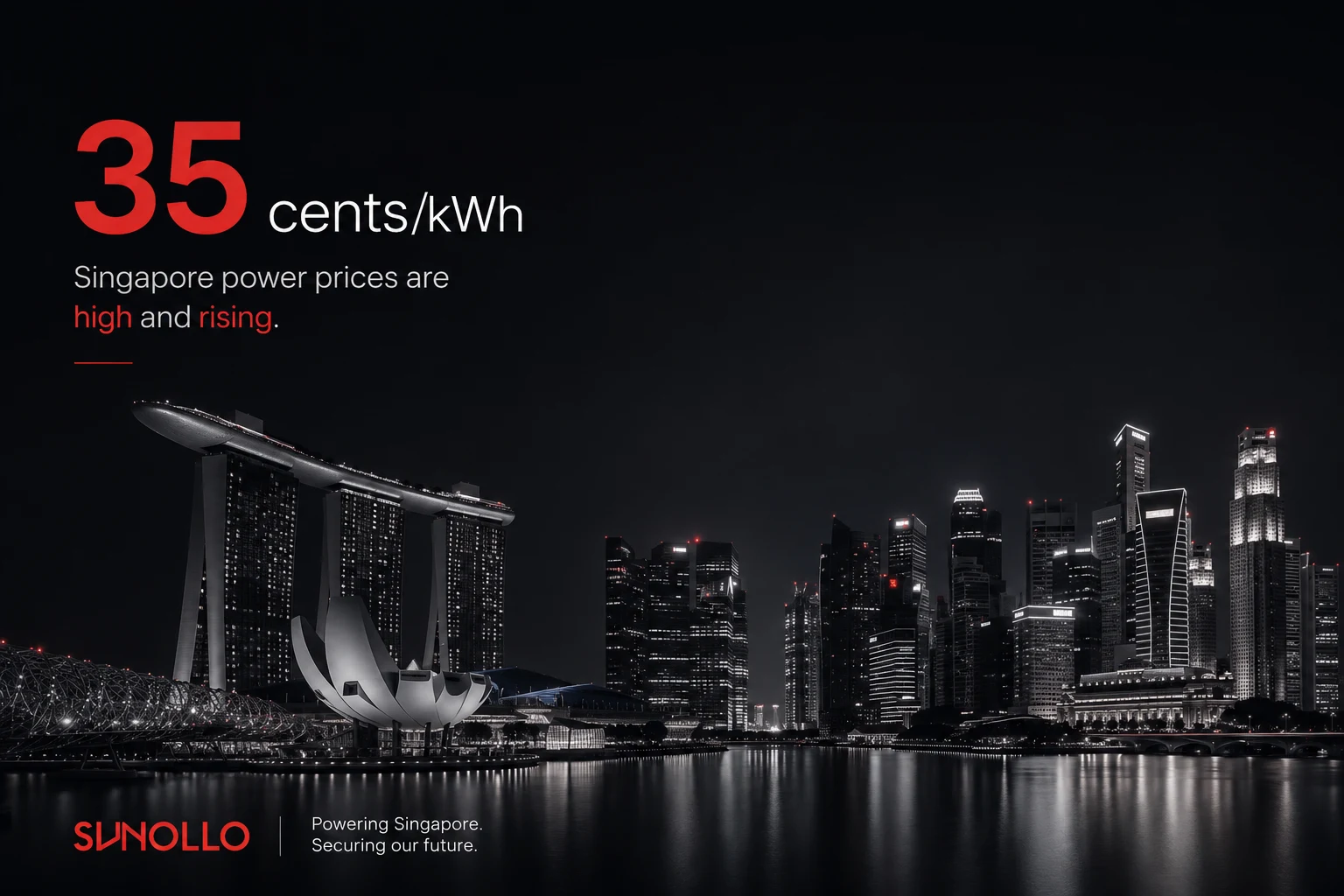
Singapore's unique energy landscape — high electricity tariffs (32+ cents per kWh and rising), no time-of-use pricing yet, and robust net metering through the NER scheme — creates a specific set of conditions that make battery economics different from Australia or the US. This guide is written specifically for the Singapore context in 2026.
How Solar Batteries Work in Singapore
A solar battery stores excess energy your panels produce during the day for use when the sun is not shining. Without a battery, your solar system exports surplus energy to the grid through the NER scheme at wholesale rates (approximately S$0.08 to S$0.12 per kWh). With a battery, you store that surplus and use it in the evening at retail value (S$0.30 to S$0.35 per kWh) — a 3x value multiplier. Learn more about what happens to solar energy at night.
The financial value of a battery comes from this arbitrage: storing electricity worth S$0.08 to S$0.12 (export value) and using it later when it would cost S$0.30 to S$0.35 (import value). That spread of approximately S$0.22 per kWh, multiplied by daily cycles over 16+ years of LFP battery life, determines whether a battery pays for itself — and by how much.
Battery Pricing for Singapore Homes
Solar battery storage for standard Singapore homes now starts from S$6,000 fully installed. This covers the most popular capacity range (9 to 20 kWh), which suits everything from terrace houses to bungalows. For a detailed price breakdown by brand, see our home battery storage cost guide for Singapore.
| Battery Size | Price Range (Installed) | Cost per kWh | Best For |
|---|---|---|---|
| 5 kWh | S$3,500–5,500 | S$700–1,100 | Small terrace, basic evening backup |
| Sunollo Essential 9 kWh | S$6,000 | S$667 | Terrace house, full evening coverage |
| 10 kWh (market) | S$5,500–8,000 | S$550–800 | Standard home battery |
| 13–15 kWh | S$9,000–12,000 | S$600–923 | High consumption, partial EV |
| Sunollo Abundance 18 kWh | S$12,000 | S$667 | Semi-D, bungalow, full home + EV |
| 20 kWh (market) | S$11,000–15,000 | S$550–750 | Large home, near-complete independence |
Larger batteries have a lower cost per kWh due to shared installation and inverter costs. When purchased as part of a Sunollo solar-plus-battery package, batteries are covered under SunolloCare's comprehensive insurance programme — protecting your investment against faults, weather damage, and performance degradation for the full warranty period.
Top Solar Batteries Available in Singapore 2026
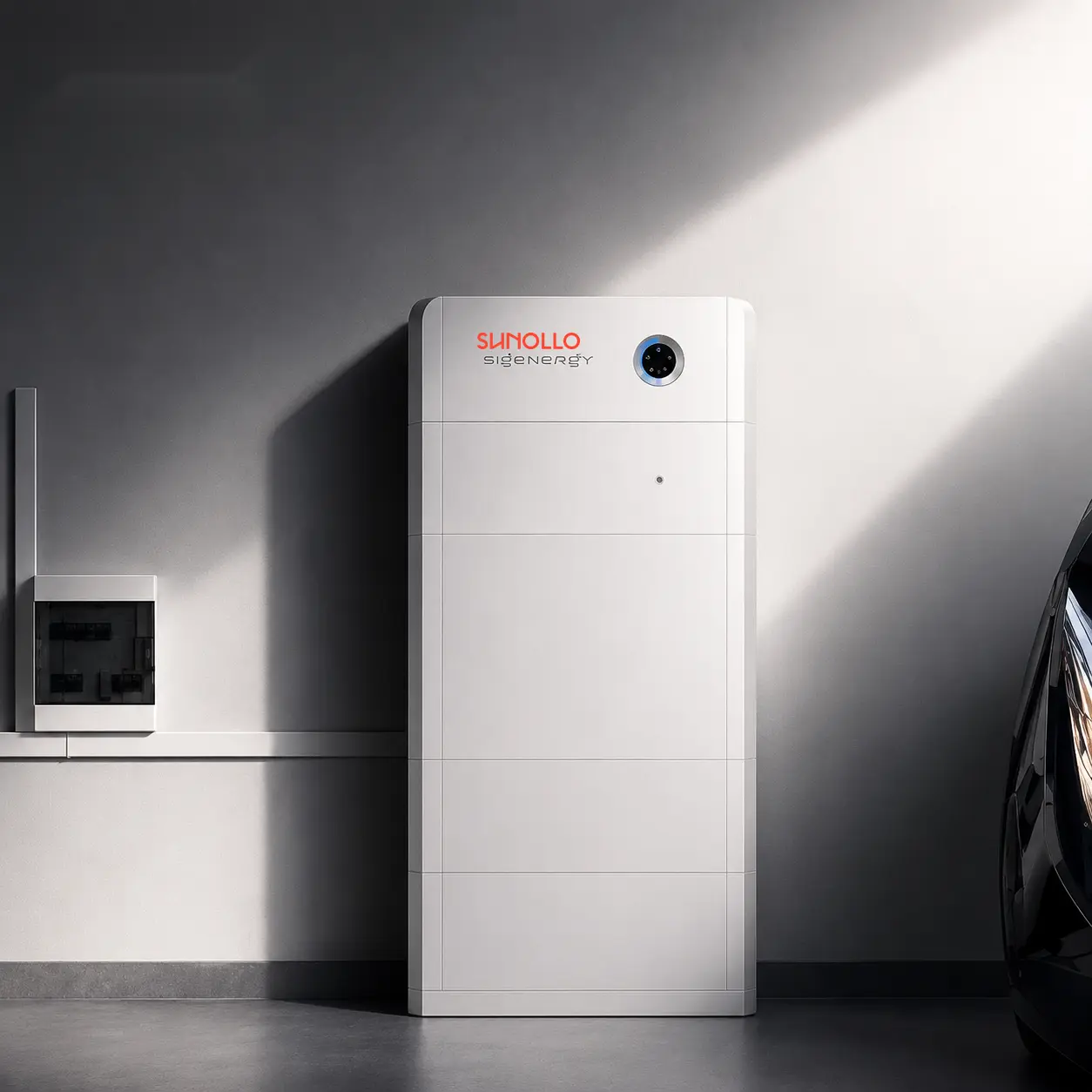
Sunollo Essential — 9 kWh
Sunollo's own LFP battery, purpose-built for Singapore's climate and electricity market. Integrates directly with the EnergyHub inverter and LiveTrack app for seamless solar-battery coordination.
| Specification | Detail |
|---|---|
| Usable capacity | 9 kWh |
| Chemistry | LFP (Lithium Iron Phosphate) |
| Cycle life | 6,000+ cycles (16+ years at 1 cycle/day) |
| Warranty | 10 years |
| Integration | Sunollo EnergyHub inverter + LiveTrack app |
| Installed price (Sunollo) | S$6,000 |
Best for: Terrace houses and moderate-consumption homes. Covers 4–6 hours of typical evening load. Payback ~8 years without EV, ~5–6 years with EV. The entry point for whole-home solar-plus-storage in Singapore.
Sunollo Abundance — 18 kWh
Sunollo's flagship battery, designed for semi-detached homes, bungalows, and EV-owning households. Covers all evening household load plus a full overnight EV charge.
| Specification | Detail |
|---|---|
| Usable capacity | 18 kWh |
| Chemistry | LFP (Lithium Iron Phosphate) |
| Cycle life | 6,000+ cycles (16+ years at 1 cycle/day) |
| Warranty | 10 years |
| Integration | Sunollo EnergyHub inverter + LiveTrack app |
| Installed price (Sunollo) | S$12,000 |
Best for: Semi-D and bungalow owners, especially EV households. Achieves 85–95% solar self-consumption. Annual savings: SGD 1,445 (no EV) to SGD 1,920 (with EV). Payback ~8 years without EV, ~6 years with EV.
1. Tesla Powerwall 3
Tesla's third-generation home battery is the most recognised name in residential storage. The Powerwall 3 integrates an inverter directly into the battery, simplifying installation.
| Specification | Detail |
|---|---|
| Usable capacity | 13.5 kWh |
| Continuous power output | 11.5 kW |
| Peak power output | 22 kW (10 seconds) |
| Round-trip efficiency | 90% |
| Chemistry | LFP (Lithium Iron Phosphate) |
| Warranty | 10 years, 70% capacity retention |
| Installed price | S$13,000 to S$18,000 |
Best for: Premium homes, EV owners who want whole-home backup and value the Tesla ecosystem. The high continuous power output (11.5 kW) handles air conditioning, cooking, and EV charging simultaneously during an outage.
2. BYD Battery-Box Premium HVS
BYD is the world's largest battery manufacturer. The modular design using LFP chemistry offers exceptional safety and the longest cycle life of any mainstream home battery.
| Specification | Detail |
|---|---|
| Usable capacity | 5.1 to 12.8 kWh (modular, 2.56 kWh increments) |
| Continuous power output | 5 kW |
| Round-trip efficiency | 95.3% |
| Chemistry | LFP (Lithium Iron Phosphate) |
| Warranty | 10 years, 80% capacity retention |
| Cycle life | 6,000+ cycles |
| Installed price (Sunollo) | S$4,500 to S$9,000 |
Best for: Budget-conscious homeowners who want to start small and expand later. BYD's LFP chemistry is inherently non-flammable, making it the safest option.
3. Huawei LUNA2000
Huawei's LUNA2000 delivers the best value per kWh. Its seamless integration with Huawei inverters means optimal efficiency and a single monitoring app.
| Specification | Detail |
|---|---|
| Usable capacity | 5 to 30 kWh (modular, 5 kWh increments) |
| Continuous power output | 5 kW (per module) |
| Round-trip efficiency | 95% |
| Chemistry | LFP (Lithium Iron Phosphate) |
| Warranty | 10 years |
| Installed price (Sunollo) | S$4,500 to S$9,000 |
Best for: Value-focused homeowners, especially those already using or planning Huawei inverters.
4. Enphase IQ Battery 5P
Enphase uses a distributed microinverter-based battery architecture. Each module operates independently — no single point of failure.
| Specification | Detail |
|---|---|
| Usable capacity | 5 kWh per unit (stackable to 40+ kWh) |
| Continuous power output | 3.84 kW per unit |
| Round-trip efficiency | 89% |
| Chemistry | LFP (Lithium Iron Phosphate) |
| Warranty | 15 years, 80% capacity retention |
| Installed price (Sunollo) | S$6,500 to S$8,500 per unit |
Best for: Homeowners using Enphase microinverters. The 15-year warranty is the longest in the industry.
5. Sigenergy SigenStar
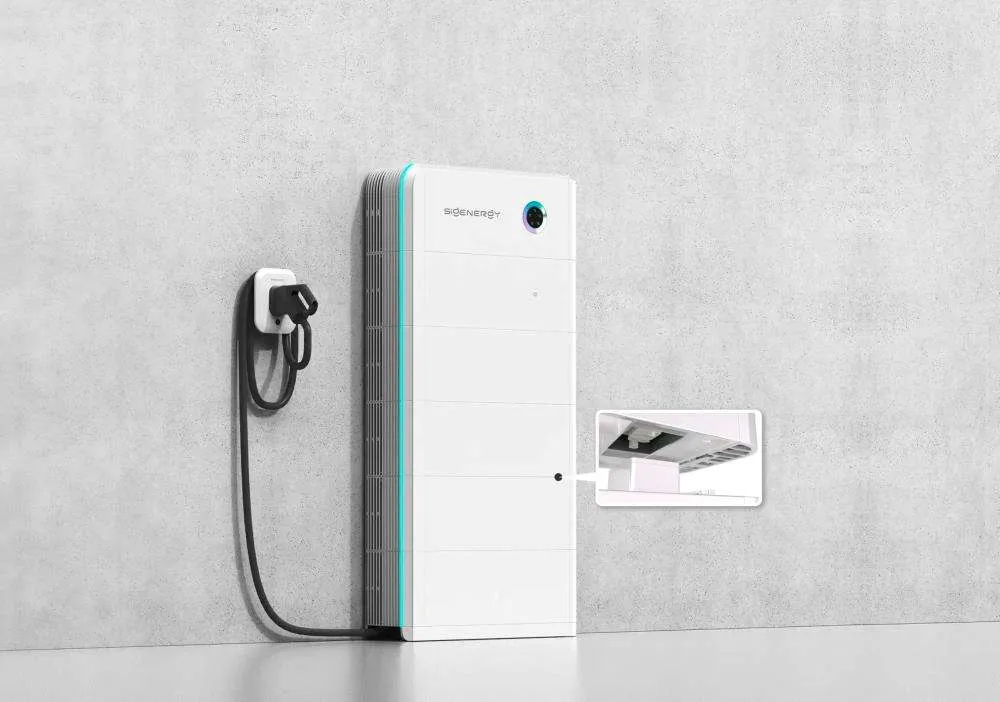
Sigenergy is a newer entrant gaining rapid traction. Their all-in-one system combines solar inverter, battery, and EV charger in a single integrated unit.
| Specification | Detail |
|---|---|
| Usable capacity | 5 to 20 kWh (modular) |
| Continuous power output | 5 to 10 kW |
| Round-trip efficiency | 95% |
| Chemistry | LFP (Lithium Iron Phosphate) |
| Warranty | 15 years |
| Integrated EV charger | Yes (7/22 kW AC) |
| Installed price (Sunollo) | S$7,000 to S$11,000 |
Best for: EV owners who want a single integrated system for solar, battery, and EV charging.
Battery Brand Comparison Summary
| Brand | Capacity | Price (Sunollo) | Warranty | Chemistry | Best Feature |
|---|---|---|---|---|---|
| Sunollo Essential | 9 kWh | S$6,000 | 10 years | LFP | Purpose-built SG, best value |
| Sunollo Abundance | 18 kWh | S$12,000 | 10 years | LFP | Full home + EV coverage |
| Tesla Powerwall 3 | 13.5 kWh | S$13K–S$18K | 10 years | LFP | Highest power output |
| BYD HVS | 5.1–12.8 kWh | S$4.5K–S$9K | 10 years | LFP | Best safety, modularity |
| Huawei LUNA2000 | 5–30 kWh | S$4.5K–S$9K | 10 years | LFP | Best value per kWh |
| Enphase IQ 5P | 5 kWh (stackable) | S$6.5K–S$8.5K/unit | 15 years | LFP | Longest warranty |
| Sigenergy | 5–20 kWh | S$7K–S$11K | 15 years | LFP | Integrated EV charger |
SunolloCare Coverage for Batteries
When you add a battery through Sunollo, it is automatically covered under the SunolloCare programme. This means your battery investment is protected by comprehensive insurance against weather damage, electrical faults, and theft, proactive performance monitoring to detect capacity degradation early, priority service and replacement if the battery falls below warranty capacity thresholds, and a single point of contact for your entire solar-plus-battery system. No other installer in Singapore includes this level of battery protection as standard.
Is a Solar Battery Worth It in Singapore? Honest ROI Analysis
Battery ROI in Singapore requires nuance because Singapore does not yet have time-of-use pricing. But even without peak/off-peak differentiation, the economics are compelling at 2026 prices.
For a broader perspective, read our guide on whether solar batteries are worth the investment.
The Financial Case
The Sunollo Essential (9 kWh, S$6,000) cycles once per day, storing 9 kWh of usable energy. The value per cycle:
- Value per kWh stored: S$0.32 (retail rate avoided) minus S$0.10 (export rate forgone) = S$0.22 per kWh
- Daily value: 9 kWh x S$0.22 = S$1.98 per day
- Monthly value: S$59.40
- Annual value: S$723
For the Sunollo Essential (9 kWh, S$6,000), the simple payback is approximately 8.3 years at current tariffs. With 3% annual tariff increases, break-even accelerates to approximately 7–8 years — and payback drops to ~5–6 years when EV charging savings are included.
| Year | Assumed Tariff (cents/kWh) | Annual Battery Value | Cumulative Value |
|---|---|---|---|
| Year 1 (2026) | 32.0¢ | S$723 | S$723 |
| Year 3 | 35.59 | S$811 | S$2,289 |
| Year 5 | 38.88 | S$919 | S$4,098 |
| Year 7 | 42.48 | S$1,036 | S$6,198 |
| Year 10 | 49.22 | S$1,256 | S$9,750 |
| Year 15 | 62.31 | S$1,686 | S$17,231 |
When a Battery IS Worth It
- You have or plan to buy an EV — Charging an EV with stored solar instead of grid electricity adds S$100 to S$200 per month in savings, improving battery payback to 5 to 6 years
- Your electricity bill exceeds S$300 per month — Higher consumption means more kWh shifted from peak rate to solar
- You want backup power — For home offices, medical equipment, or security systems
- You consume more than 50% of electricity in the evening
- You are building a new home — Adding battery during construction reduces installation cost by 30 to 40%
When a Battery May NOT Be Worth It Yet
- Your electricity bill is under S$150 per month
- You are home during the day and use most solar directly
- Budget is the primary concern — the same money spent on a larger solar system often delivers faster returns
Solar Plus Battery Plus EV: The Complete Energy Bundle
The most compelling battery case is the solar-battery-EV combination. This bundle transforms three separate costs into one investment with compounding returns.
Read our complete solar battery and EV charging guide for Singapore for the full breakdown.
Bundle Financial Impact
| Cost Category | Before Bundle | After Bundle | Annual Savings |
|---|---|---|---|
| Electricity bill | S$350/month | S$40/month | S$3,720 |
| Petrol/EV charging | S$200/month | S$0/month | S$2,400 |
| Total monthly cost | S$550/month | S$40/month | S$6,120/year |
A typical 10 kWp solar system (S$11,000) plus Sunollo Essential 9 kWh battery (S$6,000) costs S$17,000 total. With S$6,120 in annual savings (electricity + EV fuel), the bundle pays for itself in under 3 years. Over 15 years, the bundle saves approximately S$92,000 to S$120,000.
Sunollo's Abundance Pro package includes panels with optimisers, battery (Essential or Abundance), and EV charging capability in one integrated system with SunolloCare coverage and insurance for 25 years.
Installation Considerations for Singapore Homes
Where to Install
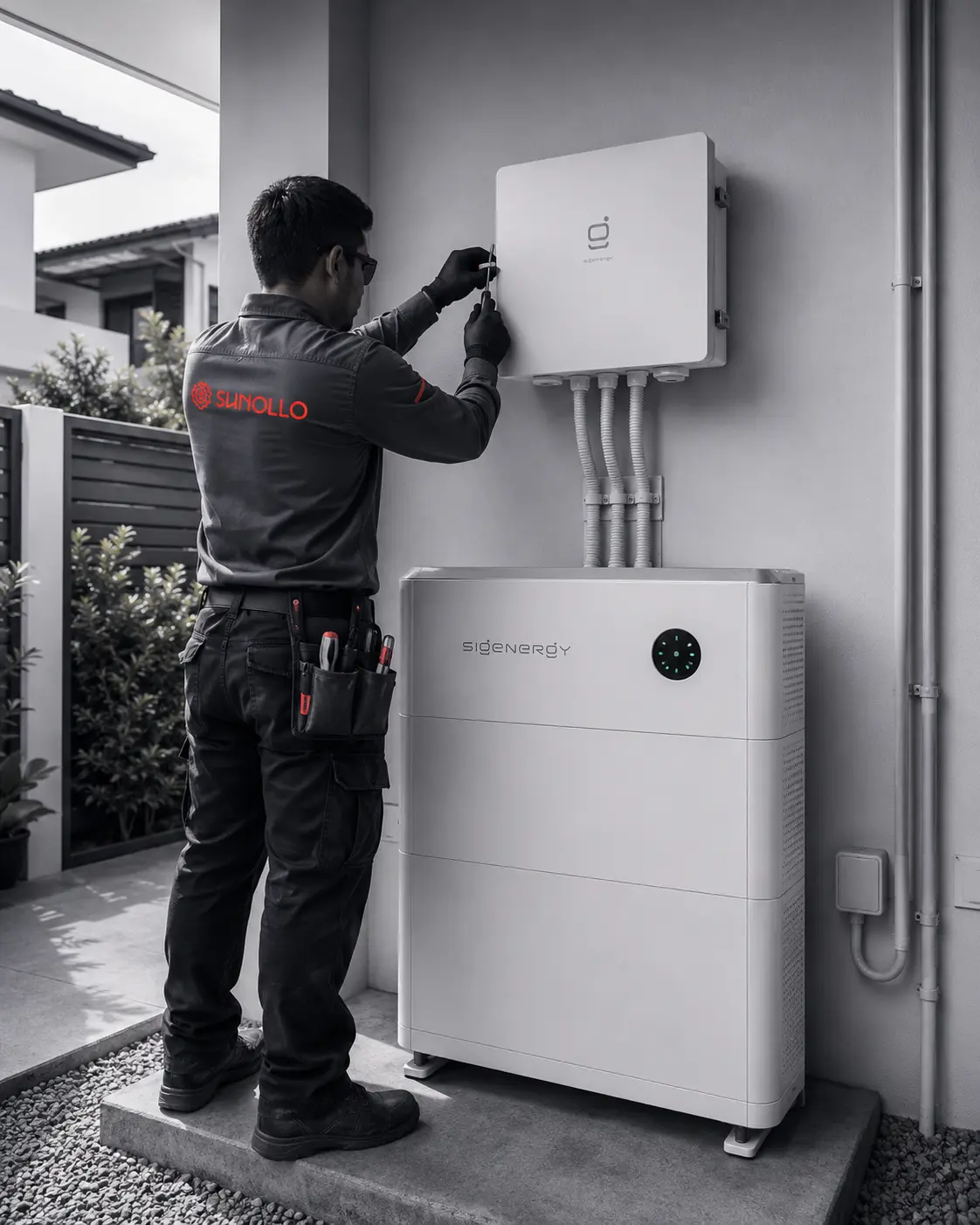
Batteries are typically installed in a utility room, storeroom, or covered outdoor area near the electrical switchboard. All batteries reviewed above use LFP chemistry, which is inherently safer than older NMC chemistry and rated for Singapore's tropical climate (up to 50 degrees Celsius).
Permits and Regulations
Battery storage systems in Singapore require EMA approval as part of the solar generation licence. Your installer handles all regulatory paperwork. No additional permits beyond the standard solar installation process are required for systems under 30 kWh. For a detailed walkthrough, see our guide on how EMA and SP Services processes work.
Future-Proofing: Why Batteries Will Become Essential
- Time-of-use pricing: Singapore is expected to introduce time-of-use tariffs within 3 to 5 years, potentially doubling battery value.
- Vehicle-to-home (V2H): EVs with bidirectional charging can power your home during peak hours.
- Virtual power plants (VPP): Aggregated home batteries participating in grid services for additional revenue.
- Continued price drops: Battery prices projected to fall another 15 to 25% by 2028.
Frequently Asked Questions
How much does a solar battery cost in Singapore?
Solar batteries for standard Singapore homes cost S$6,000 to S$12,000 installed through Sunollo. The Sunollo Essential (9 kWh) costs S$6,000 and the Sunollo Abundance (18 kWh) costs S$12,000. Battery costs have dropped 40–50% since 2023.
Explore strategies for maximising your solar energy investment with battery storage.
Is a solar battery worth it in Singapore?
For EV owners, the answer is a clear yes — payback is 5 to 6 years with combined electricity and fuel savings. For non-EV homes, the payback for Sunollo Essential and Abundance is approximately 8 years. If you value backup power or energy independence, a battery adds significant value beyond pure financials. All Sunollo batteries are covered under SunolloCare insurance.
How long do solar batteries last?
Quality LFP batteries (Sunollo, Tesla, BYD, Huawei, Enphase) last 16+ years at one cycle per day and retain 70 to 80% capacity after 10 years. All batteries listed carry 10–15 year capacity retention warranties.
Can a solar battery power my whole house during an outage?
A Sunollo Abundance (18 kWh) can power essential loads (lights, fridge, WiFi, fans, security) for 12–18 hours. Running air conditioning reduces this to 5–8 hours. For whole-home backup including multiple aircon units, 20+ kWh is recommended.
What is the best solar battery in Singapore?
Sunollo Essential (9 kWh, S$6,000) and Sunollo Abundance (18 kWh, S$12,000) offer the best value for Singapore homes, purpose-built for local conditions with 10-year warranty and EnergyHub integration. For third-party brands: Tesla Powerwall 3 for highest power output, BYD for safety and modularity, Huawei LUNA2000 for best per-kWh value, Enphase IQ 5P for longest warranty, Sigenergy for integrated EV charging.
How does battery storage affect my NER export credits?
A battery reduces NER export volume but converts that energy from export value (S$0.08 to S$0.12/kWh) to self-consumption value (S$0.32+/kWh) — a 3x multiplier. You earn less from NER but save significantly more overall.
For a wider collection of battery storage guides covering costs, payback, brands, and EV integration, see the battery storage resources hub.
Get Expert Battery Advice
Sunollo's energy experts will analyse your consumption data, evaluate your solar production profile, and recommend the optimal battery configuration for maximum savings — all covered under SunolloCare with comprehensive insurance.
Get Your Free Battery Assessment
Or explore Sunollo's Abundance Pro package — solar panels with optimisers, battery storage (Essential or Abundance), and EV charging in one integrated system with 25-year coverage. You can also compare dedicated home battery storage options.