Solar panels generate electricity during the day. Your home consumes electricity around the clock. This mismatch is the single biggest reason why battery storage and EV charging are transforming from optional upgrades into essential components of a modern Singapore solar system.
In 2026, the equation is simple: solar panels alone save you money during daylight hours. Solar plus battery saves you money around the clock. Solar plus battery plus EV saves you money on both your electricity bill and your transport costs. This guide covers all three — the technology, economics, installation, and the Sunollo systems that bring them together.
How Solar Batteries Work
A solar battery stores excess energy your panels generate during the day for use when the sun is not shining. Without a battery, your solar system exports surplus energy to the grid through the NER scheme at wholesale rates. With a battery, you store that surplus and use it in the evening at retail value — a significant economic advantage that compounds every year as electricity prices rise.
The financial value comes from this arbitrage: storing electricity worth S$0.08 to S$0.12 per kWh (export value) and using it later when it would cost S$0.30 to S$0.35 per kWh (import value). The spread of approximately S$0.22 per kWh, multiplied by 9–18 kWh per day over 16+ years of battery life, is the foundation of battery ROI in Singapore.
Battery Storage Technologies in Singapore
Lithium Iron Phosphate (LFP) — The Right Chemistry for Singapore
LFP is the dominant chemistry for home batteries in 2026, and for good reason. LFP cells offer exceptional cycle life (6,000+ cycles versus 3,000 for NMC), superior thermal stability (virtually no risk of thermal runaway), and no cobalt — making them more ethical and supply-chain secure. All Sunollo batteries use LFP chemistry.
In Singapore's year-round heat (28–33°C ambient, 40–45°C in enclosed spaces), LFP's thermal tolerance is not just a safety feature — it directly affects battery longevity. LFP degrades far more slowly at tropical temperatures than NMC, delivering better long-term ROI for Singapore homeowners.
Nickel Manganese Cobalt (NMC)
NMC batteries pack more energy per kilogram, resulting in sleeker wall-mountable units. Some premium brands use NMC chemistry. However, NMC has a shorter cycle life and requires more sophisticated thermal management — an important consideration in Singapore's year-round heat.
Sodium-Ion (Emerging)
Sodium-ion batteries are entering the market as a cost-effective alternative, using abundant materials and performing well in high temperatures. Their cost per kWh is 20–40% lower than lithium chemistries. Watch this space — sodium-ion is expected to become viable for home storage by late 2026 to 2027.
Sunollo Battery Options for Singapore Homes
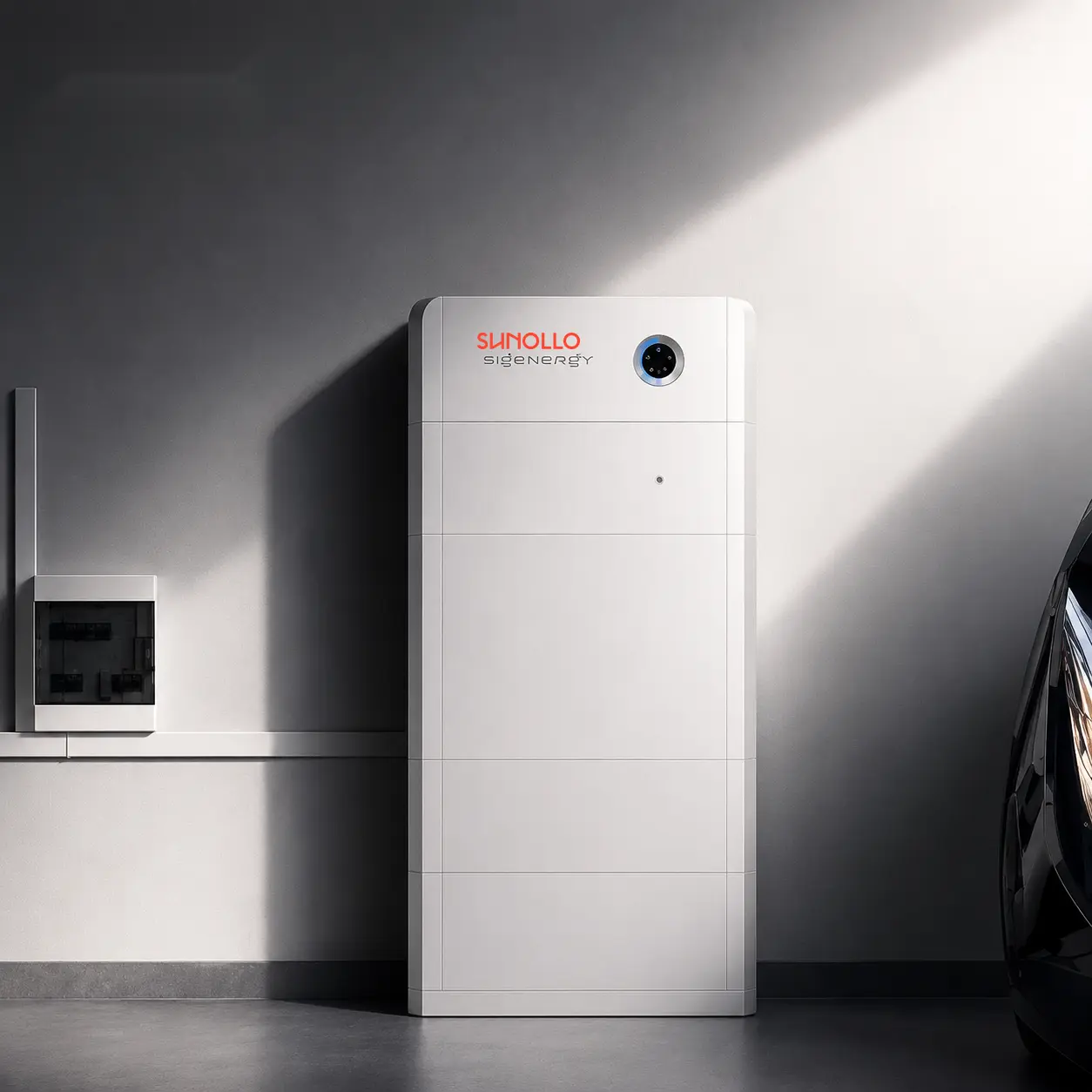
Sunollo offers two purpose-built LFP batteries for Singapore landed homes, designed to integrate directly with the EnergyHub inverter and LiveTrack monitoring app:
| Product | Capacity | Price (installed) | Annual Savings | Payback | Best For |
|---|---|---|---|---|---|
| Sunollo Essential | 9 kWh | SGD 6,000 | SGD 723 (no EV) / ~SGD 1,200 (with EV) | ~8 yrs / ~5–6 yrs with EV | Terrace houses, moderate users |
| Sunollo Abundance | 18 kWh | SGD 12,000 | SGD 1,445 (no EV) / SGD 1,920 (with EV) | ~8 yrs / ~6 yrs with EV | Semi-D, bungalows, EV homes |
For EV households, the Sunollo Abundance (18 kWh) is the recommended configuration: it covers all evening home load plus a full overnight EV charge, pushing self-consumption above 85–90%. Both batteries are available as part of the Abundance Pro subscription at SGD 0 upfront. See our full battery cost guide for market price comparisons.
Top Home Battery Systems in Singapore
Tesla Powerwall 3
Capacity: 13.5 kWh. Integrated inverter. Sleek design. Strong brand recognition. The Powerwall remains the most recognisable home battery globally. However, the premium price (SGD 13,000–18,000 installed) means slower payback compared to Sunollo's own offerings. Best for customers who value the Tesla ecosystem and app experience. Read our detailed Tesla Powerwall alternatives comparison.
BYD BatteryBox Premium
Capacity: 12.8 kWh (expandable to 25.6 kWh). LFP chemistry. Modular design allows adding capacity over time. Excellent cycle life warranty. BYD is the world's largest battery manufacturer, bringing automotive-grade quality to home storage. Installed price: SGD 7,000–11,000.
GoodWe Lynx Home
Capacity: 9.6–19.2 kWh. LFP chemistry. Tight integration with GoodWe inverters. Competitive pricing with strong regional support. Installed price: SGD 6,000–10,000.
Enphase IQ Battery
Capacity: 3.36 kWh per unit (stackable). LFP chemistry. Unique microinverter architecture means each battery unit is independent — excellent redundancy. 15-year warranty. Installed price: SGD 7,000–9,000 per unit.
For a complete pricing breakdown across all brands, see our home battery storage cost guide.
EV Charging: Turning Sunlight Into Kilometres
Singapore's EV adoption is accelerating rapidly. The government's target of 60,000 charging points by 2030 and the growing range of affordable EVs mean that within a few years, most new cars sold in Singapore will be electric.
If you already have solar panels, adding a home EV charger is the logical next step. Instead of paying $0.30–0.40/kWh at public charging stations, you charge your car with solar electricity that costs you effectively $0.
How Solar EV Charging Works
Your solar panels generate electricity during the day. A smart EV charger draws from this solar generation to charge your vehicle. With a battery (like the Sunollo Abundance), you store daytime solar and charge your EV overnight — when the car is parked at home and electricity demand is lowest.
Typical Singapore EV charging economics:
- Average EV consumption: 15–18 kWh per 100 km
- Average Singapore driving: 40–60 km/day
- Daily charging need: 6–11 kWh
- Public charging cost: SGD 2.40–4.40/day
- Solar charging cost: Effectively SGD 0
- Annual transport savings: SGD 800–1,600
For installation details, read our complete EV charger installation guide.
Smart EV Chargers vs Basic Chargers
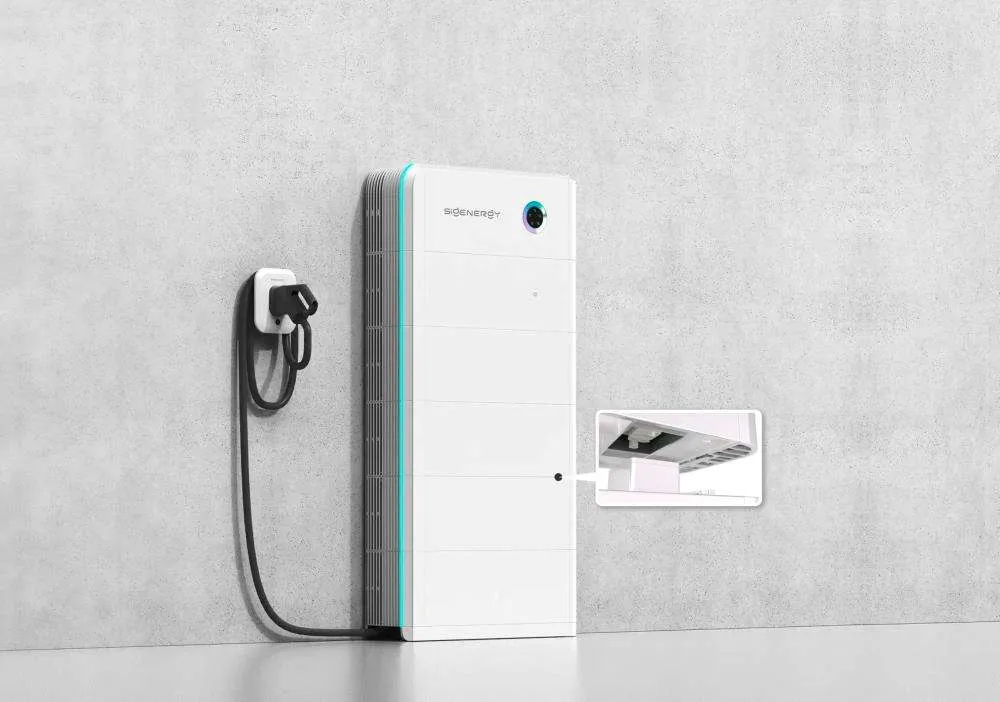
A smart charger communicates with your solar system to optimise charging times — drawing maximum power during peak solar generation and minimising draw during expensive grid periods. Sunollo's Abundance Pro system includes integrated EV charging that coordinates with the solar panels, battery, and LiveTrack monitoring app for fully automated energy management.
The Complete Energy Independence Stack
The most transformative configuration is solar panels + battery storage + EV charging + smart energy management. Here is how the components work together:
- Morning (7–10am): Solar panels begin generating. House loads powered directly by solar. Surplus charges the battery.
- Midday (10am–3pm): Peak solar generation. Battery reaches full charge. Surplus exported to grid for NER credits.
- Afternoon (3–6pm): Solar generation tapers. House loads shift to battery power. Grid import minimised.
- Evening (6pm–12am): No solar generation. Battery powers the home. EV charges from stored solar energy.
- Overnight (12–7am): Battery covers base loads. Any shortfall from grid at low off-peak rates.
With a properly sized system — like a 15 kWp solar array with a Sunollo Abundance (18 kWh) battery — 85–95% of your total household energy needs including transport come from your own rooftop.
Explore our complete bundle savings analysis for detailed cost and ROI projections.
Costs and Financing
Battery Storage Costs (2026 Singapore)
| Capacity | 2026 Market Range | Sunollo Option |
|---|---|---|
| 5 kWh | SGD 3,500–5,500 | — |
| 9 kWh | SGD 5,000–7,500 | Sunollo Essential: SGD 6,000 |
| 10 kWh (market) | SGD 5,500–8,000 | — |
| 13–15 kWh | SGD 9,000–12,000 | — |
| 18 kWh | SGD 10,000–14,000 | Sunollo Abundance: SGD 12,000 |
| 20 kWh (market) | SGD 11,000–15,000 | — |
Battery costs have dropped 40–50% since 2023 and are projected to fall a further 15–25% by 2028. However, every month without storage is a month exporting solar at SGD 0.10/kWh instead of self-consuming at SGD 0.32/kWh. See our complete battery cost guide for detailed pricing and the payback period analysis to understand exact return timelines.
EV Charger Costs
- Level 2 charger (7 kW): SGD 1,500–3,000 (including installation)
- Smart charger with solar integration: SGD 2,500–4,500
Financing Options
Sunollo offers SGD 0 upfront financing that covers the full system including battery (Essential or Abundance) and EV charging. You pay a fixed monthly subscription starting from SGD 129/month for the complete Abundance Pro stack — panels, battery, EV charging, monitoring, and full warranty. Your monthly subscription is typically less than your current electricity bill. Read more about all financing options available in Singapore.
Energy Security: Why This Matters for Singapore
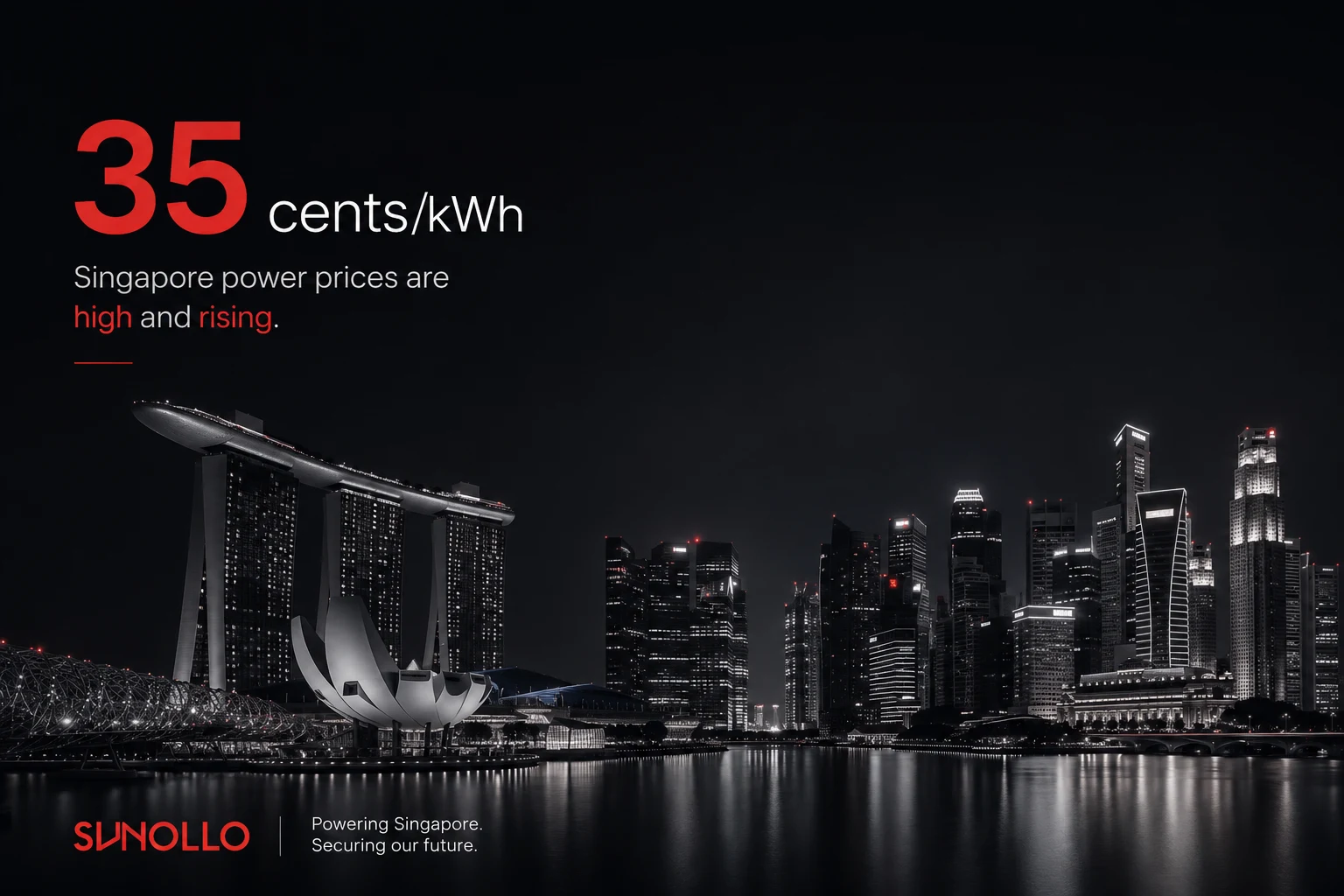
Singapore imports 95% of its energy. Natural gas arrives via pipelines and as LNG from global markets. Any disruption — geopolitical tension, supply chain breakdown, price shock — directly impacts every household. The 2026 Middle East LNG disruption has already pushed Q2 electricity tariffs significantly higher.
Distributed solar with battery storage fundamentally changes this equation. When thousands of homes each generate and store their own energy, the nation develops a resilient, distributed energy grid that no single point of failure can bring down. Your Sunollo Essential or Abundance battery is not just a personal asset — it is a cell in Singapore's collective energy immune system.
Getting Started
Whether you are adding storage to an existing solar system or planning a complete new installation, the process starts with understanding your energy consumption patterns and goals.
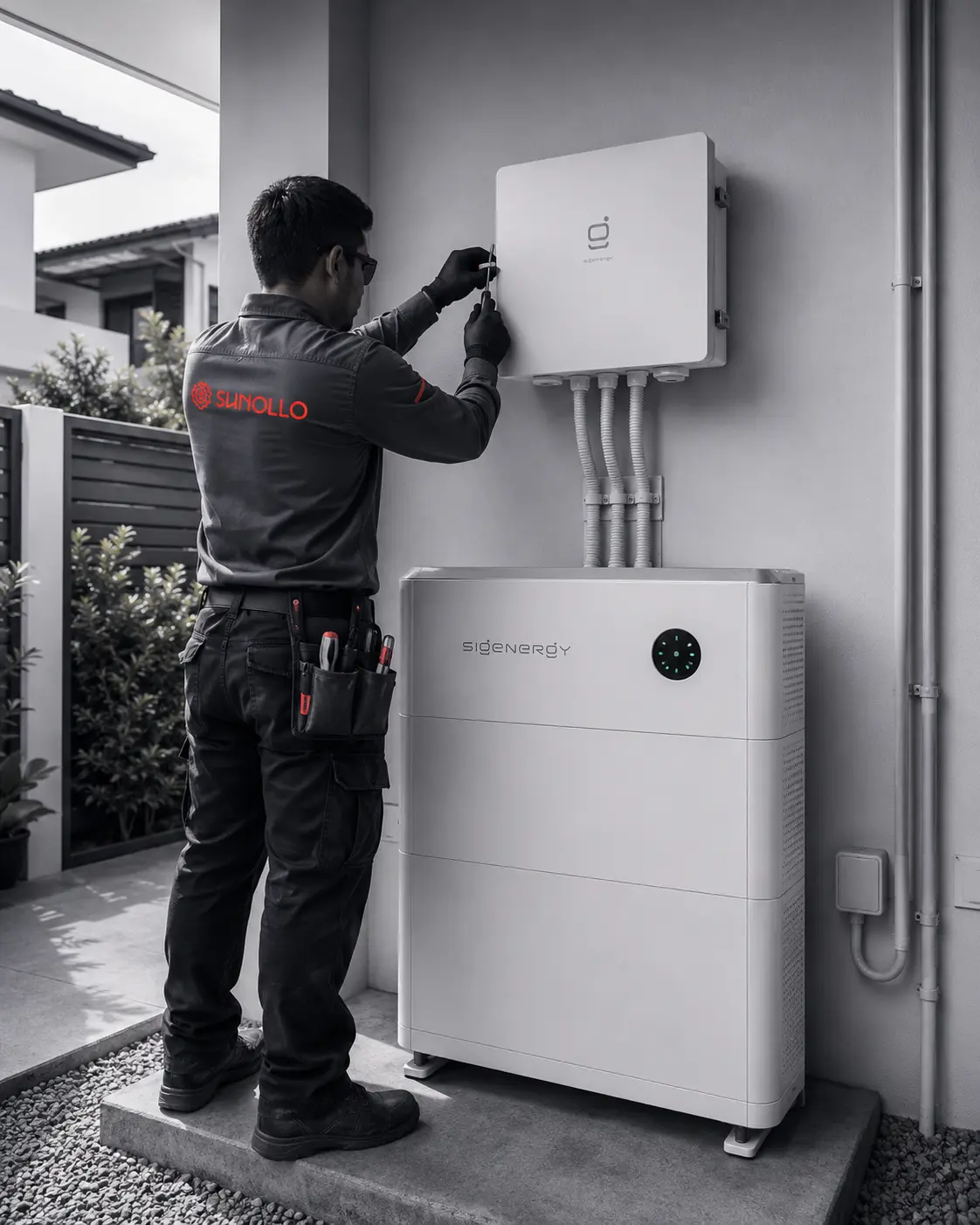
Book a free consultation with Sunollo. We will analyse your electricity usage, assess your property, and recommend the right battery — Essential or Abundance — for your specific needs. Already have solar? We retrofit both Sunollo batteries to most existing systems. Already have an EV? We will show you exactly how much you save by charging it from stored solar.
Continue reading: Battery Cost Guide 2026 | Battery Payback Analysis | Complete Battery Guide | Solar Panel Cost Guide 2026 | Compare Sunollo Packages
Frequently Asked Questions
Can I charge my electric vehicle directly from solar panels in Singapore?
Yes, you can charge your EV using solar energy. During the day, your solar panels generate electricity that can power your EV charger directly. With a battery storage system, you can also store excess solar energy generated during the day and use it to charge your EV in the evening or overnight, maximising your use of free solar electricity and minimising reliance on the grid.
What size battery do I need to charge an EV with solar power?
The battery size depends on your EV's daily driving distance and energy consumption. Most EVs in Singapore consume approximately 15 to 20 kWh per 100 km. For a typical daily commute of 40 to 60 km, you would need roughly 6 to 12 kWh of stored energy. The Sunollo Essential (9 kWh) covers most daily commuting needs, while the Sunollo Abundance (18 kWh) provides enough capacity for both household evening usage and EV charging.
How much does it cost to charge an EV with solar versus the grid in Singapore?
Charging an EV from the grid at current Singapore electricity rates costs approximately SGD 0.30 to SGD 0.35 per kWh, which works out to about SGD 45 to SGD 70 per month for typical driving. Charging the same EV from solar energy is effectively free once the system is paid off, saving you SGD 500 to SGD 800 per year on transport fuel costs alone. Combined with household electricity savings, the total value proposition becomes very compelling.
When is the best time to charge my EV if I have solar panels?
The optimal charging time depends on your setup. If you have solar panels without a battery, the best time to charge is during peak solar generation hours (typically 10 AM to 3 PM) when your panels are producing the most electricity. If you have a battery storage system, you can charge your EV anytime since stored solar energy is available around the clock. Many EV owners with batteries prefer overnight charging when household demand is lowest.
Do I need a special EV charger to use solar energy?
No, any standard EV charger compatible with your vehicle will work with solar energy. The electricity from your solar panels and battery feeds into your home's electrical system, and the EV charger draws from that same supply. However, a smart or controllable charger is recommended so you can schedule charging during peak solar hours or when your battery is fully charged, maximising the use of solar energy over grid electricity.
Can my solar system power both my home and my EV?
Yes, a properly sized solar system can power both your home and your EV. The key is to size the system to account for both household consumption and EV charging needs. In Singapore, a typical landed home with an EV may need a solar system of 8 to 15 kWp, combined with a battery of 9 to 18 kWh. Sunollo designs systems that account for your total energy profile, including EV charging, to ensure maximum self-sufficiency.
What is the payback period for a solar-plus-battery-plus-EV setup?
The combined payback period for a solar-plus-battery system that also charges an EV is typically 5 to 8 years, depending on system size, electricity tariff, and driving habits. The EV charging savings accelerate the payback because you are effectively replacing petrol or grid electricity costs with free solar energy. Over a 25-year panel lifespan, the total savings including both electricity and transport fuel often exceed SGD 100,000 to SGD 150,000.