What Changed in Q3 2026
On 30 June 2026, SP Group announced that the regulated electricity tariff for households would rise 17.0% for the period 1 July to 30 September 2026 — an increase of 4.64 cents per kWh, taking the tariff to 31.91 cents per kWh before GST (SP Group tariff revision notice). The overall tariff, including non-households, rose 17.5%.
This is not just another quarterly adjustment. As CNA reported, an EMA spokesperson confirmed this is the highest electricity price in Singapore's history — surpassing the previous record of 30.45 cents per kWh set in the fourth quarter of 2008. The Straits Times notes the average four-room HDB household will pay about S$17.14 more per month before GST; larger landed homes with air-conditioning and EV charging will feel several times that.
| Quarter | Household tariff (before GST) | With 9% GST | Change |
|---|---|---|---|
| Q1 2026 (Jan–Mar) | 26.71¢/kWh | 29.11¢/kWh | — |
| Q2 2026 (Apr–Jun) | 27.27¢/kWh | 29.72¢/kWh | +2.1% |
| Q3 2026 (Jul–Sep) | 31.91¢/kWh | 34.78¢/kWh | +17.0% — record high |
Sources: SP Group quarterly tariff revisions; GST-inclusive figure as reported by CNA. The previous all-time peak was 30.45¢/kWh in Q4 2008.
What the Government Is Actually Saying
The signals from the authorities have been consistent and unusually direct:
- EMA, 31 March 2026 (official media factsheet): “Given the extensive disruptions to oil and natural gas production in the Middle East, fuel prices are expected to remain elevated in the foreseeable future. Consequently, we are likely to see further and potentially sharper increases in the electricity and town gas tariffs in subsequent quarters.” (EMA factsheet, PDF)
- Dr Tan See Leng, Minister-in-charge of Energy, warned earlier this year that the July–September tariff would see “significantly sharper increases” because of how Singapore's regulated tariff is calculated (CNA Explains).
- DPM Gan Kim Yong confirmed in a ministerial statement in Parliament on 7 April 2026 that the July adjustment was expected to reflect higher fuel costs fully.
- EMA has also urged consumers to be prepared for “higher and more volatile energy costs”, noting that about 95% of Singapore's electricity is generated from imported natural gas.
To be fair and complete: EMA also said on 30 June that if the Middle East situation improves, tariffs may ease in Q4 2026. Nobody can predict fuel markets. But the structural picture is unchanged — Singapore imports nearly all of its generation fuel, the tariff resets every quarter, and the only part of your electricity cost you fully control is how much of your own roof's energy you keep.
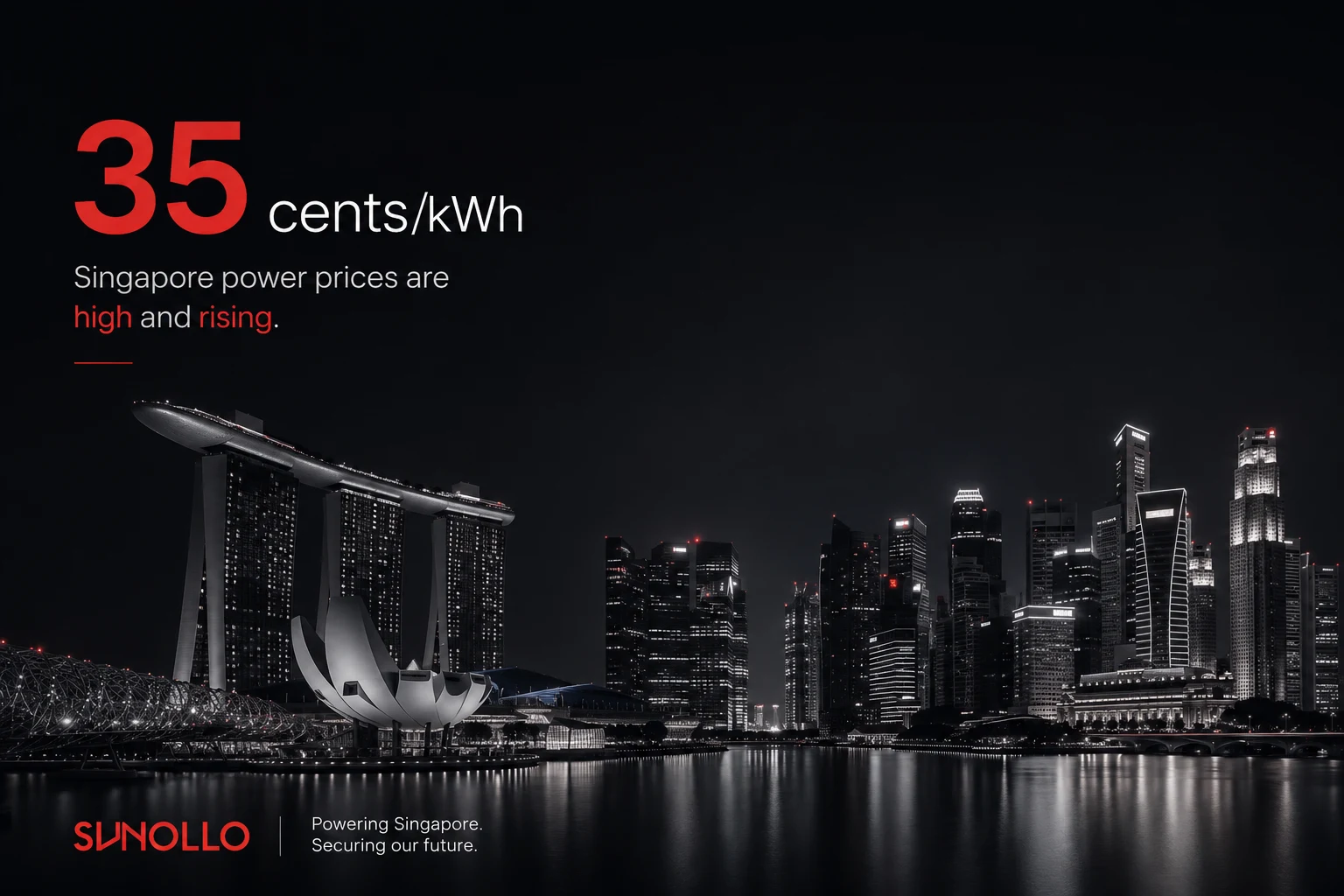
The 35-Cent Reality: GST Makes It Worse Than the Headline
Most coverage quotes the before-GST tariff. Your bill doesn't work that way. Every kWh you import is charged 9% GST on top — at Q3 2026 rates that is 2.87 cents of tax on every single kWh, taking the real price you pay to 34.78 cents per kWh.
Here is the asymmetry almost nobody talks about: you pay GST on the electricity you buy, but you do not receive GST on the electricity you sell back. Export credits are calculated off the energy value only. Which means every time the tariff rises, the tax wedge on imported electricity rises with it — and the case for consuming your own solar energy instead of exporting it gets mechanically stronger.
The Export Gap: What You Are Really Paid to Sell Back
Singapore has no 1:1 net metering. What you are paid for exports depends on who supplies your electricity (full details in our Net Energy Rebate guide):
| Your situation | Export scheme | What you're paid | What imports cost you | The gap |
|---|---|---|---|---|
| Buying from SP Group (62.8% of households) | Simplified Credit Treatment (SCT) | Prevailing tariff minus grid charge — roughly 25–26¢/kWh at Q3 2026 rates | 34.78¢/kWh with GST | ~9–10¢/kWh |
| Buying from an OEM retailer (37.1% of households) | Enhanced Central Intermediary Scheme (ECIS) | Wholesale-linked (USEP) — monthly averages more than doubled from 9.5¢/kWh (Dec 2025) to 20.6¢/kWh (1–25 Jun 2026, NEMS data) | ~27.5¢/kWh on typical 24-month fixed plans (incl GST) | ~11¢/kWh or more |
Sources: EMA payment schemes; NEMS half-hourly USEP market data, Jan–Jun 2026 (Energy Market Company); EMA price-comparison data reported by CNA, July 2026. Household supply mix as of 1 June 2026 per EMA.
Two honest observations from that table:
First — selling back is actually getting better. The same gas prices pushing your tariff up also push the wholesale USEP up. NEMS half-hourly market data shows the monthly average rising every quarter of 2026: S$118.6/MWh in January, S$160.4 in March, S$194.5 in April, and S$206.1/MWh over 1–25 June — more than double December 2025's S$95.1/MWh. Wholesale prices even spiked to S$1,208/MWh (S$1.21 per kWh) in a single half-hour on 18 May 2026, and 14 separate days in the first half of 2026 saw half-hours above S$500/MWh. For households on OEM retail plans under ECIS, export compensation is meaningfully better than it was a year ago. SCT credits also rise automatically with the tariff. If you have solar, register for export payment — our OEM electricity plan guide for solar homes covers how to pick the right supply plan around it.
Second — even improved, exporting still loses to self-consumption by around 10 cents on every kWh, on every scheme. The gap is structural: grid charges and GST apply to what you buy, not to what you sell. No supply plan closes it. Only one device does: a battery that stores your midday surplus and serves it back to your own home in the evening — at a value of 34.78 cents per kWh instead of 25 or 16.
Third — the market itself prices your exports at the cheapest hours of the day. Across January to June 2026, the wholesale price averaged S$147/MWh during the 10:00–16:00 solar window — when solar homes export — but S$185/MWh during the 19:00–23:00 evening peak, when those same homes buy back from the grid. That is a 26% premium on evening energy, visible in the market data every single day. Without storage, a solar home systematically sells low at noon and buys high at night. A battery is, quite literally, arbitrage on that curve — and the curve is published by the Energy Market Company for anyone to verify.
The Battery Flip
Three curves crossed this quarter, and this is why we believe Q3 2026 will be remembered as the moment home battery economics flipped in Singapore:
- Grid electricity hit an all-time high — 34.78¢/kWh with GST, with the energy regulator itself having warned of “further and potentially sharper increases.”
- Battery hardware hit an all-time low. Global average lithium battery pack prices have fallen roughly 90% since 2013 and reached record lows in BloombergNEF's latest annual survey. In Singapore, a residential battery added at the time of a new solar installation now costs about S$8,000–S$20,000 for 5–20 kWh.
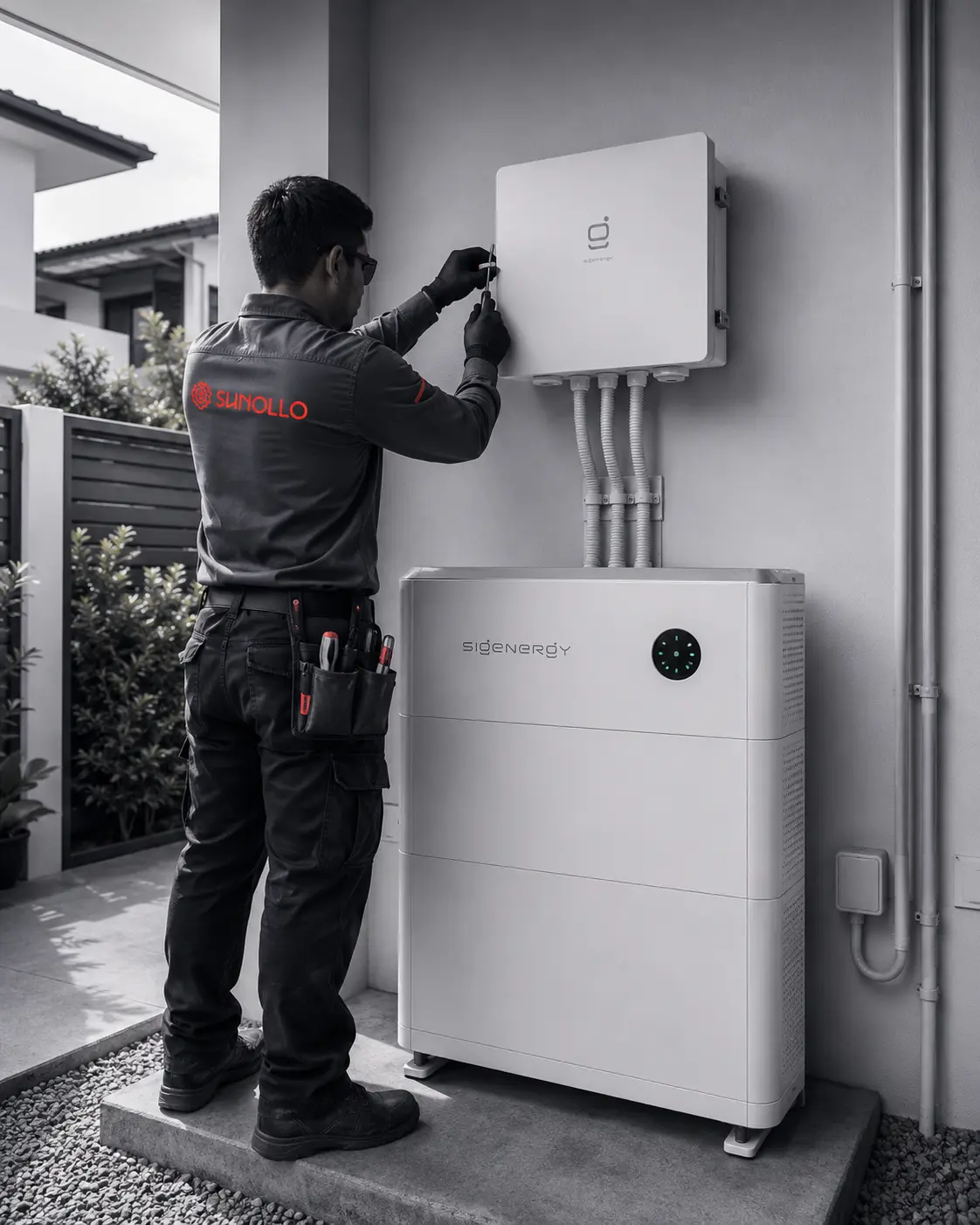
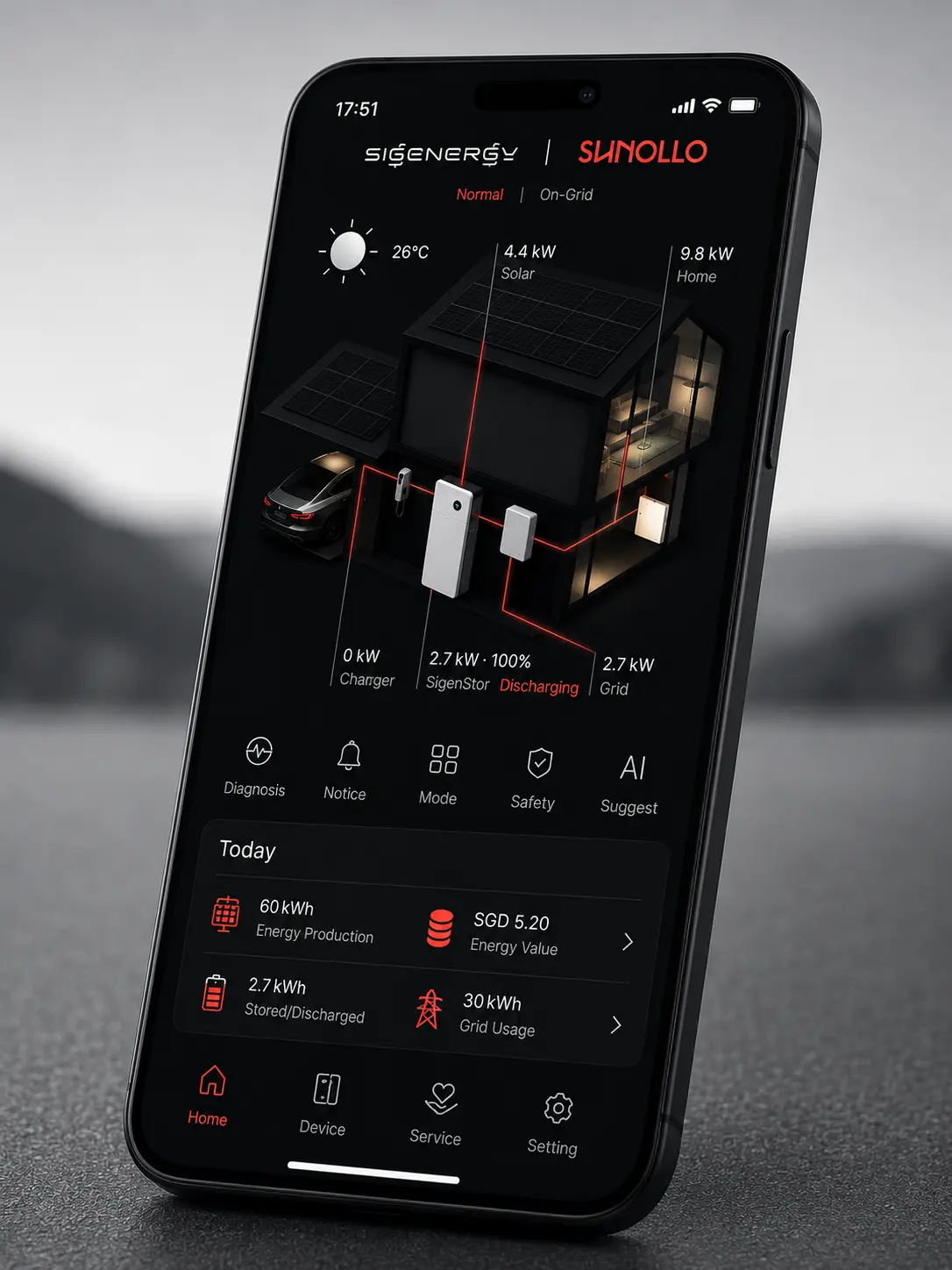
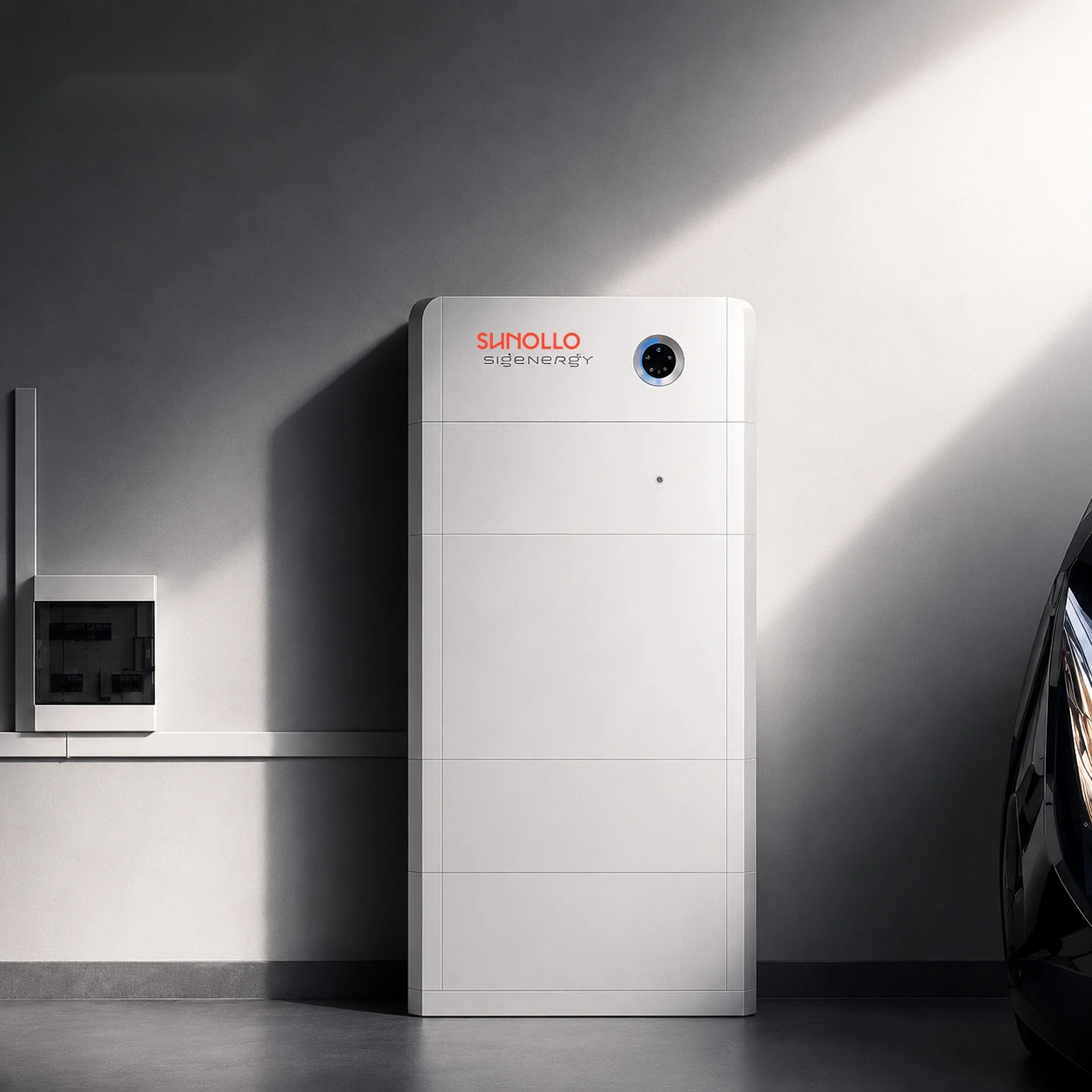
- Integration costs collapsed. Five-in-one systems — inverter, battery, storage converter, EV charger and energy management in one unit — remove most of the extra electrical work that used to make storage expensive to add. This is the product category behind Sunollo's strategic partnership with Sigenergy, the world's #1 stackable all-in-one home battery brand by shipments, signed at SNEC 2026 — before this quarter's tariff record made the logic obvious.
A battery in a Singapore home earns its keep in five ways at once — and the Q3 2026 tariff raised the value of every single layer:
| Value layer | How it works | What Q3 2026 did to it |
|---|---|---|
| 1. Export-gap recovery | Midday surplus is stored and used in the evening at full import value instead of being exported at a discount | Gap grew to ~10¢/kWh as GST scales with the record tariff |
| 2. Evening coverage | Without storage, solar does nothing after sunset — evening air-conditioning, cooking and laundry run at the full 34.78¢ | Every stored kWh is now worth a record amount |
| 3. EV charging from sunshine | An EV charged overnight from stored solar avoids both peak-rate grid charging at home and public charging rates | Grid and public charging costs both track the tariff upward |
| 4. Blackout backup | Essential circuits stay on during outages | Unchanged — but it comes free with the economics |
| 5. Tariff-inflation hedge | Stored self-consumption is immune to quarterly tariff resets | EMA's own guidance: prepare for “higher and more volatile energy costs” |
Put together: for evening-heavy households — and especially the fast-growing group that charges an EV at home — a right-sized battery added to a new solar installation now models to a payback of roughly 6–9 years, inside the typical 10-year battery product warranty. In the 2023–2024 tariff environment the same battery modelled to 12–15 years or more. That crossing — payback moving inside the warranty — is the flip. Size yours with our battery sizing guide.
A Homeowner's Numbers: What Saving Actually Looks Like
The following is a modelled example using typical parameters from Sunollo's installed fleet and Q3 2026 rates — not a specific customer. We will be publishing named battery-owner case studies from the Sunollo fleet in the coming months.
Take a semi-detached family home: five people, two air-conditioned floors, one EV, using about 1,400 kWh a month. At Q3 2026 rates that is roughly S$487 a month — about S$5,840 a year — on the regulated tariff.
| No solar | 12 kWp solar only | 12 kWp solar + 16 kWh battery | |
|---|---|---|---|
| Solar energy used at home | — | ~55% of production | ~90% of production |
| Evening/night supply | Grid at 34.78¢ | Grid at 34.78¢ | Mostly stored solar |
| Surplus | — | Exported at ~25¢ | Small export remainder |
| Approx. annual benefit | — | ~S$3,500–S$4,000 | ~S$4,700–S$4,900 |
Around S$4,900 a year, and the part people miss: this is money you never had to earn. Salary is taxed before it reaches your bank account; electricity you avoid buying is not — and it dodges the 9% GST too. To bank S$4,900 of after-tax savings from employment income, you would need to earn meaningfully more than S$4,900 gross. A bill you don't pay is the cleanest income there is — and it repeats every year for the 25-year life of the system, growing every time the tariff does.
On upfront cost: a system in this class (12 kWp plus 16 kWh storage) sits in the range of S$25,000–S$29,000 all-in — a modelled payback of under six years, followed by roughly two decades of production. And with Sunollo's $0-upfront plans and financing terms of up to 15 years — the longest in the market — the monthly saving can exceed the monthly payment from the first bill.
Why Most Solar Companies Still Say No to Batteries
Here is the uncomfortable part for the industry: most solar installers in Singapore still discourage batteries, quote them reluctantly, or don't offer them at all. The reasons are usually structural — a standard string inverter cannot accept a battery without being replaced, storage requires brand partnerships, trained installers and monitoring infrastructure that a lean contracting operation doesn't carry, and a battery conversation makes a quote look bigger even when the economics favour the homeowner.
Sunollo took the opposite bet years ago: every Sunollo inverter is battery-ready as standard — across Radiance, Abundance and Abundance Pro — so every customer can add storage later without replacing core equipment. That is also why we signed the Sigenergy MoU at SNEC 2026: when battery economics flipped, we wanted Singapore homes already standing on the right side of the line. If your system was installed by someone else and batteries were never on the menu, read My Solar Installer Doesn't Offer Batteries — What Now?
All the raw data behind this article is freely citable from the Singapore Solar & Electricity Data Hub — tariff history, USEP spreads, irradiance, and capacity, CC-BY-4.0 licensed.
What To Do Now
- If you already have a Sunollo system: your inverter is battery-ready. A storage assessment takes one conversation — contact us and we'll model your actual export data.
- If you have solar from another installer: a battery can still be added — the route depends on your inverter. Start with this guide.
- If you don't have solar yet: at 34.78¢/kWh, the payback on solar alone is the strongest it has ever been — see current pricing — and specifying a battery (or at minimum battery-ready hardware, which Sunollo includes as standard) costs the least when done at install time.
- Go deeper: battery technology guide, blackout backup guide, how solar cuts your SP bill, and the Abundance Pro package with battery and EV options built in.
Frequently Asked Questions
What is Singapore's electricity tariff for Q3 2026?
31.91 cents per kWh before GST for households (1 July – 30 September 2026), or 34.78 cents including 9% GST. It rose 17% from Q2 and is the highest tariff in Singapore's history, exceeding the previous peak of 30.45 cents set in Q4 2008. Source: SP Group tariff revision, 30 June 2026.
Will electricity prices in Singapore keep rising?
EMA said in March 2026 that consumers are “likely to see further and potentially sharper increases” in subsequent quarters, and has urged consumers to prepare for “higher and more volatile energy costs.” It also noted in June that Q4 tariffs may ease if the Middle East situation improves. The structural exposure is unchanged: about 95% of Singapore's electricity comes from imported natural gas, and the tariff resets every quarter.
How much am I paid for solar electricity exported to the grid?
If SP Group supplies you, exports are credited at the prevailing low-tension tariff minus grid charge (Simplified Credit Treatment) — roughly 25–26 cents/kWh at Q3 2026 rates. If an OEM retailer supplies you, exports are paid at wholesale-linked (USEP) prices under the Enhanced Central Intermediary Scheme. Both pay meaningfully less than the 34.78 cents (with GST) you pay to import.
Is selling solar back to the grid getting better in 2026?
Yes — sharply. NEMS market data shows wholesale USEP monthly averages more than doubled from S$95.1/MWh in December 2025 to S$206.1/MWh over 1–25 June 2026, lifting ECIS export payments, and SCT credits rise automatically with the tariff. But the gap between export value and import cost — roughly 10 cents per kWh — is structural (grid charges plus GST apply only to imports), and exports flow at the day's cheapest hours: the 10:00–16:00 solar window averaged S$147/MWh in H1 2026 versus S$185/MWh in the evening peak. Self-consuming stored solar still beats exporting on every scheme.
What is the Battery Flip?
The point at which a home battery's payback moved inside its 10-year product warranty for typical evening-heavy Singapore households — reached in Q3 2026 when the record 34.78¢/kWh all-in tariff met record-low battery hardware prices and integrated five-in-one systems.
How much does a home battery cost in Singapore in 2026?
Residential batteries of 5–20 kWh cost about S$8,000–S$20,000 when added at the time of a new solar installation. Retrofitting to an existing system typically costs 30–40% more, unless the inverter is already battery-ready — which every Sunollo inverter is, as standard.
What size battery do I need?
Most landed homes land between 10 and 20 kWh depending on evening consumption and EV charging. See our battery sizing guide for a property-by-property breakdown.
Are solar and battery savings taxed?
Electricity you avoid buying is simply money not spent — there is no income tax on avoided bills, and you also avoid the 9% GST charged on every imported kWh (2.87 cents per kWh at Q3 2026 rates). This is why a dollar of solar savings is worth more than a dollar of gross salary.
Which battery brands does Sunollo install?
Sunollo works with Sigenergy (strategic MoU signed at SNEC 2026), Tesla, BYD, Huawei and Enphase, matched to your system size, backup needs and EV plans.
Can I add a battery to a solar system installed by another company?
Usually yes — via an AC-coupled battery, or a hybrid-inverter upgrade if your current inverter isn't battery-ready. Sunollo assesses and adds storage to existing systems regardless of who installed them. Full details: My Solar Installer Doesn't Offer Batteries — What Now?