The bottom line: Sunollo Abundance Pro is the integrated solar + battery + EV-ready package for Singapore homes — AIKO ABC panels, SolarEdge EnergyHub inverter, 10–15 kWh battery, and EV charger compatibility from S$129/month with S$0 upfront. It delivers 85–95% bill reduction, automatic backup during outages, and one app to manage your entire energy ecosystem. Backed by SunolloCare 25-year comprehensive warranty.
Every quarter, the electricity bill arrives. And every quarter, it is a little higher than you expected.
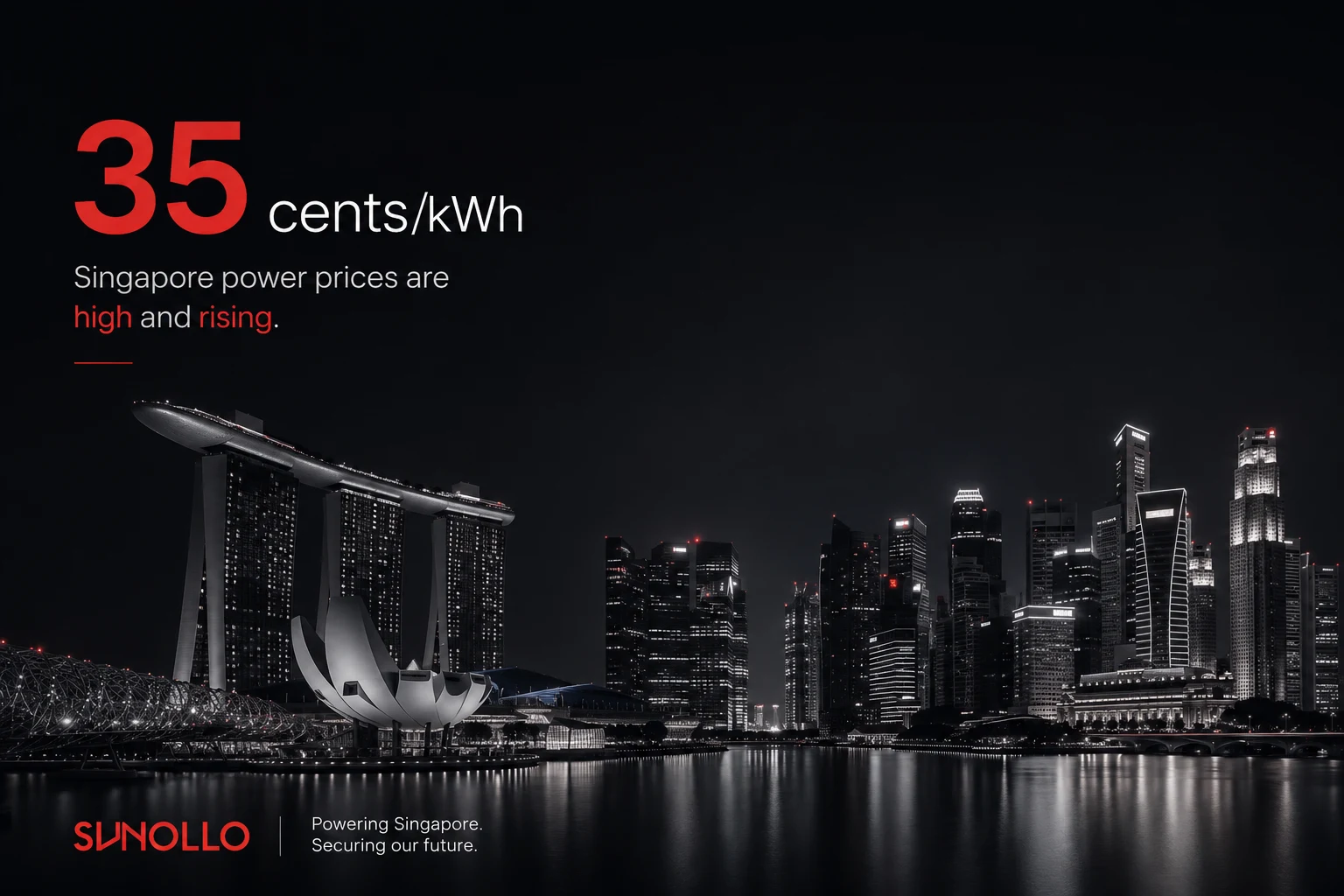
Singapore's electricity tariff has risen significantly over the past two years. With the carbon tax jumping from S$5 per tonne to S$25 per tonne in 2024 — and scheduled to climb to S$45 per tonne by 2026, then S$50–S$80 by 2030 — the direction is clear: grid electricity in Singapore is only going to get more expensive.
For homeowners who have already invested in solar, this is welcome news on the production side. But there is a question that more and more customers are asking us: should I add a battery — and if so, how do I plan it right?
This guide answers that question comprehensively. We will walk you through Singapore's changing energy economics, how to size a battery for your specific lifestyle, how electric vehicles change the equation, and why the Sunollo Abundance Pro system with integrated battery storage represents the smartest long-term energy investment a Singapore homeowner can make today.
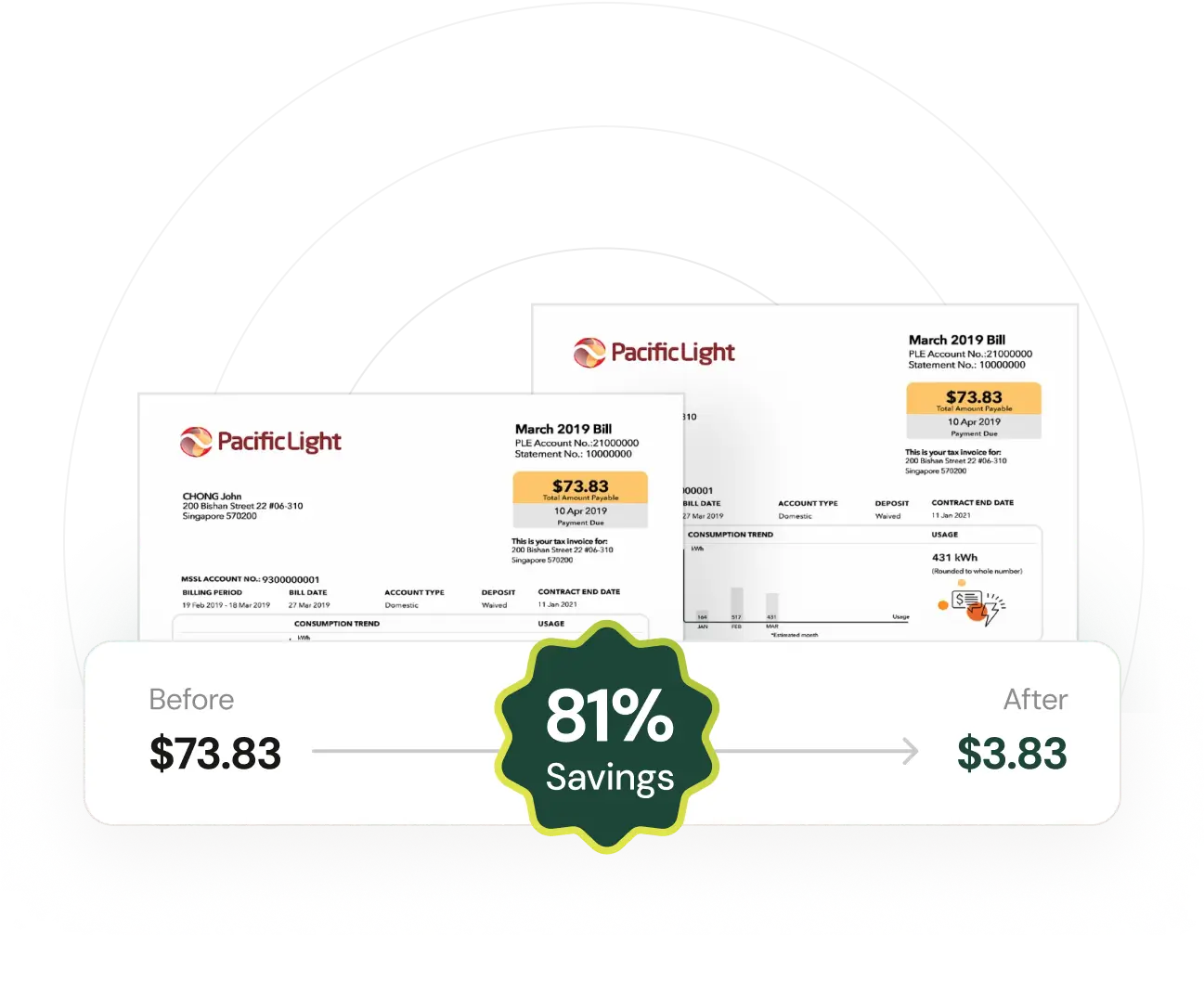
Singapore electricity tariffs are on a clear upward trend — driven by carbon tax increases, global LNG prices, and infrastructure investment.
Why Now? Singapore Electricity Prices Are Going Up
Singapore imports virtually all of its energy. We have no oil, no gas, no coal of our own. That makes us uniquely exposed to global commodity prices — and to government policy decisions designed to shift the country toward cleaner energy.
Here is what has already happened, and what is coming:
- 2024: Carbon tax raised from S$5 to S$25 per tonne of CO2
- 2026–2027: Carbon tax rises to S$45 per tonne
- 2028–2030: Target range of S$50–S$80 per tonne
- Global LNG prices continue to affect Singapore's electricity generation mix and retail tariffs
- Grid infrastructure upgrades to support EV charging and distributed solar are already being factored into future tariff structures
For the average Singapore landed property consuming 700–1,200 kWh per month, this trajectory means electricity bills could increase by 30–50% over the next five years — even with identical usage patterns and lifestyle.
Solar helps enormously. But solar alone only saves money during daylight hours. At 7pm — when the family is home, the air conditioning is running, dinner is being prepared, and the EV is plugged in — your panels are producing nothing. That is when the grid takes over, and that is when rates hit hardest.
A battery changes this entirely.
The Export Rate Problem: Why Selling Back Is Not a Strategy
Many homeowners assume that excess solar energy can simply be sold back to the grid at a favourable rate, offsetting night-time consumption costs. In Singapore, this is managed through the Enhanced Central Intermediary Scheme (ECIS), administered by SP Group.
There are two critical issues with relying on export as your primary financial strategy:
- The export rate is a policy rate, not a market rate. It is set by SP Group and can be revised — typically downward — as the grid absorbs more distributed solar. Countries including Germany, Australia, the UK, and California have all seen dramatic cuts to solar export compensation as penetration grew. Singapore is following the same adoption curve.
- Time-of-use mismatch. Your panels produce the most energy at noon, when your home consumption is at its lowest. You export at the cheapest time and import at the most expensive time — an economic double-disadvantage that compounds with every tariff increase.
The solution is elegant: use your solar energy yourself, at peak hours, by storing it in a battery. Every kWh you consume from your own battery instead of the grid is worth the full retail tariff rate — not the reduced export rate. Self-consumption is always worth more than exporting. This gap widens as tariffs rise.

Battery storage shifts your consumption from expensive grid power to your own solar energy — maximising the return on every panel you have installed.
How a Battery Transforms Your Energy Economics
A home battery system works by capturing excess solar energy during the day and making it available when your panels are not producing — typically from dusk until the following morning.
Paired with a hybrid inverter (like the Sungrow hybrid inverters used in our Abundance Pro system), the battery does several things simultaneously:
- Charges automatically from excess solar during daylight hours
- Discharges to power your home from sunset onwards, seamlessly and silently
- Keeps essential circuits running during a grid outage — blackout protection included
- Can be configured to charge from grid at off-peak rates as a supplementary option
- Communicates with your EV charger to coordinate smart, priority-based charging schedules
The result: a household that previously imported 60–70% of its electricity from the grid can reduce that dependence to 10–20%, or even lower in sunny months. Your utility bill does not disappear entirely — but it becomes a fraction of what it was.
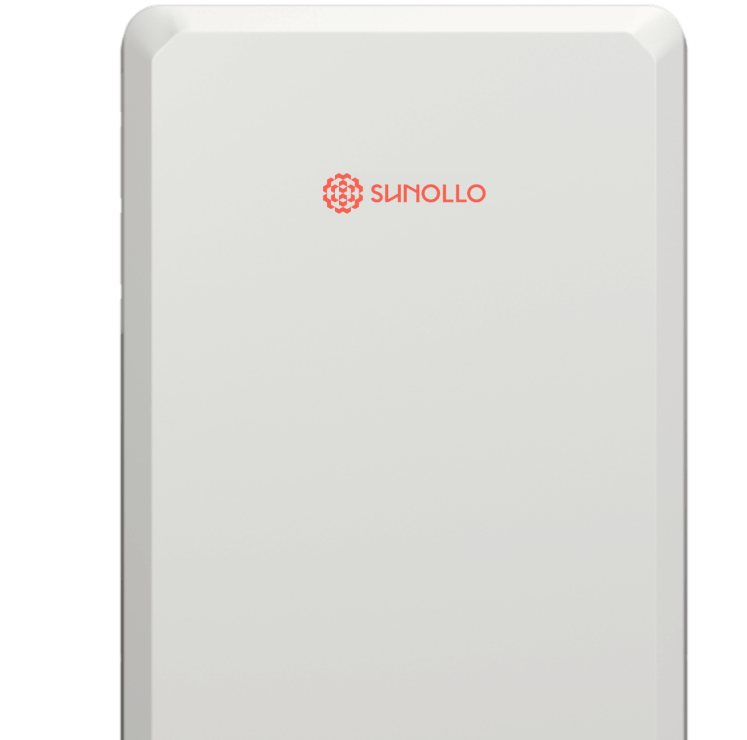
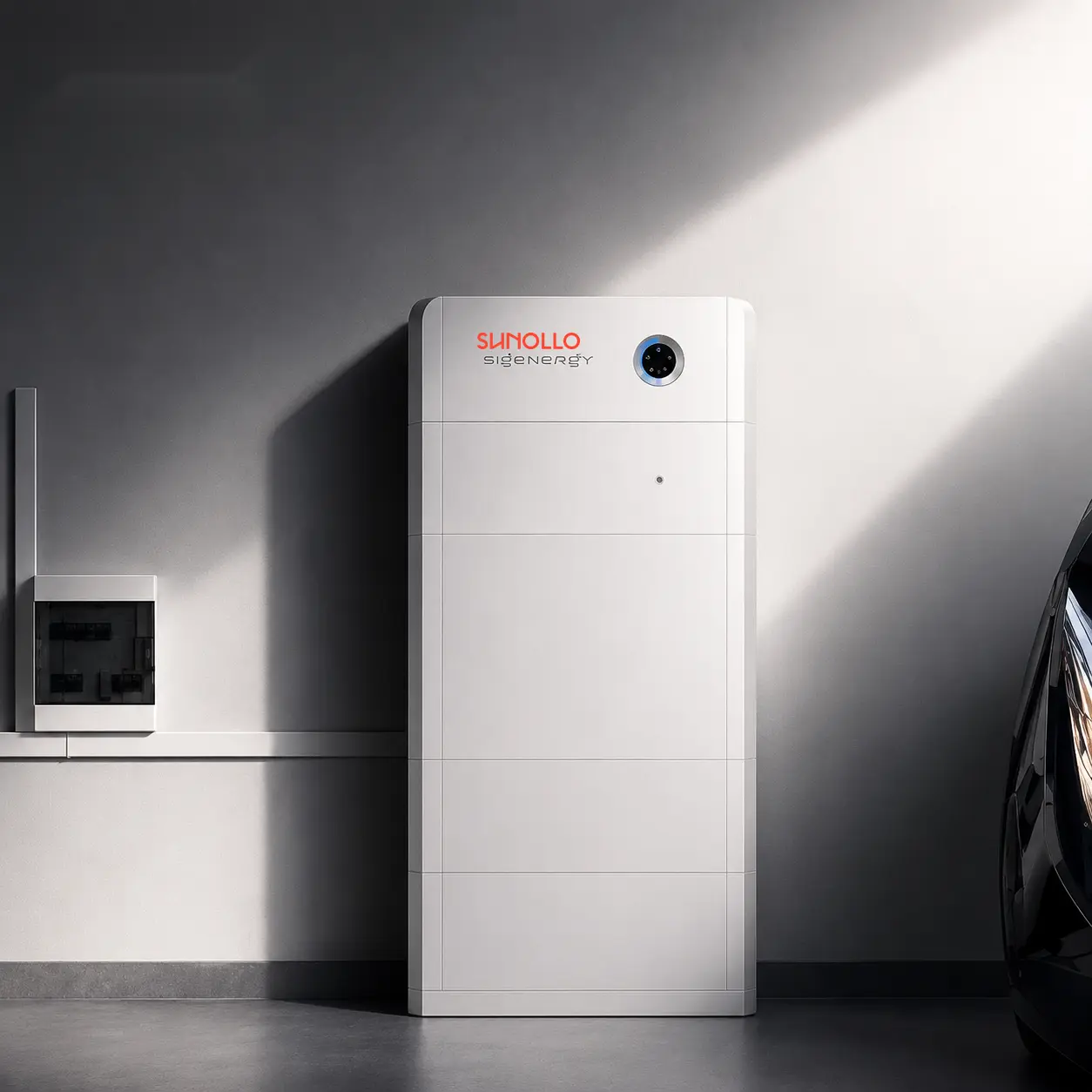
The Sungrow LFP battery: modular, tropical-climate rated, and designed to pair seamlessly with the Abundance Pro hybrid inverter system.
Planning Your Battery: How Much Do You Actually Need?
Battery sizing is deeply personal. A household of two adults with modest air conditioning needs looks entirely different from a family of five with multiple aircon units running overnight and an EV in the driveway. Here is how to think through it systematically.
Step 1: Understand Your Evening Energy Load
Your battery needs to cover the hours when your panels are not producing — roughly 6:30pm to 7:00am in Singapore (approximately 12–13 hours). Your evening load is everything running in that window:
- Air conditioning: A typical 18,000 BTU inverter aircon unit consumes approximately 1.2–2.0 kWh per hour. Two units running for 8 hours overnight = 19–32 kWh
- Kitchen, lighting, entertainment: TV, cooking, refrigerator, lights — typically 2–4 kWh overnight
- Water heater: Instant heaters have low draw; storage water heaters consume 2–4 kWh per cycle
- Pool pump or water features: 1–3 kWh depending on equipment size and scheduled runtime
Total evening load for a typical Singapore landed property: 15–40 kWh. Your battery will not necessarily cover all of this — the goal is to cover enough to make a meaningful, measurable reduction in your grid import each night.
Step 2: Factor In Your EV
An electric vehicle adds a substantial new energy demand — but also a significant new opportunity. A typical EV consumes approximately 0.18–0.22 kWh per kilometre. For an average Singapore driving distance of 40–60 km per day:
- Daily EV charging requirement: 7–13 kWh
- Weekly EV charging requirement: 50–90 kWh
- Monthly EV energy cost at current grid rates: S$50–S$100 per month
With smart charging (via the Sunollo EV Charger integrated with iSolarCloud), your vehicle can be configured to charge exclusively from solar during the day — or from battery at night — eliminating its grid dependency almost entirely. At current petrol prices, this alone can represent S$250–S$400 per month in fuel savings.

The Sunollo smart EV charger works in concert with your solar panels and battery — automatically prioritising clean, self-generated energy for your vehicle.
Battery Sizing Quick-Reference Guide
Use this as a starting framework when planning your system:
- 5 kWh — Suitable for small terrace homes or apartments with 1–2 aircon units. Covers 3–5 hours of evening load. No EV.
- 10 kWh — Recommended for a semi-detached or terrace home with 2–3 aircon units. Covers most evening load. Handles an EV with daily drives under 50 km.
- 15 kWh — Ideal for larger landed properties with 3–4 aircon units and an EV. Achieves near-full evening grid independence in most months.
- 20 kWh+ — For large GCBs, pool pumps, high-consumption households, or homes with two EVs. Designed for near-total grid independence.
All Sunollo battery systems are fully modular. You can start with one 10 kWh unit today and expand with an additional unit in year 2 or 3 as your energy needs — or your EV fleet — grows. The hybrid inverter supports this expansion without any hardware changes.
The Abundance Pro Ecosystem: Built for Total Energy Control
The Sunollo Abundance Pro system is not simply a solar installation with a battery bolted on. It is an integrated energy management platform — engineered from the ground up to work as a single, intelligent ecosystem.

Abundance Pro is built for what comes next: a fully integrated energy ecosystem for the modern Singapore home.
The complete Abundance Pro ecosystem with battery includes:
- AIKO All Back Contact (ABC) Solar Panels — the highest-efficiency residential panels available in Singapore, delivering up to 23.9% module efficiency. More energy from the same roof area means more solar available to fill your battery every day.
- SunMax Power Optimisers — one per panel. Panel-level maximum power point tracking ensures each panel operates at its individual peak, regardless of shading or roof angle. No single underperforming panel drags down your whole array.
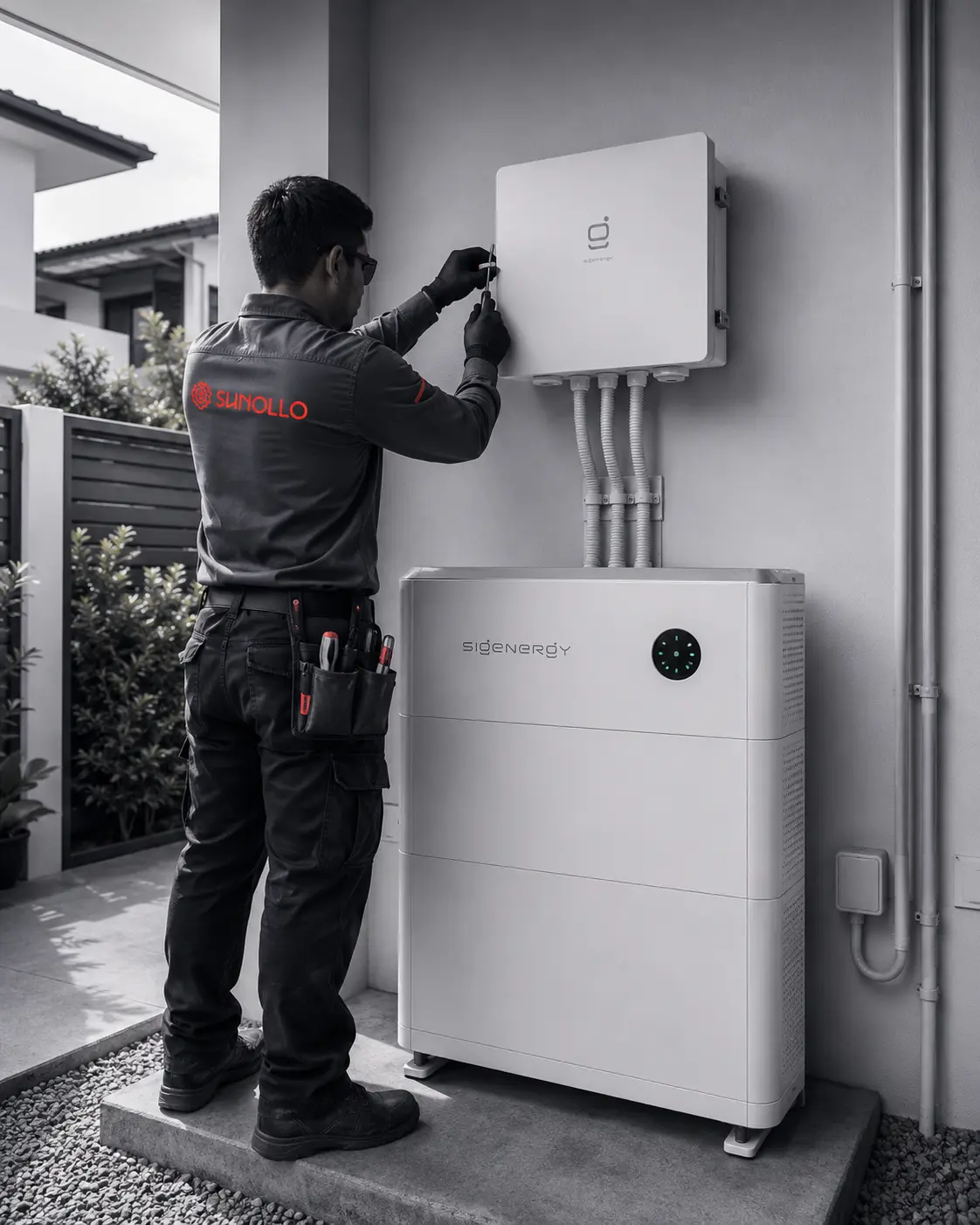
- Sungrow Hybrid Inverter — the intelligent hub of the system. This inverter manages solar input, battery charging and discharging, grid interaction, and EV coordination simultaneously and automatically. Supports both single-phase and three-phase configurations.
- Sungrow LFP Battery Storage — modular lithium iron phosphate battery units in 5 kWh or 10 kWh configurations, expandable over time. LFP chemistry delivers superior cycle life (6,000+ cycles), inherent thermal safety, and consistent performance in Singapore's tropical heat.
- Sunollo EV Charger — 7.4 kW or 11 kW AC chargers with smart scheduling and solar-priority modes. Fully integrated with iSolarCloud for autonomous, intelligent charging management.
- iSolarCloud App — real-time visibility across every panel, battery state of charge, EV charging status, and grid import/export history. Accessible from anywhere via smartphone, 24 hours a day.
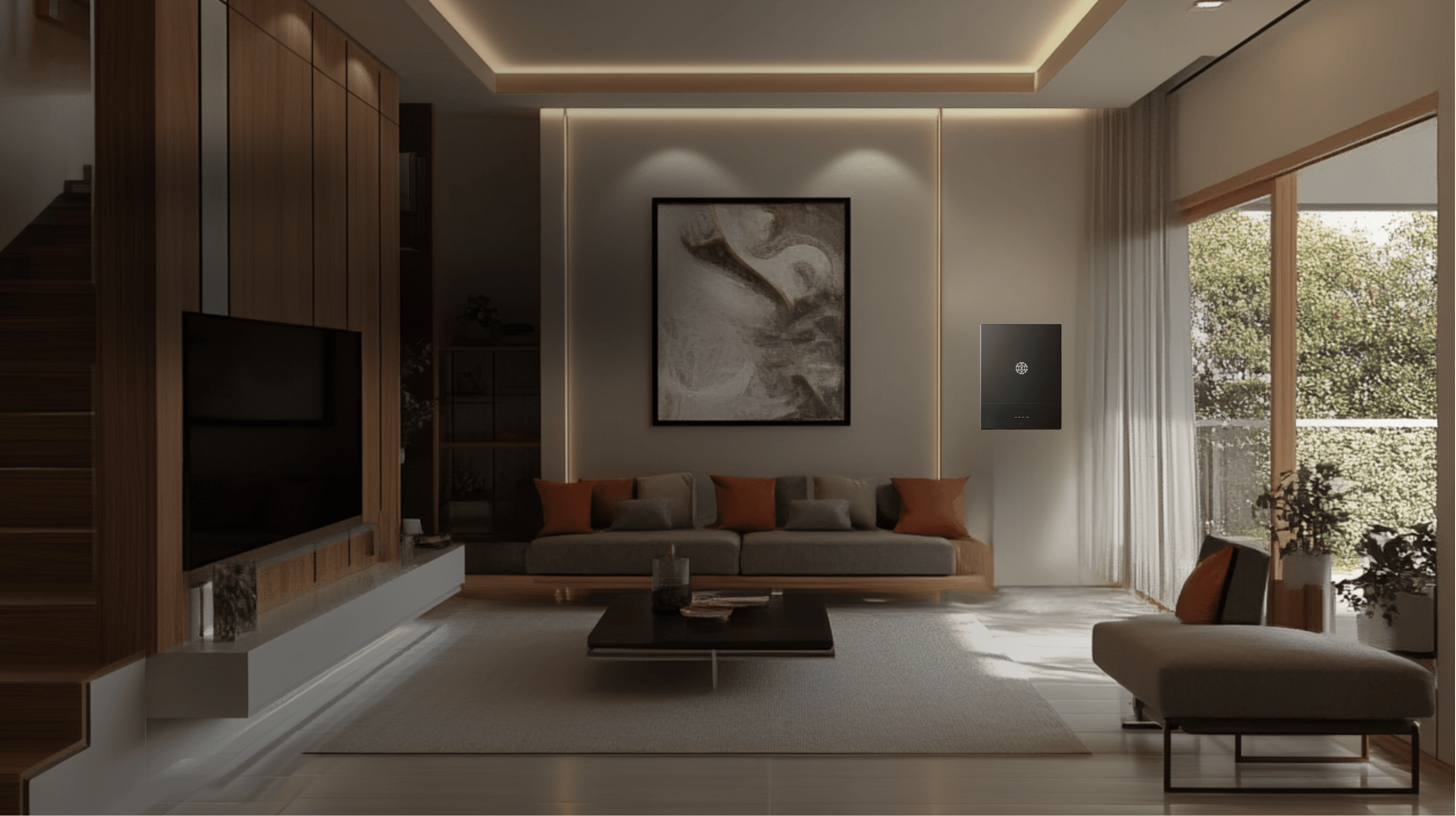
The Sunollo Energy Hub: one intelligent system managing solar generation, battery storage, home consumption, and EV charging in real time.
Why LFP Chemistry Matters in Singapore's Climate
Not all batteries are equal — and in Singapore's tropical climate, the chemistry matters significantly.
The Sungrow batteries specified for Abundance Pro use Lithium Iron Phosphate (LFP) chemistry — chosen specifically for its thermal stability and longevity in high-ambient-temperature environments. Unlike older NMC batteries, LFP does not experience thermal runaway at elevated temperatures. In Singapore's average ambient temperature of 28–33°C, this is not a theoretical concern — it is a real and practical one.
- Operating temperature range: -10°C to 50°C (designed for Singapore's conditions)
- Cycle life: 6,000+ full charge-discharge cycles — approximately 16+ years of daily use at full depth
- Depth of discharge: Up to 95% usable capacity, compared to 80% for many NMC batteries
- Safety certifications: IEC 62619 and UL 9540 certified
- No risk of thermal runaway: The safest lithium battery chemistry currently available
This is the same battery chemistry used in commercial grid-scale energy storage systems worldwide — now engineered for Singapore homes.
EV + Solar + Battery: The Smart Singapore Energy Trio
The transition to electric vehicles in Singapore is accelerating. With the government's 2030 EV goals, expanded charging infrastructure, and rising petrol costs, more homeowners are either already driving an EV or actively planning to make the switch within the next 2–3 years.
The combination of rooftop solar, home battery, and a smart EV charger creates something genuinely powerful: a closed-loop personal energy ecosystem. Here is what a typical day looks like with the full Abundance Pro system running:
- 6:30 AM: Panels begin generating. The hybrid inverter routes solar directly to home appliances — morning lighting, water heater, kitchen.
- 9:00 AM: Solar production ramps up. Battery begins charging from excess solar. EV is set to charge from solar during the day.
- 12:00 PM (Peak production): Full solar output. Home load is at its daily low. Battery charges rapidly. If battery reaches full capacity, a small amount of excess is exported to the grid.
- 4:00 PM: Battery reaches 95% state of charge. System is loaded and ready for the evening peak.
- 6:30 PM: Family comes home. Panels begin tapering off. The inverter seamlessly switches to battery discharge — no interruption, no switch, no noise.
- 7:00 PM – 11:00 PM: Air conditioning, cooking, entertainment, hot water — all powered entirely by stored solar. Grid import: zero.
- 11:00 PM: Battery at approximately 25–35% state of charge. Smart scheduling activates: EV charger uses remaining battery capacity to top up the car for the next day.
- 6:00 AM: Sun rises. Cycle repeats automatically.
On a well-optimised Abundance Pro system with a 10–15 kWh battery and a sufficient panel array, many Singapore households achieve 80–95% grid independence across the calendar year.
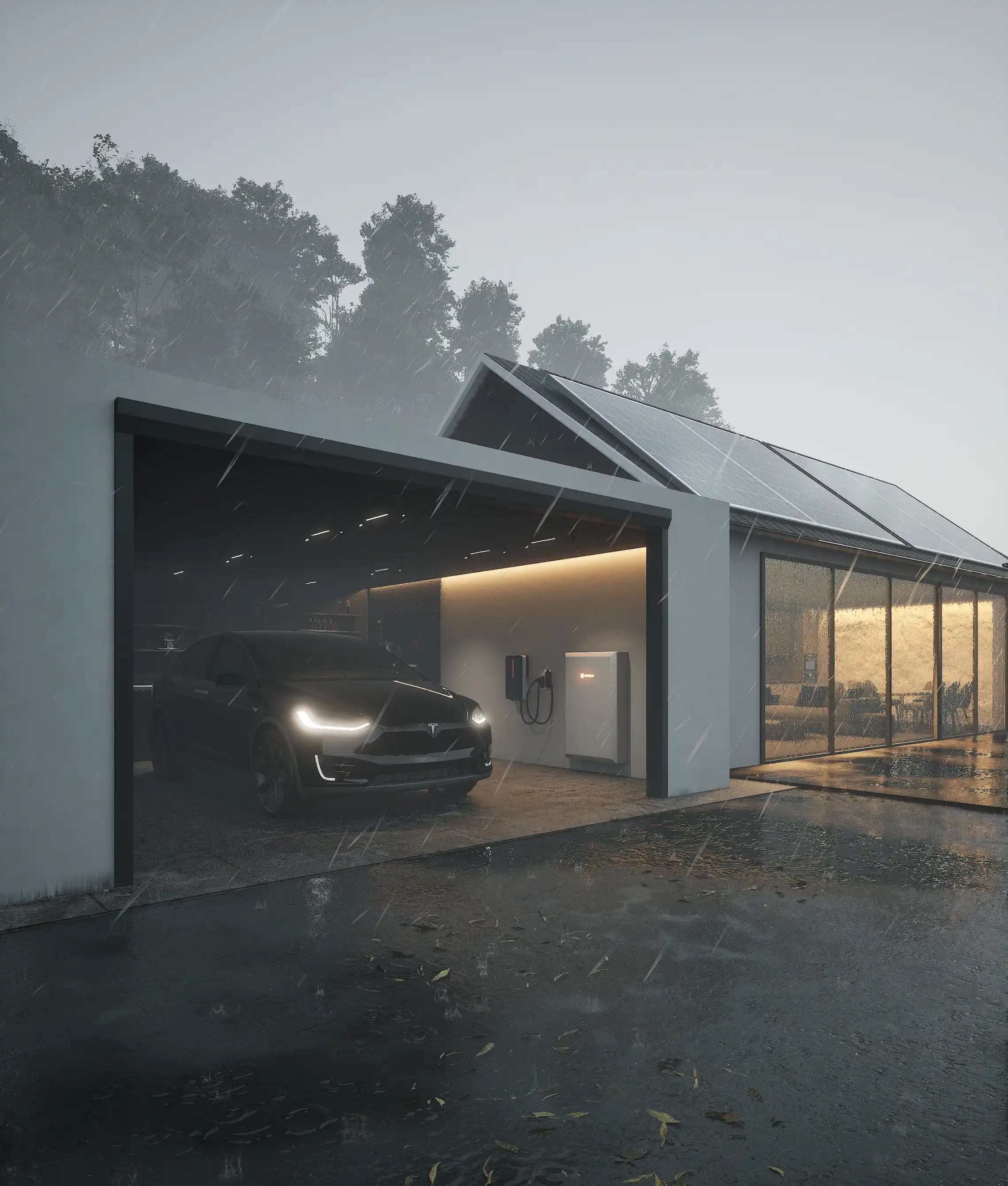
With smart EV charging integrated into the Abundance Pro system, your vehicle charges from solar during the day — turning your daily commute into a zero-cost, zero-emission journey.
Protection Against Future Export Rate Changes
This is one of the most underappreciated benefits of battery storage — and one of the most financially significant over a 10-year horizon.
Singapore's ECIS scheme currently allows homeowners to export excess solar to the grid and receive a credit from SP Group. However, this rate is a policy decision, not a market guarantee. As solar penetration across Singapore's residential sector grows — and it is growing rapidly — SP Group may adjust export compensation rates downward, just as electricity regulators have done in Australia, Germany, the UK, and California as those markets matured.
When you have a battery, you are insulated from this policy risk. Instead of exporting cheaply during the day and importing expensively at night, you consume your solar production yourself, at full retail value, regardless of what SP Group decides to do with export rates. Your financial return does not depend on government policy or utility pricing decisions.
Battery storage converts policy risk into grid independence.
It is the difference between a solar investment that works with the grid — and a solar investment that delivers returns regardless of what the grid does.
What About Power Outages?
Singapore's grid is among the most reliable in the world — but power interruptions do occur, particularly during severe weather events. For most households, a brief outage is an inconvenience. For those with elderly residents, medical equipment, or home offices, continuity is critical.
The Sungrow hybrid inverter with battery storage supports Emergency Power Supply (EPS) mode. When a grid outage is detected:
- The system isolates from the grid within milliseconds, protecting connected equipment
- Essential circuits — lighting, selected aircon, refrigerator, internet router — switch seamlessly to battery power
- If the sun is shining, your panels continue charging the battery throughout the outage
- When the grid is restored, the system reconnects and resumes normal operation automatically
With a 10 kWh battery, EPS mode typically provides 8–14 hours of essential circuit coverage — enough to comfortably ride out any typical Singapore power interruption.
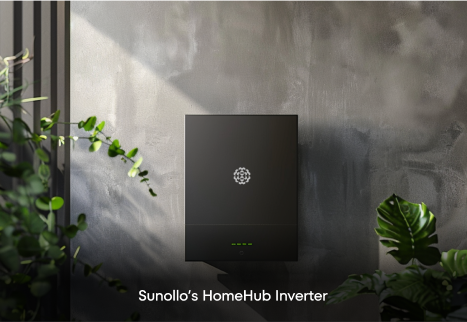
The Sungrow hybrid inverter manages solar, battery, grid, and EV loads simultaneously — and provides automatic blackout protection the moment it is needed.
The Financial Case: Returns Improve as Tariffs Rise
Let us look at the numbers honestly. A typical Sunollo Abundance Pro system for a Singapore landed home, with a 10 kWh battery:
- Panel count: 15–25 AIKO ABC panels with SunMax optimisers
- Annual solar generation: approximately 12,000–20,000 kWh depending on panel count and roof exposure
- Self-consumption rate with battery: 85–92% (compared to 40–50% without storage)
- Grid import reduction: From approximately 700–1,000 kWh per month to under 100–150 kWh per month
- Annual savings at current tariff (S$0.30–0.35 per kWh): S$2,500–S$3,800 per year from electricity alone
- Additional EV savings: S$2,000–S$4,000 per year replacing petrol costs (model and mileage dependent)
As electricity tariffs increase toward 2030, the same installed system generates progressively higher returns — without any additional investment. At a conservative S$0.45 per kWh scenario for 2030, annual electricity savings on the same system exceed S$4,500–S$5,500 per year.
Combined with carbon tax-driven fuel price increases affecting petrol vehicles, the total 10-year economic benefit of the Abundance Pro system with battery is substantial — and strengthens every year.

A complete Sunollo Abundance Pro home — solar, battery, and EV working as one intelligent system to minimise grid dependency and maximise long-term returns.
Sunollo Care Package: 10 Years of Complete Protection
The Sunollo Care Package covers your entire Abundance Pro system — including the battery — for 10 years from installation.
The Care Package includes:
- Annual system health checks — a certified Sunollo technician conducts a full inspection of panels, inverter, battery modules, wiring, and mounting
- Remote performance monitoring via iSolarCloud — our technical team monitors your system and proactively alerts you if any performance anomaly is detected
- Priority service response — dedicated support line with a 48-hour on-site response commitment for any service requirement
- Warranty management — Sunollo manages all manufacturer warranty claims on your behalf, including for AIKO panels, Sungrow inverter, Sungrow battery, SunMax optimisers, and the EV charger
- Battery health verification — annual capacity verification to ensure your battery is delivering the storage capacity you paid for, every year of the 10-year period
- Firmware and software updates — inverter and battery firmware kept current with the latest improvements throughout the service period
Is a Battery Right for You? Six Questions to Ask
- Is your monthly electricity bill above S$400? If yes, your consumption is sufficient to benefit meaningfully from battery storage.
- Are you regularly home from 6pm onwards? Evening consumption is where battery storage delivers its greatest return.
- Do you own or plan to own an EV in the next three years? Battery storage and smart EV charging together create the most powerful personal energy ecosystem available today.
- Does your roof have multiple orientations or partial shading? Abundance Pro with SunMax optimisers maximises output across all roof angles — giving you more solar to store.
- Do you want protection against future tariff increases and export rate changes? Battery storage maximises self-consumption regardless of what the grid charges or what SP Group pays.
- Do you value energy independence and continuity? Blackout protection and near-zero grid reliance carry real value beyond the financial numbers.
If you identified with three or more of these, a battery is a compelling addition to your solar investment. If you identified with five or six, it is very likely the right choice for your household.
Your Next Step
Every home in Singapore is different. Roof orientation, shading patterns, household size, EV plans, air conditioning load, and long-term energy goals all factor into the right system design. That is why Sunollo's approach always begins with a thorough energy assessment — not a generic off-the-shelf quote.
Our team will review your electricity bills, assess your roof, understand your driving habits and EV plans, and design an Abundance Pro system sized precisely to optimise your return — whether that is a 5 kWh starter configuration, a 20 kWh full independence setup, or anything in between.
Electricity prices are rising. Export rates are uncertain. The grid is not becoming more affordable.
The homeowners who act now — with the right system, properly designed for their lifestyle and sized for their future energy needs — are the ones who will look back from 2030 and know they made the right call.
Speak to a Sunollo energy advisor today and receive your personalised battery recommendation — no obligation, no pressure, just the right numbers for your home.