Get a quote for your home
See what solar costs — and saves — on your roof
Book a free, no-obligation site assessment. Sunollo installs and operates residential solar across Singapore — buy outright or from $0 upfront ($99/month), with the same 25-year SunolloCare either way.
Why Can't Condo Residents Just Install Solar Panels on the Roof?
In Singapore, the rooftop of a condominium or apartment block is common property under the Building Maintenance and Strata Management Act (BMSMA). This means no individual unit owner has the right to install solar panels on the roof unilaterally — even if they own a penthouse directly below it.
The roof, along with external walls, lobbies, and shared facilities, is managed by the Management Corporation Strata Title (MCST). Any modification to common property — including solar panel installation — requires a formal resolution passed at a general meeting. This is the single biggest difference between condo solar and HDB solar or landed home solar.
But "you can't install panels yourself" doesn't mean "you can't benefit from solar." Singapore condo residents have several practical pathways to solar energy in 2026, ranging from building-level installations to individual actions.
What Solar Options Do Condo and Apartment Residents Actually Have?
Here's a clear breakdown of what condo residents can and cannot do:
| Option | Who Decides | Effort Level | Potential Saving | Available Now? |
|---|---|---|---|---|
| MCST rooftop solar on common areas | MCST (general meeting) | High — requires resolution and project management | 10–30% reduction in common area electricity | Yes |
| Community solar scheme | Individual resident | Low — sign up online | 5–15% bill discount | Emerging (limited schemes) |
| Green electricity plan (OEM retailer) | Individual resident | Low — switch retailer | Varies; supports renewables | Yes |
| Portable balcony solar panel | Individual resident (check MCST rules) | Medium — purchase and set up | $5–$25/month offset | Yes |
| BIPV in new-build condos | Developer (at design stage) | None for buyer — built-in | Reduced common charges | Growing trend |
| Advocate for solar at AGM | Individual resident (propose motion) | Medium — gather support | Indirect (enables MCST solar) | Yes |
How Does the MCST Solar Installation Process Work?
If your condo's MCST decides to install solar panels on common areas — rooftops, car park roofs, or covered walkways — the process involves several stages. The key regulatory requirement is that any improvement to common property needs to be approved at an Extraordinary General Meeting (EGM) or Annual General Meeting (AGM) by ordinary resolution (simple majority of those present and voting).
| Stage | Timeline | Key Actions |
|---|---|---|
| 1. Proposal and feasibility | Month 1–2 | Council identifies solar potential; requests feasibility study and quotes from installers |
| 2. Installer assessment | Month 2–3 | Site survey, roof structural assessment, system sizing, financial projections |
| 3. AGM/EGM resolution | Month 3–5 | Present proposal to residents; pass ordinary resolution (50%+ of votes at meeting) |
| 4. Contract and approvals | Month 5–7 | Engage installer; submit EMA turnkey application, BCA assessment if required |
| 5. Installation | Month 7–10 | Panel installation on approved common areas; minimal disruption to residents |
| 6. Grid connection | Month 10–12 | SP Group meter upgrade; system commissioning; NER activation for common supply |
| 7. Ongoing operation | Ongoing | Monitoring, maintenance, quarterly reporting to MCST council |
The entire process typically takes 9–12 months from first proposal to operational system. Sunollo GreenStores specialises in commercial and strata installations and can handle the full process — from feasibility study to ongoing maintenance — on behalf of the MCST.
What Common Areas Can Solar Panels Be Installed On?
Condominiums offer several surfaces suitable for solar beyond the main rooftop:
- Main building rooftop: The largest area, though shared with water tanks and lift motor rooms. A typical condo rooftop fits 30–100+ kWp.
- Multi-storey car park roofs: Often the best opportunity — large, flat, unobstructed. Many condos have 500–2,000 m² of usable car park roof.
- Covered walkways: Smaller capacity but can incorporate solar canopies that provide shade while generating electricity.
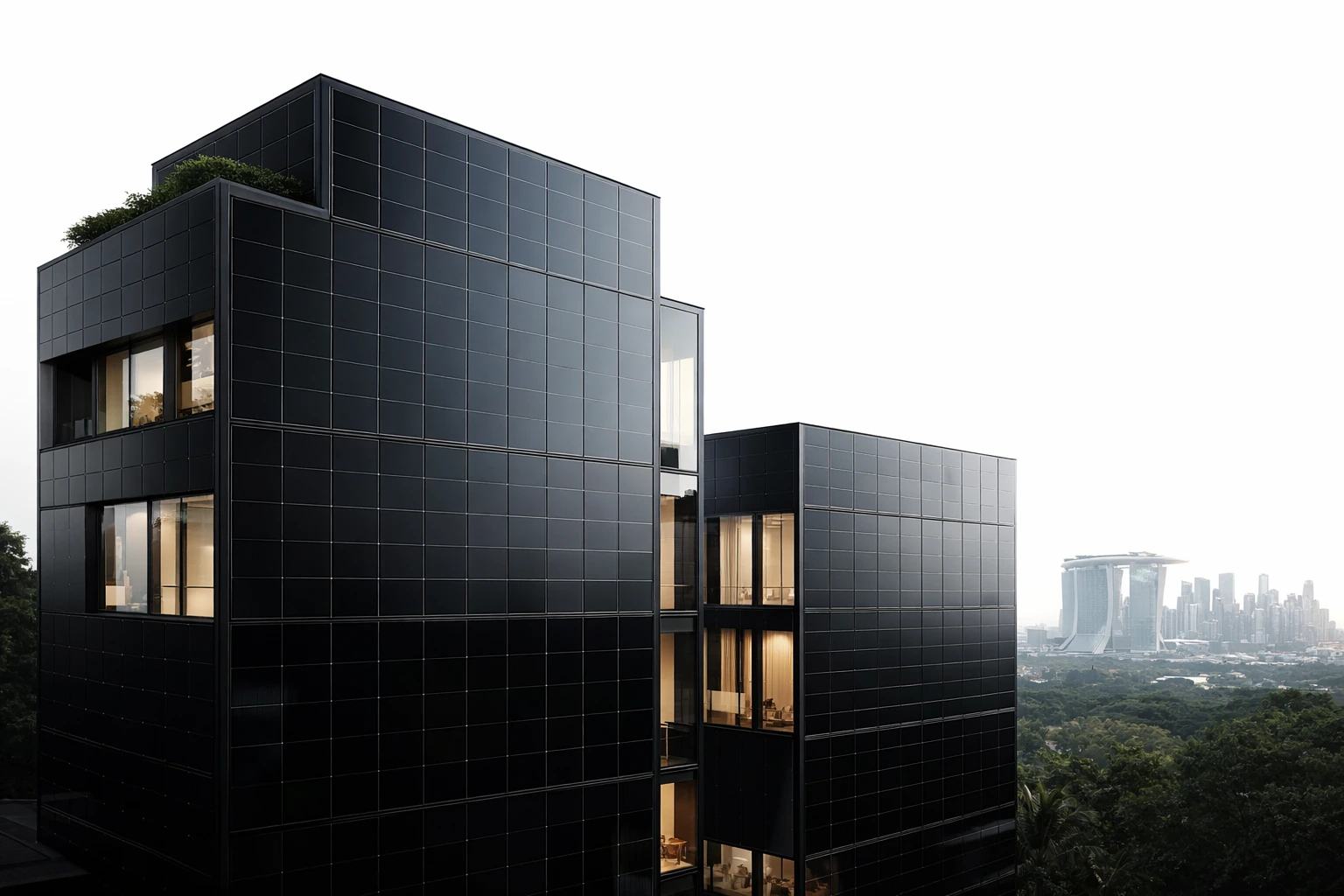
- Facade surfaces (BIPV): For new developments, Sunollo Pro's BIPV solutions can turn external walls and shading devices into power-generating surfaces.
Solar on common areas offsets shared electricity for lifts, corridor lighting, pool pumps, gym air-conditioning, and security systems — reducing monthly maintenance fees for all residents.
How Much Can MCST Solar Save on Common Area Electricity?
Common area electricity for a mid-size condo (200–500 units) typically costs $15,000–$50,000 per month. A well-sized solar installation can offset 15–35% of this consumption, translating to meaningful reductions in maintenance contributions.
| Condo Size | Typical Common Area Bill | Solar System Size | Estimated Annual Saving | Per-Unit Monthly Saving |
|---|---|---|---|---|
| Small (50–150 units) | $8,000–$18,000/mo | 50–100 kWp | $20,000–$45,000 | $10–$25 |
| Medium (150–400 units) | $18,000–$40,000/mo | 100–250 kWp | $45,000–$110,000 | $10–$25 |
| Large (400–1,000+ units) | $40,000–$80,000+/mo | 200–500+ kWp | $90,000–$220,000+ | $8–$20 |
Many MCSTs opt for a Power Purchase Agreement (PPA) model: the solar company installs and owns the system at no upfront cost to the MCST, selling the generated electricity at a discounted rate. This eliminates capital expenditure risk entirely. Learn about Sunollo GreenStores PPA options for condos.
What Are Community Solar Schemes and Can Condo Residents Join?
Community solar (also called shared solar or virtual net metering) allows residents who cannot install their own panels to subscribe to a share of a larger off-site solar farm. The electricity generated is credited to subscribers' bills.
In Singapore, community solar is still emerging. You subscribe to a portion of a remote solar installation (e.g., 5 kWp of a 500 kWp system), and the energy produced is credited against your SP bill. Nothing is installed on your property. Typical savings are 5–15% off your electricity bill, though availability remains limited as of 2026.
Community solar is expected to grow significantly as Singapore pursues its 2 GWp by 2030 solar target. For condo residents without MCST solar, this is the most promising future pathway to direct solar savings.
Can I Use Portable Solar Panels on My Condo Balcony?
Yes — with caveats. Portable or plug-in balcony solar panels are compact systems (typically 300–800W) that attach to a balcony railing or sit on a balcony floor and plug into a standard power outlet via a micro-inverter.
Key considerations:
- MCST rules: Check your condo's by-laws. Some MCSTs restrict items attached to balcony railings for aesthetic uniformity. Freestanding panels on balcony floors are generally less restricted.
- Typical output: A 400–600W balcony panel generates roughly 40–60 kWh/month, saving approximately $12–$20/month.
- Grid-tied vs. off-grid: Plug-in systems feeding into your unit's wiring require EMA notification. Simpler options charge a portable battery station, avoiding grid-tie requirements.
- Safety: Panels must be securely mounted and should not protrude beyond the balcony footprint.
- Orientation: Balcony panels only generate well facing east, north, or west with minimal shading from above. Heavily shaded lower floors may not produce enough to justify the cost.
Balcony solar won't dramatically cut your bill, but it's a practical way to generate some of your own clean energy — and it requires no MCST approval if placed within your private balcony space without external modifications.
How Do Green Electricity Plans Compare to Actual Solar?
Any condo resident can switch to a green electricity plan through Singapore's Open Electricity Market (OEM). These plans match your consumption with renewable energy certificates (RECs), meaning your electricity is nominally renewable — but you don't generate any electricity yourself and the grid supply is unchanged.
Green plans are the lowest-effort option — switch in minutes — but they don't reduce electricity costs the way actual solar generation does. For a detailed comparison, see our solar vs electricity retailers guide.
What Is BIPV and Why Does It Matter for New Condo Developments?
Building-Integrated Photovoltaics (BIPV) refers to solar technology that replaces conventional building materials — glass facades, roof tiles, shading louvres, and cladding — with materials that generate electricity while serving their architectural function.
BIPV is increasingly relevant for new condos because BCA Green Mark requirements incentivise it, it eliminates aesthetic objections (solar is invisible, embedded in the design), and it maximises generation area by harvesting energy from facades, canopies, and shading devices — not just the roof.
Sunollo Pro offers a full range of BIPV products for architects and developers:
- Cloud Cover: Semi-transparent BIPV canopies for covered walkways and car parks.
- Sunshine Tiles: Solar roof tiles that blend with conventional roofing materials.
- PV Glass: Semi-transparent solar glass for building facades and windows.
- Stellar Louver: Solar-generating external louvres that provide shading and energy simultaneously.
If you're buying into a new-launch condo, ask the developer whether BIPV or rooftop solar is included — developments with embedded solar reduce long-term common area costs and demonstrate genuine sustainability commitment.
How Can Residents Push for Solar at Their Condo AGM?
If you want solar at your condo, champion it through the MCST process:
- Research: Check your condo's annual financial statements for common area electricity costs and request a preliminary feasibility assessment from Sunollo GreenStores.
- Build a case: Prepare a one-page summary showing savings, payback, and the fact that PPA models require zero upfront investment.
- Engage council members: Present informally before the AGM — council support greatly increases the chance of a resolution passing.
- Submit a motion: Formally request a solar feasibility study on the AGM agenda. Under BMSMA, subsidiary proprietors can request agenda items.
- Present and vote: Focus on savings and zero-risk PPA structures. An ordinary resolution (simple majority of voting shares present) is sufficient.
The biggest challenge is typically apathy, not opposition — many AGMs struggle with quorum. Gathering proxy votes from supportive neighbours can make the difference.
What About HDB Residents — Is It Different?
Yes. HDB flats benefit from SolarNova, Singapore's national programme that installs solar on HDB rooftops centrally — residents don't need to take any action. The generated electricity offsets common area consumption, reducing S&CC charges. For a complete guide, see Solar for HDB Flats in Singapore 2026.
The key difference: HDB solar is government-driven, while condo solar requires bottom-up action by the MCST and residents.
Frequently Asked Questions
Can I install solar panels on my condo roof as an individual unit owner?
No. The condo rooftop is common property managed by the MCST. You cannot install panels without MCST approval via a general meeting resolution. However, you can propose a solar installation for common areas at the AGM or EGM.
What type of MCST resolution is needed for solar panels?
An ordinary resolution (simple majority of voting share values present at the meeting) is generally sufficient for solar installations on common areas. If the installation grants exclusive use of common property to a third-party solar company under a PPA, a 90% resolution may be required. Consult your MCST's legal advisor for your specific situation.
Will MCST solar panels reduce my monthly maintenance fees?
Yes, indirectly. Solar panels on common areas reduce the condo's electricity costs for lifts, lighting, pools, and other shared facilities. This reduces the operating expenses funded by maintenance contributions, either lowering fees or preventing increases.
Are portable balcony solar panels legal in Singapore condos?
Portable panels placed within your private balcony space are generally permissible, but check your condo's by-laws. Some MCSTs restrict items attached to external railings or visible from outside. Freestanding panels that don't modify the building exterior are typically allowed.
How much does a portable balcony solar panel cost?
A balcony solar kit with a 400–600W panel and micro-inverter costs approximately $500–$1,200 in Singapore. With a portable battery station instead of grid-tie, expect $800–$2,000. At typical generation rates, payback takes 3–7 years depending on balcony orientation and shading.
What is community solar and when will it be widely available in Singapore?
Community solar allows residents to subscribe to a share of a remote solar installation and receive bill credits for the energy generated. While pilot schemes exist, widespread community solar in Singapore is expected to scale between 2026 and 2028 as the EMA refines its virtual net metering framework.
Can Sunollo install solar on my condo's common areas?
Yes. Sunollo GreenStores handles commercial and strata solar installations, including condominiums. Sunollo can conduct the feasibility study, present to the MCST, and manage the full installation under a PPA or outright purchase model. With over 80,000 panels installed across Singapore, Sunollo has the experience to handle complex multi-building condo projects.
Should I choose a green electricity plan or wait for community solar?
They serve different purposes. A green electricity plan supports renewable energy through certificates and is available immediately — but it typically doesn't reduce your bill. Community solar provides direct bill savings from actual solar generation but has limited availability in 2026. If cost savings are your priority, community solar (when available) or advocating for MCST solar are better options. If supporting renewables now matters most, a green plan is the easiest step.
Sources
- EMA — Solar Installation Guide and Grid Connection Requirements
- Building Maintenance and Strata Management Act (BMSMA)
- HDB — SolarNova Programme
- BCA — Green Mark Certification Scheme
- SP Group — Solar PV Guide for Consumers
- EMA — Solar Energy Overview and Deployment Target
- Sunollo GreenStores — Commercial and Strata Solar Solutions
- Sunollo Pro — BIPV Solutions for Architects and Developers