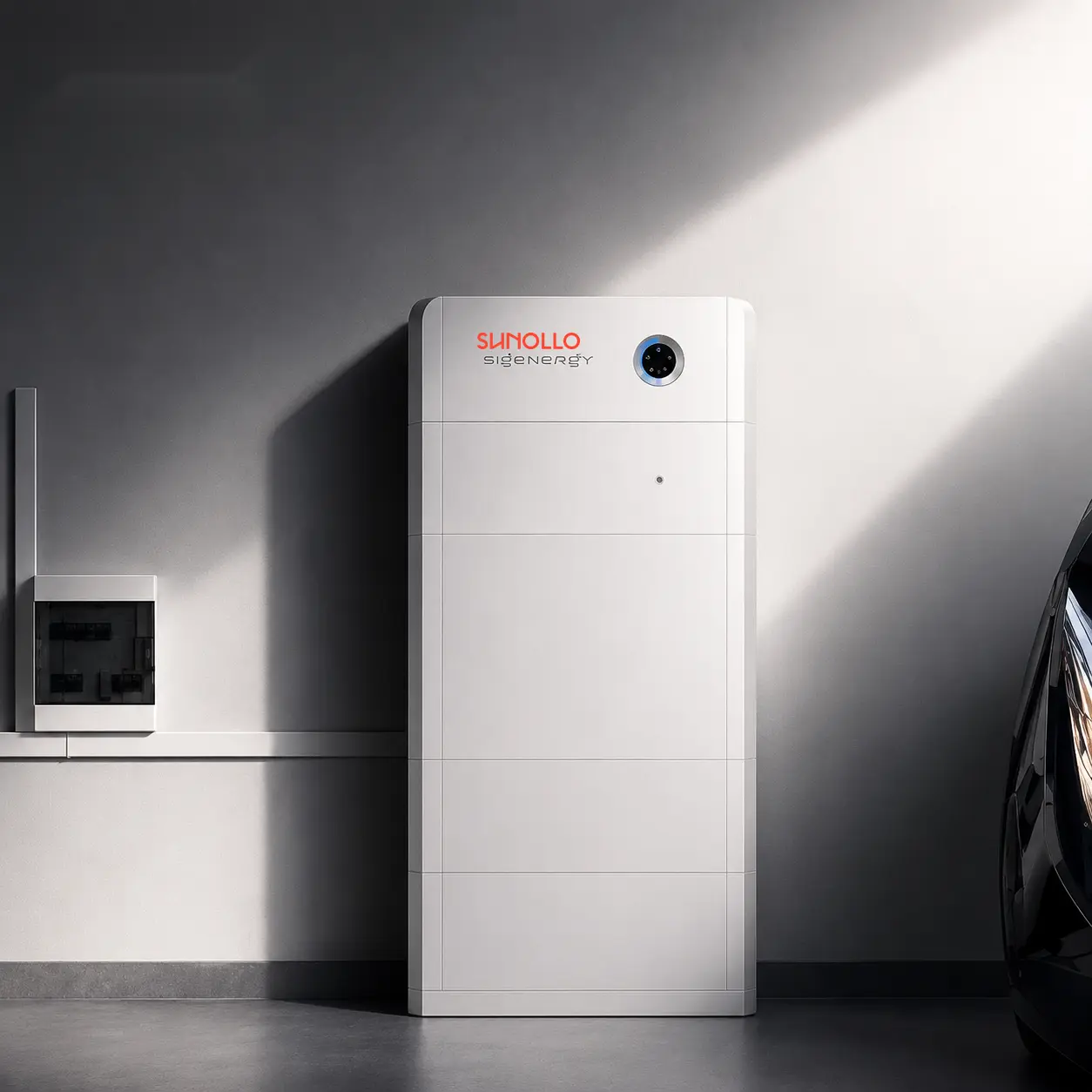
If you own a landed home in Singapore, you have probably considered backup power. Maybe a five-hour construction-related outage in your estate prompted the conversation. The default mental model is simple: backup power = generator. Diesel, stored in the garden shed, ready to rumble when the lights go out.
That model is outdated. In 2026, a rooftop solar system paired with a lithium battery and hybrid inverter delivers everything a generator does — and a list of things a generator fundamentally cannot. This article puts solar + battery and diesel generators side by side, runs the numbers over 10 years, and explains why the generator-first mentality no longer makes financial or practical sense for Singapore homeowners.
Why Are Singapore Homeowners Looking for Backup Power?
Singapore's grid is among the most reliable in the world — 99.99%+ uptime, year after year. Most landed homes experience zero or one outage annually, lasting minutes. Yet interest in backup power is growing due to construction disruptions (MRT extensions, condo developments causing 4–8 hour planned cuts), ageing local infrastructure in older estates, medical dependency (CPAP, oxygen concentrators, refrigerated medication), work-from-home normalisation, and increasingly intense storms and lightning strikes.
The question is not whether Singapore's grid is reliable — it is. The question is: when you do lose power, what is the smartest way to stay running?
How Does a Diesel Generator Compare to Solar + Battery for Backup?
A diesel generator burns fuel to generate electricity on demand. Solar + battery takes a fundamentally different approach: it stores solar energy in a lithium battery and deploys it automatically when the grid drops — no fuel, no engine noise, no manual intervention.
With a hybrid inverter like the SolarEdge EnergyHub (included in Sunollo's Abundance Pro), the switchover happens in under 200 milliseconds — seamlessly. During daylight, solar panels recharge the battery, making runtime effectively indefinite. For a detailed explanation of how this works, see our Solar Battery Storage Singapore 2026 Guide.
The following table puts the three main backup options side by side:
| Feature | Solar + Battery (Hybrid Inverter) | Diesel / Petrol Generator | UPS (Uninterruptible Power Supply) |
|---|---|---|---|
| Automatic switchover | Yes — <200 ms, seamless | Manual: 1–5 min; with ATS: 10–30 sec | Yes — <10 ms |
| Backup runtime | 8–34 hours (battery); indefinite with solar | 8–24 hours per tank | 15–60 minutes |
| Noise level | Silent (0 dB) | 65–85 dB (louder than a vacuum cleaner) | Silent (0 dB) |
| Fuel / consumables | None — sunlight is free | Diesel or petrol (S$2–4/litre, ongoing) | None |
| Emissions | Zero | CO₂, NOx, particulate matter | Zero |
| Maintenance | Minimal — app-based monitoring | Oil changes, fuel rotation, filters, annual servicing | Battery replacement every 3–5 years |
| Daily value when grid is up | 70–85% electricity bill reduction | None — sits idle 99.99% of the time | None — sits idle |
| Solar recharging during outage | Yes — panels charge battery in daylight | No — requires external fuel | No — fixed capacity only |
| Indoor installation | Yes — LFP battery rated for indoor use | No — exhaust fumes, fire risk | Yes |
| SCDF/NEA compliance | Compliant (IEC 62619, UL 9540A) | Restricted — noise, emissions, fuel storage rules | Compliant |
| Lifespan | 12–20 years (battery); 25 years (panels) | 5–10 years (with regular maintenance) | 3–5 years per battery swap |
| Upfront cost (2026) | S$21,000–28,000 (complete system) | S$2,000–8,000 (generator + ATS) | S$300–2,000 (per device) |
The table reveals a fundamental asymmetry: the generator and UPS are pure insurance products that deliver zero value until an outage occurs. Solar + battery is an income-generating asset that also happens to provide backup.
What Does Each Option Cost Over 10 Years?
Upfront cost alone is misleading. A diesel generator looks cheaper at purchase, but total cost of ownership over 10 years tells a very different story. The table below models a typical Singapore landed home: 4-bedroom semi-detached, current SP bill S$350–450/month.
| Cost Component | Solar + Battery (10 kWp + 13.5 kWh) | Diesel Generator (5 kVA + ATS) | UPS (2 kVA) |
|---|---|---|---|
| Upfront hardware + installation | S$24,000 (or $0 upfront via Sunollo) | S$5,500 | S$1,200 |
| Annual fuel cost | S$0 | S$150–300 | S$0 |
| Annual maintenance | S$0 (included in subscription) | S$300–500 | S$0 |
| Replacement costs (10 yr) | S$0 (LFP lasts 12–20 years) | S$0 (overhaul at year 7–8) | S$1,200–2,400 (2–3 battery swaps) |
| Annual electricity bill savings | −S$3,000 to −S$4,200 | S$0 | S$0 |
| 10-Year Net Position | S$6,000–18,000 ahead (net savings) | S$10,000–13,500 behind (net cost) | S$2,400–3,600 behind (net cost) |
Solar + battery is the only backup option that puts money back in your pocket. The electricity savings exceed system cost over the first 6–8 years. From that point on, every kWh of solar generation is pure profit. With Sunollo's Abundance Pro package at $0 upfront from $129/month, you are cash-flow positive from month one. The backup capability comes at effectively zero marginal cost.
What About Noise, Emissions, and Neighbour Relations?
In Singapore's dense landed estates — neighbours within metres — these are not minor considerations.
A diesel generator produces 65–85 dB at 7 metres (louder than a vacuum cleaner). Running one at 2 AM during a nighttime outage will generate complaints. NEA noise regulations restrict excessive noise in residential areas, and generator operation at night is a frequent source of disputes.
A solar + battery system produces zero noise. No moving parts, no engine, no exhaust. Your neighbours will not even know your power is on.
The environmental comparison is equally decisive:
| Environmental Metric | Solar + Battery | Diesel Generator |
|---|---|---|
| CO₂ per hour of backup | 0 kg | 2.5–4.0 kg |
| NOx / particulate emissions | None | Yes — contributes to smog and respiratory issues |
| Carbon monoxide risk | None | Present — requires outdoor ventilation |
| Fuel spill / soil contamination | None | Risk from diesel storage and refuelling |
| Annual CO₂ avoided (daily solar use) | 4,500–6,500 kg/year offset | 0 kg — no daily operation |
| End-of-life disposal | LFP batteries are recyclable | Oil, coolant, fuel residue — hazardous waste |
Over 25 years, a 10 kWp solar system avoids approximately 100–160 tonnes of CO₂ — equivalent to taking 3–4 cars off the road permanently.
Can Solar + Battery Handle Multi-Day Outages Better Than a Generator?
This is where solar + battery delivers its most decisive advantage. Consider a hypothetical 48-hour outage from a damaged transformer:
- Diesel generator: Runs 8–24 hours on a full tank. Then you need to source more diesel — difficult during an area-wide disruption. No fuel, no power.
- UPS: Lasts 15–60 minutes. Irrelevant for extended outages.
- Solar + battery: Battery powers essential loads through the night (12–25 hours at 400–800 W). At sunrise, solar panels generate 3–8 kW — sustaining loads while recharging the battery. The cycle repeats. Runtime is indefinite.
In Singapore's equatorial location with 12 hours of daylight year-round, even cloudy days produce 1–3 kW from a 10 kWp system — more than enough to sustain essential loads. The system is functionally self-sufficient for any outage duration. For more on energy resilience, see our Singapore Energy Security — Solar & Batteries 2026 article.
Is a Generator Still Better for Anything?
In the interest of honesty: yes, in narrow scenarios. A 10–15 kVA generator can power an entire house including all aircon units simultaneously — achieving that with batteries requires 20+ kWh of storage and is significantly more expensive. Generators also excel for construction sites and temporary setups without permanent infrastructure.
But for the vast majority of Singapore landed homeowners — people who pay S$300–500/month in electricity, value quiet operation, and want a system that pays for itself — solar + battery is the superior choice on every metric that matters.
What Does a Sunollo Solar + Battery Backup System Include?
Sunollo's Abundance Pro package is engineered for backup readiness from the start, drawing on 80,000+ installed panels across 12,000+ Singapore households:
- High-efficiency monocrystalline panels (10–14 kWp, depending on roof area)
- SolarEdge EnergyHub hybrid inverter with panel-level optimisers — islanding-capable, pre-wired for battery, <200 ms backup switchover
- LFP battery option (10–13.5 kWh) — safest lithium chemistry, 6,000–10,000 cycle life, IEC 62619 and UL 9540A certified
- Backup gateway + essential circuits sub-panel — professionally installed for seamless outage coverage
- 24/7 monitoring and app control — real-time solar, battery, and backup status
Available at $0 upfront from $129/month with Sunollo's Savings Guarantee. Explore configurations via the battery configurator. For a complete guide to battery options, see our Home Battery Storage Singapore Complete Guide.
Frequently Asked Questions
Is solar + battery really cheaper than a diesel generator over 10 years?
Yes. While the upfront cost of a solar + battery system (S$21,000–28,000) is higher than a diesel generator (S$2,000–8,000), the solar system generates S$30,000–42,000 in electricity savings over 10 years. After accounting for all costs, the solar system puts S$6,000–18,000 back in your pocket, while the generator costs S$10,000–13,500 with zero return.
How long does solar + battery backup last during a blackout?
A 13.5 kWh battery powering essential loads (refrigerator, lighting, fans, WiFi, security) at 400–800 W provides 17–34 hours on battery alone. If the outage extends into daylight, solar panels recharge the battery, making runtime effectively indefinite.
Can I run air conditioning on battery backup during an outage?
Yes, with appropriate sizing. A 13.5 kWh battery can run one inverter aircon (9,000 BTU, 600–1,000 W) for 7.5–13.5 hours alongside essential loads. Multiple aircon units require 15–20+ kWh. Most homeowners prioritise one bedroom aircon for sleeping and use fans elsewhere.
What happens to my solar system during a blackout without a battery?
A standard grid-tied solar system shuts down during a blackout — a safety requirement called anti-islanding that protects utility workers. To maintain power during an outage, you need a hybrid inverter with islanding capability and a battery. Sunollo's Abundance Pro includes the SolarEdge EnergyHub, pre-wired for battery connection.
Are diesel generators allowed in Singapore residential areas?
Diesel generators face significant restrictions. NEA regulates noise pollution (65–85 dB exceeds residential thresholds, especially at night). SCDF has fire safety requirements for fuel storage. Many landed estates have additional by-laws restricting generator use. While not outright banned, practical and regulatory barriers make generators increasingly impractical for residential backup.
Does the battery degrade faster in Singapore's hot climate?
Singapore's warmth (28–34°C) accelerates degradation slightly, but LFP (Lithium Iron Phosphate) chemistry — which Sunollo specifies exclusively — is significantly more heat-tolerant than older NMC batteries. LFP is rated for 6,000–10,000 cycles, giving a realistic Singapore lifespan of 12–20 years with most manufacturers guaranteeing 70%+ capacity after 10 years.
Can I add a battery to my existing solar system later?
Yes, if your inverter supports it. Systems with a hybrid inverter (like the SolarEdge EnergyHub in Abundance Pro) are pre-wired — adding a battery requires only the battery module, gateway, and sub-panel. Systems with standard grid-tied inverters can add an AC-coupled battery (e.g., Tesla Powerwall 3) with its own inverter. Contact [email protected] for a compatibility assessment.
What maintenance does a solar + battery system need compared to a generator?
Virtually zero. Panels self-clean in Singapore's rain. The inverter and battery are monitored remotely via app with automated alerts. No oil changes, no fuel rotation, no filter replacements, no annual servicing. A diesel generator requires oil changes every 100–200 hours, fuel rotation every 6–12 months, annual servicing, and periodic parts replacement — and frequently fails when needed because maintenance was deferred.
Sources and Further Reading
- Energy Market Authority (EMA), Singapore Electricity Market Rules and Grid Connection Scheme. ema.gov.sg
- SP Group, Net Energy Rebate (NER) Scheme and grid reliability statistics (SAIDI). spgroup.com.sg
- National Environment Agency (NEA), Environmental Protection and Management Act — Noise Regulations. nea.gov.sg
- Singapore Civil Defence Force (SCDF), Fire Safety Guidelines for BESS and Fuel Storage Regulations.
- SolarEdge Technologies, EnergyHub Inverter Technical Specifications. solaredge.com
- BloombergNEF, Battery Price Survey 2025–2026 — LFP pricing trends.
- IEEE 1547-2018, Standard for Interconnection and Interoperability of Distributed Energy Resources.
- IEC 62619:2022 and UL 9540A — battery safety standards.
- Sunollo, Solar Battery Storage Singapore 2026 Guide.
- Sunollo, Home Battery Storage Singapore Complete Guide.
- Sunollo, Singapore Energy Security — Solar & Batteries 2026.