Why inverter sizing matters for Singapore homes
Most homeowners first hear about inverter sizing when comparing solar quotes. One proposal may show 12 kWp of panels with a 10 kW inverter. Another may show 10 kWp of panels with an 8 kW inverter. A third may use microinverters or optimisers and make the comparison even harder.
The inverter is the electrical bridge between your solar panels and your home. It converts DC power from the panels into AC power that your house can use and that can be exported to the grid. In Singapore, a good residential inverter design must answer four practical questions:
- How much AC power can the home safely accept? This depends on supply type, main switch rating, distribution board arrangement, protection devices, and SP Group requirements.
- How much solar energy will the household actually use? Self-consumed solar usually has higher value than exported solar.
- How much panel capacity is sensible for the roof? The roof size, orientation, shading, and module type determine the DC side.
- How much clipping or curtailment is acceptable? Some clipping can be normal, but persistent heavy clipping should be explained clearly.
The two sizes homeowners confuse: kWp and kW
Panel size is normally stated in kWp. This is the DC nameplate capacity of the array under laboratory test conditions. A roof with twenty 600 W panels is a 12 kWp array.
Inverter size is normally stated in kW AC. This is the maximum AC output the inverter can deliver at one moment, subject to its settings, voltage, temperature, manufacturer limits, and grid connection requirements.
A 12 kWp solar array paired with a 10 kW inverter has a DC-to-AC ratio of 1.2. That ratio is normal in many residential designs. It does not automatically mean the inverter is undersized. It simply means the solar array is larger than the inverter's peak AC output.
Start with the home supply: single-phase or three-phase
In Singapore residential properties, the first practical sizing check is the electrical supply arrangement. Many homes have single-phase supply. Larger landed homes may have three-phase supply. This matters because the same inverter kW produces very different current depending on phase configuration.
For a simplified calculation:
- Single-phase current: amps roughly equal inverter watts divided by 230 V.
- Three-phase current: amps per phase roughly equal inverter watts divided by 1.732 x 400 V.
That means a 10 kW single-phase inverter can draw or export roughly 43.5 A at full output, while a 10 kW three-phase inverter is roughly 14.4 A per phase. This is why the same solar system can be easy to accommodate on one property and more constrained on another.
Illustrative inverter current and breaker discussion
The table below is a simplified homeowner guide. It is not a substitute for the inverter datasheet, cable derating calculation, local regulations, or LEW design.
| Inverter AC Size | Approx. Single-Phase Current at 230 V | Approx. Three-Phase Current at 400 V | Homeowner Takeaway |
|---|---|---|---|
| 3 kW | 13 A | 4.3 A per phase | Often straightforward, but still needs DB and protection checks. |
| 5 kW | 21.7 A | 7.2 A per phase | Common residential size; breaker and cable sizing must follow the inverter output and route. |
| 6 kW | 26.1 A | 8.7 A per phase | May commonly point toward a 32 A class circuit on single-phase designs, subject to LEW confirmation. |
| 8 kW | 34.8 A | 11.5 A per phase | Can be a heavier single-phase export current; main supply and DB constraints become more important. |
| 10 kW | 43.5 A | 14.4 A per phase | Often much cleaner on three-phase supply; single-phase suitability needs careful review. |
| 15 kW | 65.2 A | 21.7 A per phase | Typically a three-phase conversation for landed homes, not a casual single-phase add-on. |
Why does this matter? Breakers protect cables and equipment from overheating and fault conditions. A breaker is not selected just because the inverter is a certain kW. The LEW must consider inverter maximum output current, manufacturer maximum overcurrent protection, cable size, cable length, installation method, ambient temperature, grouping with other cables, voltage drop, fault level, isolation requirements, and the existing DB arrangement.
Common breaker sizes and what they really mean
Homeowners often ask whether a 5 kW inverter needs a 25 A breaker or a 32 A breaker, or whether a 10 kW inverter can go on a 40 A breaker. The honest answer is: it depends on the full AC design.
As a rough educational guide, the inverter output current often leads designers toward familiar breaker classes such as 16 A, 20 A, 25 A, 32 A, 40 A, or 63 A. But those are not universal prescriptions. For example, a 6 kW single-phase inverter produces about 26 A at 230 V, so a designer may evaluate a 32 A circuit, but only if the inverter datasheet, cable, installation conditions, DB rating, and protection coordination support it.
A smaller breaker may nuisance-trip if it is too close to the inverter's continuous output. A larger breaker may be unsafe if the cable or equipment is not rated for it. The right breaker is the one that protects the circuit and complies with the approved design, not the one that makes the solar quote look bigger.
Main switch and DB constraints
Even if the roof can fit a large solar array, the distribution board may not be ready for a large inverter. Practical constraints can include:
- Main incoming capacity: A single-phase home with limited main capacity may not be suitable for a large single-phase inverter without review.
- Spare DB ways: The solar AC circuit, isolator, protection device, meter arrangement, and labels may need physical space.
- Backfeed considerations: Solar exports power into the electrical installation, so protection and board ratings must be checked.
- Cable route: A long or difficult cable run may require larger cable to manage voltage drop and heat.
- Existing loads: EV chargers, air-conditioning, induction cooking, water heaters, and lifts can change the load profile and supply planning.
This is why a proper residential solar proposal should not be based only on roof area. A serious installer needs electrical photos, utility bills, DB information, and, for landed homes, a site visit before finalising the design.
Regulatory and connection context in Singapore
EMA and SP Group guidance make clear that solar PV connection is an electrical and grid-interface matter, not just a rooftop hardware project. Residential solar work should involve a Licensed Electrical Worker. SP Group's residential solar guide refers to documents such as inverter specifications, solar panel specifications, type test reports, a single-line diagram from the PV system to the point of common coupling, and the relevant connection and export forms.
For homeowners, the key point is practical: your installer should be able to explain who the LEW is, what inverter capacity is being submitted, where the solar circuit connects, and what protection devices are being used. If the quote cannot answer those questions, it is not ready for signing.
A practical residential sizing workflow
A good inverter sizing conversation usually follows this sequence:
- Check the supply and DB. Confirm single-phase or three-phase supply, main switch rating, DB condition, available ways, and route for the solar AC cable.
- Review household consumption. Use 12 months of bills if possible and identify daytime loads such as air-conditioning, pool pumps, EV charging, home office use, and helpers' quarters.
- Model the roof. Estimate kWp from usable roof area, orientation, pitch, shading, and panel technology.
- Select inverter architecture. Choose between string inverter, optimiser-based design, microinverters, or hybrid inverter depending on shading, safety, monitoring, battery plans, and cost.
- Check AC current and protection. Confirm inverter output current, breaker class, isolators, cable size, voltage drop, manufacturer overcurrent limits, and DB connection.
- Model annual energy and clipping. Compare P50/P90 yield, self-consumption, export, and clipping losses.
- Document assumptions. The final proposal should state inverter model, AC rating, DC kWp, DC-to-AC ratio, expected annual kWh, and estimated clipping loss.
Acceptable inverter sizing ranges and ratios
There is no single legal DC-to-AC ratio that makes a residential solar design automatically acceptable in Singapore. The acceptable range depends on the roof, inverter, supply type, self-consumption, and the LEW-approved electrical design. Still, homeowners can use the following bands as a practical review guide.
| DC-to-AC Ratio | Acceptance Range | What It Means for a Singapore Home |
|---|---|---|
| 0.90 to 1.00 | Usually acceptable but conservative | The inverter is as large as, or larger than, the panel array. Clipping is unlikely, but the inverter may cost more and run below full use for much of the year. |
| 1.00 to 1.15 | Conservative residential range | Low clipping risk and simple to explain. Often suitable where the homeowner wants maximum peak headroom or expects future panel expansion constraints. |
| 1.15 to 1.30 | Normal target range | A common sweet spot for many residential systems. Usually balances inverter cost, annual yield, and modest clipping. |
| 1.30 to 1.40 | Often acceptable with modelling | Can make sense for hot roofs, east-west layouts, limited inverter options, or when extra DC capacity improves mornings and afternoons. Ask for clipping loss and savings impact. |
| 1.40 to 1.50 | Conditional acceptance | Not automatically wrong, but should come with site-specific simulation, clear clipping percentage, and a reason why a larger inverter is not better value. |
| Above 1.50 | High scrutiny | Possible in special cases, but a residential homeowner should treat this as a red flag unless the installer provides strong modelling and a clear engineering explanation. |
A slightly smaller inverter can appear to improve early morning and late afternoon production, but the technical reason is more precise: the benefit comes from having more DC panel capacity available for the same AC inverter size, not from the inverter being smaller by itself. More DC capacity can push the inverter into its operating range sooner and keep it producing later under low irradiance, provided each string still meets the inverter's start voltage and MPPT voltage range. This is a string-design issue as much as a sizing issue. Adding panels in series raises string voltage, while adding parallel strings mainly raises current; parallel strings do not help a string meet a minimum start-voltage threshold. In Singapore's hot roof conditions, module voltage falls as cell temperature rises, so the LEW and designer must check that hot-weather Vmp stays above the inverter's minimum MPPT voltage, while cold-weather Voc remains below the inverter's maximum DC voltage.
For inverter AC output relative to the home supply, the acceptance question is different. A 10 kW inverter may be reasonable on a three-phase landed home but problematic on a constrained single-phase installation. The LEW must confirm whether the main switch, DB, breaker, cable route, voltage rise, protection coordination, and SP Group connection requirements can support the proposed inverter output.
Acceptable clipping losses
Clipping should be discussed in annual energy terms, not just as a scary word. The installer should show the expected clipping loss in kWh per year and as a percentage of potential annual production. The bands below are practical homeowner review thresholds, not regulatory limits.
| Annual Clipping Loss | Acceptance View | How to Interpret It |
|---|---|---|
| 0% to 1% | Negligible | Usually not worth worrying about. A larger inverter is unlikely to materially improve savings. |
| 1% to 3% | Generally acceptable | Common in well-optimised residential designs. Often a sensible trade-off for better low-light and shoulder-hour production. |
| 3% to 5% | Acceptable if justified | Needs a clear explanation. The quote should show that the lower inverter cost or higher annual production still improves payback. |
| 5% to 8% | Requires strong justification | Ask for a comparison against the next inverter size up. This may still work for east-west roofs or export-limited designs, but it should not be hand-waved. |
| Above 8% to 10% | Usually a red flag | For most residential homes, this suggests the inverter may be too small unless there are special constraints such as export caps, battery strategy, or deliberate cost optimisation. |
| Above 10% | High concern | Should trigger a redesign discussion. Homeowners should ask why so much paid-for generation is being sacrificed. |
The best acceptance test is economic, not emotional: if a bigger inverter reduces clipping, how many extra kWh does it recover per year, what are those kWh worth after self-consumption and export assumptions, and how many years does the bigger inverter take to pay back? If the recovered value is small, a little clipping may be the smarter design.
What is a sensible DC-to-AC ratio?
NREL and mainstream PV modelling treat DC-to-AC ratio, also called inverter loading ratio, as a normal design variable. In residential projects, a common practical range is around 1.1 to 1.3. Some designs can go higher when roof orientation, panel layout, cost, and yield modelling support it.
| DC-to-AC Ratio | What It Usually Means | How to Think About It |
|---|---|---|
| 1.0 to 1.1 | Conservative sizing | Low clipping, but the inverter may be underused for much of the year. |
| 1.1 to 1.3 | Common residential range | Often a good balance of inverter cost, energy yield, and modest clipping. |
| 1.3 to 1.5 | More aggressive oversizing | Can be valid, but should come with clear annual clipping and savings modelling. |
| Above 1.5 | High loading ratio | Needs strong justification and transparent homeowner explanation. |
The ratio alone does not prove whether a design is good or bad. A 1.35 ratio on an east-west roof may clip less than a 1.25 ratio on a perfect single-plane roof. Site modelling matters.
Clipping losses: important, but not the whole story
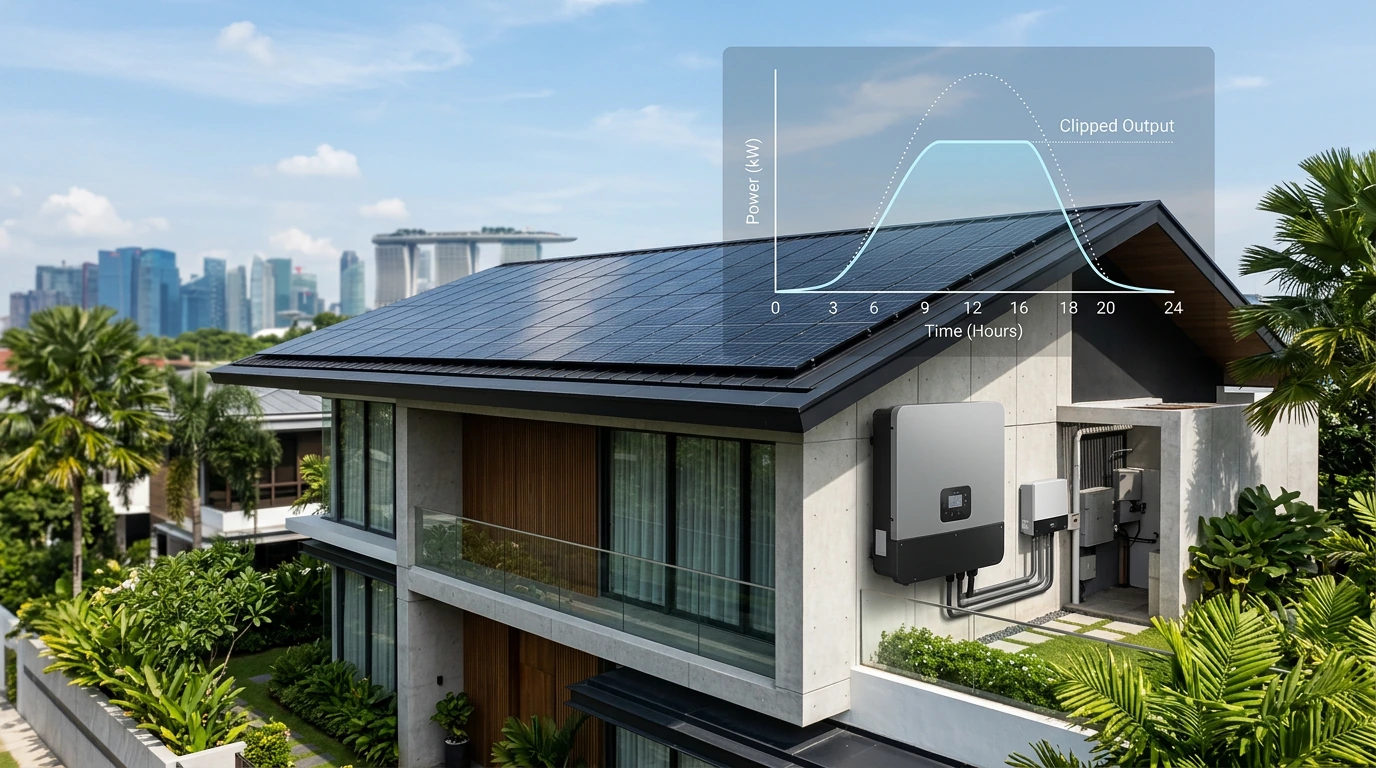
Clipping happens when the solar panels could produce more DC power than the inverter can convert into AC power at that instant. The inverter caps output at its AC limit, creating a flat top on the production curve.
Small clipping losses can be normal and economically rational. The extra panels may produce more energy during mornings, afternoons, cloudy periods, and lower-light conditions, while only losing a little energy at peak sun. The design becomes questionable when clipping is frequent, heavy, and not disclosed.
Ask for clipping loss in two forms: annual kWh and percentage of potential production. A vague statement like 'there will be no issue' is not enough. A transparent proposal should show whether a larger inverter would actually improve annual savings after extra cost.
String inverter, microinverter, optimiser, or hybrid?
Inverter sizing also depends on architecture.
String inverters are common and cost-effective. They work well on simple roofs with limited shading, but string design, MPPT allocation, and voltage/current limits matter.
Optimiser systems add panel-level electronics, which can help with shading, mismatch, monitoring, and some safety requirements. The central inverter still has an AC size, so breaker and DB checks still apply.
Microinverters put small inverters at the panel level. Instead of one large inverter output, the AC design aggregates many smaller outputs. This changes the branch circuit and protection design, but it does not remove the need for correct breaker and cable sizing.
Hybrid inverters support battery integration. They can be attractive if you plan to add storage, backup circuits, or future energy management. But the design must carefully distinguish PV capacity, inverter AC output, battery charge/discharge limits, and backup output capacity.
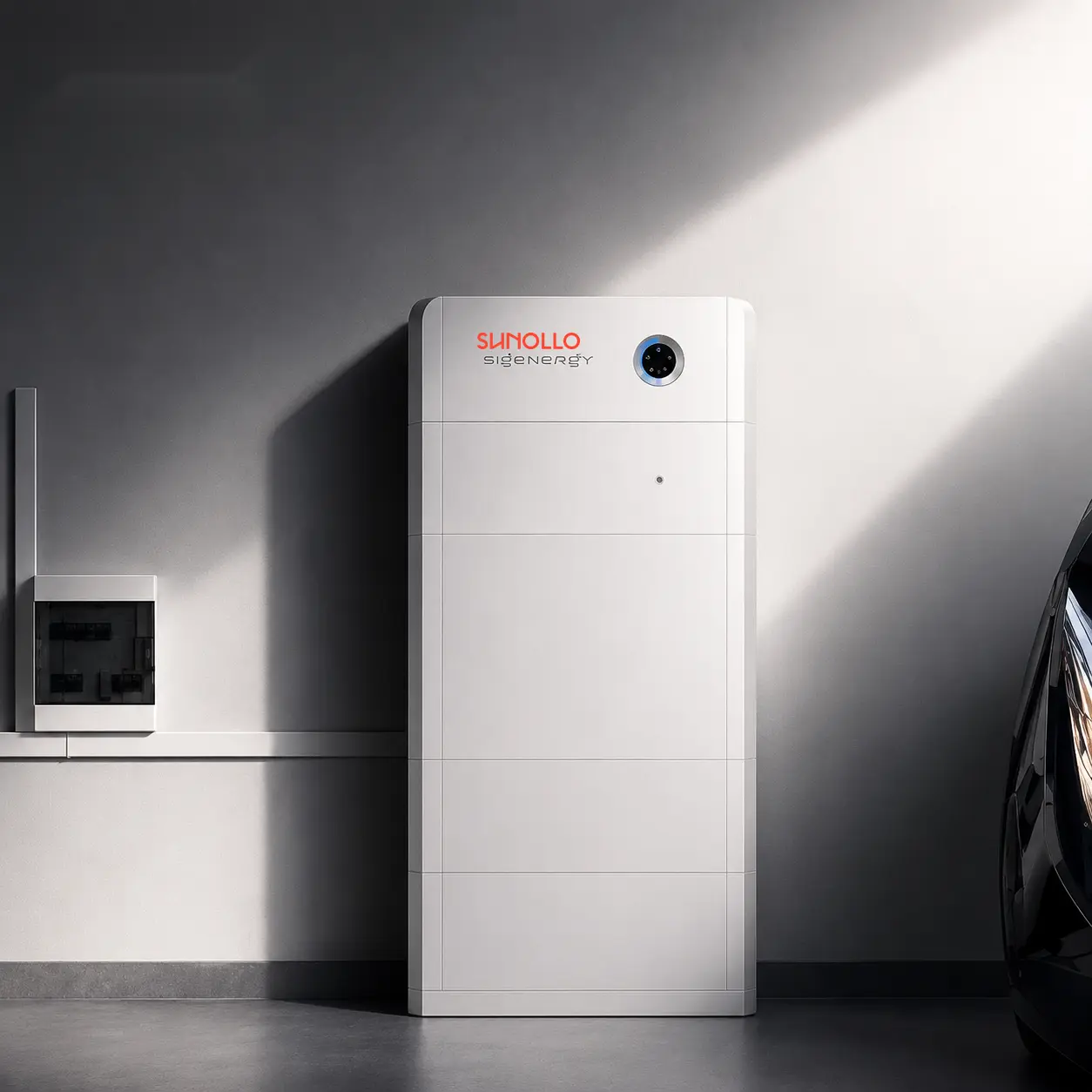
Sunollo’s residential systems are battery-ready as standard, and its 2026 partnership with Sigenergy brings the integrated SigenStor platform — solar, storage, and EV charging in one unit — to Singapore. If you are sizing for future storage or EV charging, see the Sunollo–Sigenergy partnership.
Homeowner examples
Example 1: Terrace house with single-phase supply
A terrace house can fit 8 kWp of panels and has a 6 kW single-phase inverter proposed. The approximate inverter current is 26 A. The LEW checks whether the DB can accept the solar circuit, whether cable routing supports the required cable size, and whether the inverter's overcurrent protection requirements are met. The DC-to-AC ratio is 1.33, which may be acceptable if annual clipping is low and most energy is self-consumed.
Example 2: Semi-detached home with three-phase supply
A larger home can fit 15 kWp of panels and uses a 12 kW three-phase inverter. The current is roughly 17 A per phase. This may be easier to integrate than a large single-phase inverter because current is spread across phases. The design still needs phase balance, DB review, inverter approval, and connection documentation.
Example 3: EV-ready landed home
A homeowner plans to add an EV charger within 12 months. The installer should not size the inverter only around current daytime consumption. Future charging, battery plans, and tariff strategy may justify a larger array, hybrid inverter, or a design that reserves DB space and cable route capacity for upgrades.
Questions to ask before signing
- Is my home single-phase or three-phase? Ask how this affects inverter size and current per phase.
- What is the inverter's AC output current? Do not look only at kW.
- What breaker size is proposed and why? Ask for the basis: datasheet, cable size, route, derating, and LEW approval.
- Where will the solar circuit connect? The answer should refer to the DB, isolator, metering, and single-line diagram.
- What is the DC-to-AC ratio? Ask for the panel kWp divided by inverter AC kW.
- How much clipping is expected? Ask for annual kWh and percentage.
- What happens if I add an EV charger or battery later? Future loads can change the best design.
- Who is the LEW and what will be submitted to SP Group? A credible installer should answer clearly.
Red flags
- The quote hides the inverter model or AC capacity.
- The installer says breaker size is 'standard' without checking DB, cable route, or inverter datasheet.
- The design pushes a large single-phase inverter without discussing main supply capacity.
- The proposal shows panel kWp but no annual kWh, clipping estimate, or self-consumption assumption.
- The installer treats clipping as either always terrible or never relevant. Both extremes are too simplistic.
- The quote does not mention LEW review, SP Group connection process, or a single-line diagram.
Bottom line
For Singapore residential solar, inverter sizing is a practical electrical design decision. The right inverter must suit the home supply, DB, breaker and cable design, grid connection requirements, panel array, and household consumption. Clipping losses are part of the optimisation, but they should not dominate the conversation.
A good quote should make the design easy to audit: panel kWp, inverter kW, single-phase or three-phase current, proposed breaker and cable approach, DC-to-AC ratio, annual energy estimate, clipping loss, and future upgrade assumptions. If those items are clear, the homeowner can compare quotes intelligently instead of guessing whether a bigger inverter is automatically better.