Is My Roof Fit for Solar Panels in Singapore?
Yes — most Singapore roofs are suitable for solar PV installation, but suitability depends on your roof type, structural condition, orientation, shade exposure, and available area. A professional site assessment confirms whether your specific roof can support a solar system safely and efficiently. Sunollo offers a free site assessment so you can find out without any commitment.
This comprehensive guide covers every factor that determines roof fitness for solar panels in Singapore — from structural requirements and roof materials to orientation, shading, and regulatory considerations. Whether you own a landed home, semi-detached, or terrace house, this guide will help you understand what makes a roof solar-ready in 2026.
What Roof Types Work Best for Solar Panels in Singapore?
Concrete flat roofs and pitched tile roofs are the most common and well-suited roof types for solar PV in Singapore. Metal roofs also work well but may require different mounting hardware. Each roof type has its own advantages and installation considerations.
| Roof Type | Suitability | Mounting Method | Considerations |
|---|---|---|---|
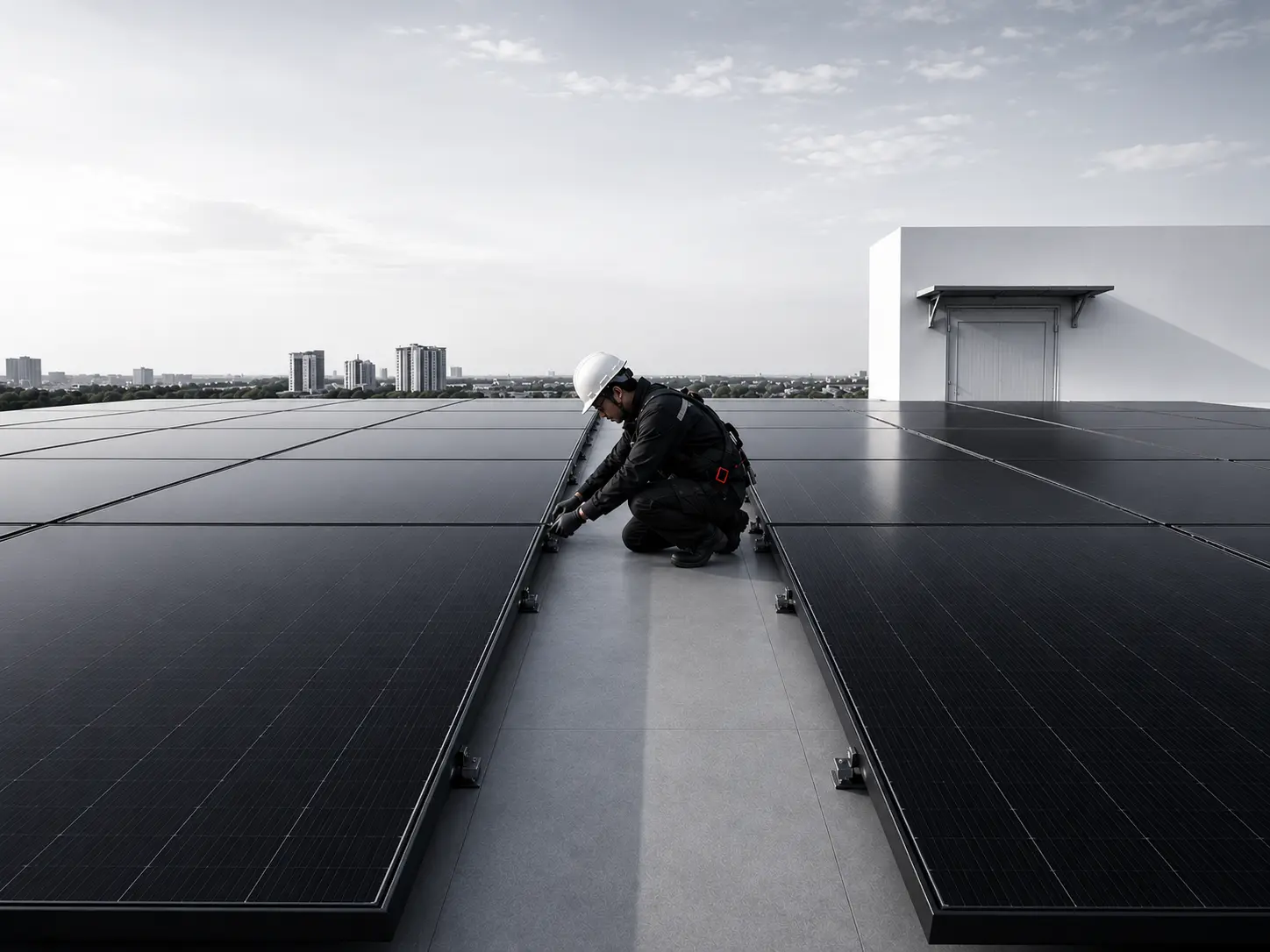
| Concrete Flat Roof | Excellent | Ballasted or anchored tilt frames | Panels angled at 5–10° for self-cleaning and optimal output; easy maintenance access |
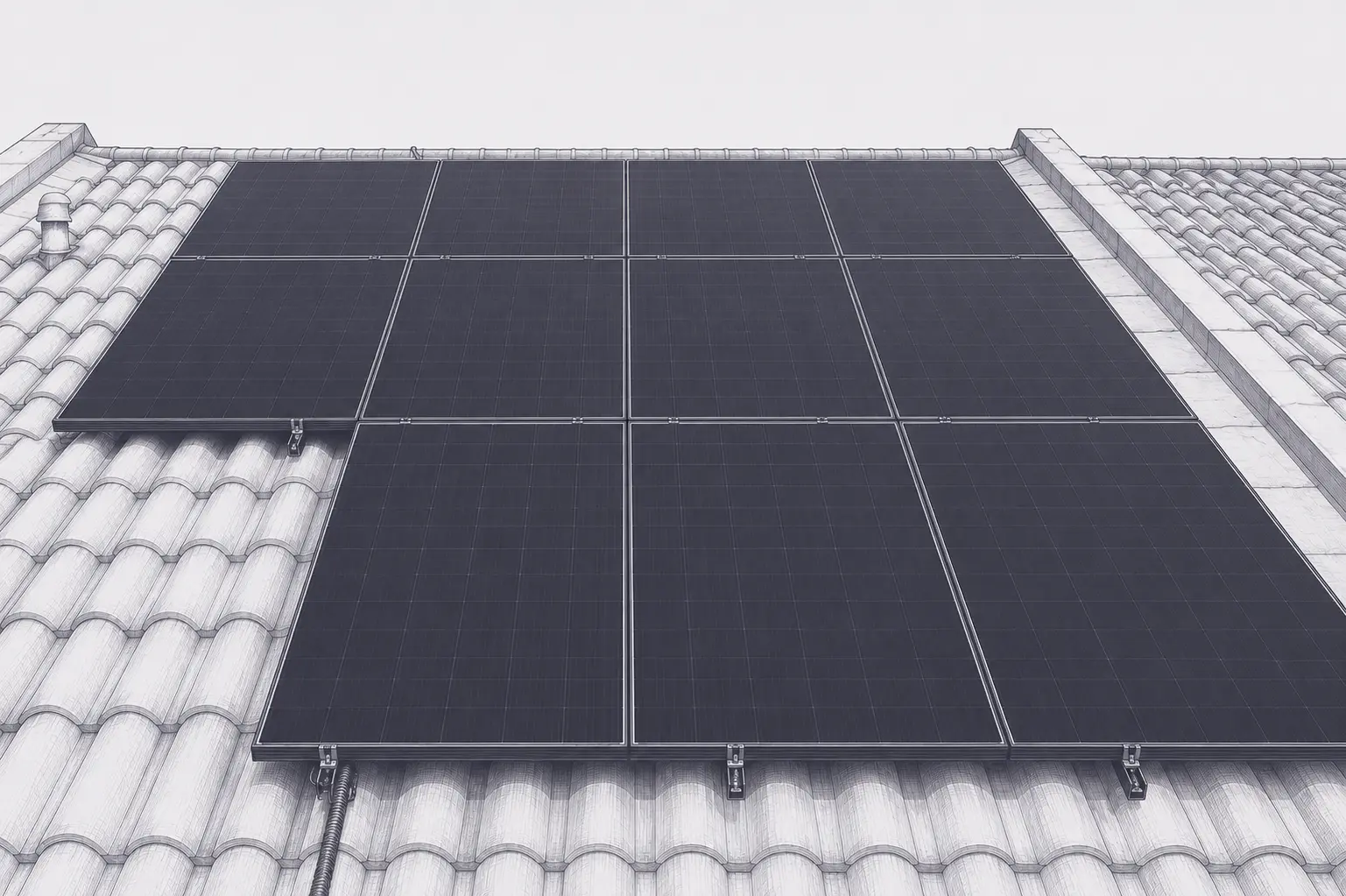
| Pitched Tile Roof (Clay/Concrete) | Excellent | Tile hooks with rail mounting | Common on landed homes; tiles removed and re-seated around brackets; 15–30° pitch is ideal |
| Metal / Standing Seam Roof | Very Good | Clamp-on brackets (no drilling) | Lightweight and quick to install; ensure metal is not corroded; may need insulation check |
| Metal / Corrugated Roof | Good | Piercing brackets with waterproof seals | Older corrugated roofs may need structural verification; ensure no rust or leaks |
| BIPV / Glass Roof | Specialised | Integrated solar glass panels | Used in new builds or major renovations; higher cost but aesthetically seamless |
For most landed homes in Singapore, concrete flat and pitched tile roofs are by far the most common. Both offer straightforward installation paths with proven long-term reliability.
Does My Roof Orientation Affect Solar Panel Output?
Yes, but less than you might think. Singapore sits just 1.3° north of the equator, which means the sun passes almost directly overhead year-round. Unlike temperate countries where south-facing (or north-facing in the Southern Hemisphere) roofs are critical, Singapore roofs in any orientation receive strong solar irradiance. That said, slight differences exist.
| Roof Orientation | Estimated Annual Output | Notes |
|---|---|---|
| North-facing | 100% (optimal baseline) | Marginally best due to Singapore's position just north of the equator |
| South-facing | ~97–99% | Negligible difference from north; excellent performance |
| East-facing | ~90–95% | Strong morning generation; slightly lower afternoon output |
| West-facing | ~90–95% | Strong afternoon generation; slightly lower morning output |
| Flat (0° tilt) | ~95–98% | Very common in Singapore; slight self-cleaning benefit if tilted 5° |
The key takeaway: no Singapore homeowner should rule out solar based on roof orientation alone. A north-facing roof is marginally optimal, but east-, west-, and south-facing roofs all perform within 5–10% of peak output. Your installer will model the exact expected generation based on your roof's specific angle and direction.
How Much Roof Space Do I Need for Solar Panels?
You need a minimum of approximately 20 square metres of usable, unshaded roof area to install a meaningful residential solar system. A standard 400W residential panel measures roughly 1.7m × 1.1m (~1.9 sqm). Here is how roof area translates into system capacity:
- 20 sqm — fits approximately 8–10 panels (~3.2–4.0 kWp); suitable for smaller households
- 30–40 sqm — fits approximately 14–18 panels (~5.6–7.2 kWp); covers most of an average household's electricity needs
- 50+ sqm — fits 22+ panels (~8.8+ kWp); ideal for larger homes or those with higher consumption (EV charging, pool pumps)
Keep in mind that usable area excludes zones near roof edges (setback requirements), areas shaded by structures, and space reserved for maintenance walkways. A professional assessment measures the precise usable area on your roof using satellite imagery and on-site verification.
How Does Shade Affect Solar Panel Performance?
Shade is the single biggest performance killer for solar panels. Even partial shading on one panel can significantly reduce output for an entire string of panels due to the way panels are wired in series. Modern solutions like microinverters and optimisers mitigate this, but avoiding shade at the design stage is always preferable.
| Shade Source | Typical Output Reduction | Mitigation |
|---|---|---|
| No shade | 0% loss | Ideal scenario; maximum energy harvest |
| Light intermittent shade (small branches, antennas) | 5–10% loss | Trim vegetation; use optimisers on affected panels |
| Moderate shade (neighbouring building for part of day) | 15–25% loss | Strategic panel placement; microinverters to isolate affected panels |
| Heavy shade (large tree canopy, adjacent tall building) | 30–50%+ loss | May make affected roof sections unsuitable; relocate panels to unshaded zones |
| Permanent full shade | 70–90% loss | Area not viable for solar; exclude from system design |
During a Sunollo site assessment, shade analysis is performed using satellite data and on-site observation across different times of day. This ensures panel placement maximises energy production while avoiding problematic shade zones.
Does My Roof Need a Structural Assessment for Solar?
Older roofs (typically 15+ years) or roofs with visible wear may require a structural assessment by a Professional Engineer (PE) before solar panel installation. Solar panels and mounting hardware add approximately 12–15 kg per square metre of dead load to your roof. While this is relatively light, the Building and Construction Authority (BCA) in Singapore has guidelines that may require a PE certification for certain structures.
When is a structural assessment required?
- Older buildings — homes built before 2000 or those without recent renovation records
- Visible roof damage — cracked tiles, sagging beams, water damage, or corroded metal
- Flat roofs with heavy ballasted systems — where additional weight from concrete ballast blocks is used instead of roof-penetrating anchors
- Heritage or conservation properties — additional approvals may be needed from URA
When is a structural assessment typically NOT needed?
- Newer homes (built after 2010) — modern building codes generally account for additional rooftop loads
- Homes that have undergone recent roof renovation — with documentation from a licensed contractor
- Lightweight rail-mounted systems on pitched roofs — where the load is distributed across multiple structural points
Sunollo coordinates the PE assessment process where required, so you do not need to source an engineer independently. This is included as part of the project planning for installations that require it.
What Are the Regulatory Requirements for Rooftop Solar in Singapore?
Installing rooftop solar on a landed home in Singapore is straightforward and generally does not require planning permission, provided the system meets certain conditions.
- EMA (Energy Market Authority) — residential systems under 1 MWac are registered under the Simplified Credit Treatment (SCT), which allows you to export excess electricity to the grid and receive credits on your SP bill.
- BCA — structural compliance may be required for older buildings; solar installations must not affect the structural integrity of the building.
- URA — solar panels are generally considered minor building works and do not require planning approval unless they alter the building height or are on conservation properties.
- SP Group — your installer handles the Turn-On application to connect your system to the grid.
Sunollo manages all regulatory paperwork — EMA registration, SP Group Turn-On applications, and BCA coordination — as part of every installation package.
How Much Does a Residential Solar System Cost in Singapore in 2026?
A fully installed residential solar system in Singapore in 2026 typically costs between $14,500 and $16,000 for a standard landed home, or from $0 upfront with monthly plans starting at $99/month.
- Radiance Package — $14,500: Entry-level system ideal for smaller roofs or lower electricity consumption. Includes Tier-1 panels, string inverter, full installation, and 10-year warranty.
- Abundance Package — $15,000: Mid-range system with higher-efficiency panels and enhanced monitoring. Best balance of performance and value for most homes.
- Abundance Pro Package — $16,000: Premium system with top-tier panel efficiency, microinverters for shade-heavy roofs, and extended 25-year performance warranty.
- $0 Upfront Option — from $99/month: Sunollo's subscription model lets homeowners go solar with no upfront cost. You pay a fixed monthly fee that is typically lower than your current electricity bill.
For a detailed cost breakdown and ROI analysis, see our complete guide to solar panel costs in Singapore 2026.
What Happens During a Professional Roof Assessment for Solar?
A professional solar roof assessment evaluates your roof's physical condition, structural capacity, sun exposure, shading patterns, and electrical infrastructure to design the optimal system for your home.
Here is what a typical Sunollo assessment covers:
- Satellite pre-analysis — roof area, orientation, and tilt are estimated using high-resolution satellite imagery before the site visit.
- On-site roof inspection — a technician inspects the roof surface, checks for damage, measures exact dimensions, and identifies mounting points.
- Shade mapping — shade patterns from trees, neighbouring buildings, and rooftop structures (water tanks, antennas) are recorded across different times of day.
- Electrical assessment — your existing DB board, meter, and wiring capacity are reviewed to confirm compatibility with solar inverter connection.
- System design proposal — you receive a detailed proposal showing panel layout, expected annual generation (kWh), estimated savings, and payback period.
Sunollo provides this assessment completely free, with no obligation. Book your free roof assessment here.
Frequently Asked Questions
Can I install solar panels on a rented property in Singapore?
Generally, no — you need the property owner's written consent and cooperation for any structural modifications and SP Group applications. If you are renting a landed home, speak with your landlord about the benefits of solar installation, including increased property value. Sunollo can assist with landlord discussions and provide documentation to support the case.
Will solar panels damage my roof?
No. Professional installations use non-invasive mounting systems designed to protect your roof. For tile roofs, hooks are installed under tiles without drilling into the waterproof membrane. For metal roofs, clamp-on systems avoid penetration entirely. All Sunollo installations come with a workmanship warranty that covers any roof-related issues.
How long does a solar panel installation take in Singapore?
A typical residential installation takes 1–3 days of on-roof work once permits are approved. The full process from initial assessment to system activation — including permit applications and SP Group Turn-On — usually takes 6–10 weeks. Read our step-by-step installation guide for more details.
Do I need to clean my solar panels regularly?
Singapore's frequent rainfall provides natural cleaning for most installations. However, panels on flat roofs with minimal tilt (under 5°) may accumulate dust and debris more quickly. An annual professional cleaning is recommended to maintain peak output, and Sunollo offers maintenance packages for this purpose.
What if my roof needs repairs before solar installation?
If the assessment reveals roof issues — cracked tiles, leaks, or structural concerns — these should be addressed before installation. Repairing your roof first ensures the solar system has a solid 25-year foundation. Sunollo can recommend trusted roofing contractors and coordinate the timeline so repairs and installation happen seamlessly.
Can I install solar on a roof with skylights or roof windows?
Yes. Skylights reduce the usable roof area but do not prevent solar installation. Panels are simply placed around the skylights with appropriate clearance. The system design accounts for the reduced area and adjusts panel count accordingly to optimise output from the remaining space.
How does solar panel installation affect my home insurance?
Most Singapore home insurance policies cover solar panels as permanent fixtures once installed. You should notify your insurer about the installation and confirm coverage for the panels against fire, storm damage, and theft. Some insurers may require the system to be installed by a licensed contractor — all Sunollo installations meet this requirement as a BCA-registered contractor.
What is the minimum electricity bill needed to make solar worthwhile?
Solar becomes financially attractive for households with monthly electricity bills above $150–$200. At current Singapore tariff rates of approximately $0.33/kWh (2026), a well-sized system typically offsets 70–90% of electricity costs. Even with Sunollo's $99/month subscription plan, homeowners with bills above $150 see immediate savings from day one.
Sources & References
- Energy Market Authority (EMA) — Solar Photovoltaic Systems Handbook for Residential Consumers, 2025 edition
- Building and Construction Authority (BCA) — Guidelines on Installation of Solar Photovoltaic Systems on Existing Buildings
- SP Group — Guide to Connecting Solar PV Systems to the Grid
- Housing & Development Board (HDB) — SolarNova Programme Overview
- National Climate Change Secretariat (NCCS) — Singapore's Long-Term Low-Emissions Development Strategy
- International Energy Agency (IEA) — Solar PV Global Supply Chains Report, 2025