Solar Panels and Property Value Singapore: What Homeowners Need to Know
Installing solar panels is often framed as a way to cut electricity bills and support sustainability. For landed homeowners in Singapore, there is another practical question: does a solar system help or hurt when you sell? This article summarises what international research suggests, how that evidence maps to the Singapore market, and what you can do to present your system clearly to buyers.
What overseas research says about home value
Large-scale studies in the United States have repeatedly linked rooftop solar with higher sale prices, after controlling for home size, location, and other factors. Analysts at Lawrence Berkeley National Laboratory have reported premiums in the range of about 3–4% of sale price for homes with owned PV systems. These figures are not a guaranteed uplift for every home — they are averages from different regulatory and tariff environments. Singapore has no identical resale dataset published at the same depth, so US numbers should be read as directional evidence: buyers in competitive markets have been willing to pay more for homes with solar when the benefit and ownership structure are easy to understand.
Singapore context: landed homes, sustainability, and Green Mark
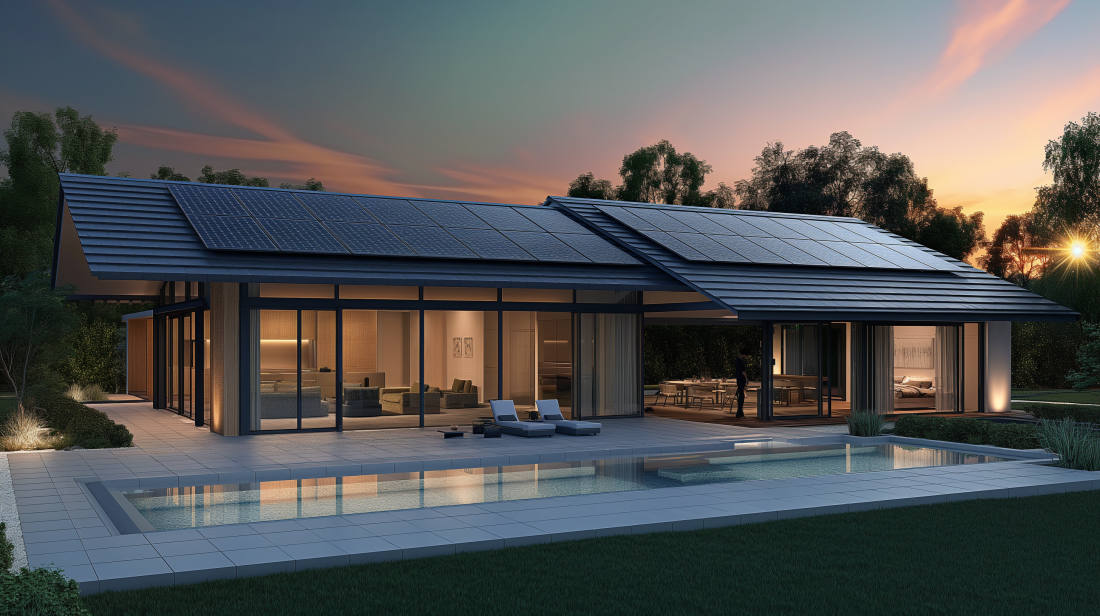
Most residential solar in Singapore is on landed properties, where roof space and structural control sit with the owner. National policy continues to emphasise energy efficiency and low-carbon buildings. Green Mark certification from BCA signals that a building meets defined environmental performance criteria. A standalone home solar array is not the same as full Green Mark certification, but it aligns with the same narrative: lower operating carbon, predictable energy cost management, and a property that reflects current sustainability expectations.
Buyers who follow ESG trends or who plan long owner-occupancy may view solar as part of a broader “future-ready” package, especially when paired with efficient air conditioning, good insulation, and EV charging capability.
| Factor | Typical Buyer View | Your Action |
|---|---|---|
| System ownership | Clear title preferred | Keep purchase and grid paperwork organised |
| Documentation | Reduces perceived risk | Compile warranties, diagrams, handover notes |
| Roof condition | Concern if age or leaks unclear | Share inspection or racking penetration details |
Owned systems versus leased or PPA arrangements
In Singapore, outright purchase or financing that leaves the system as your asset is more typical for residential rooftop PV. For resale, an owned system is usually easier to explain: it is part of the property’s plant and equipment, subject to your land title, and there is no separate power contract for the buyer to inherit. If you did use any third-party contract, disclose it early — ambiguity is worse than a clear answer.
What buyers and valuers look for
Serious buyers rarely object to solar on principle; they object to uncertainty. The following items consistently reduce friction:
- Transferable warranties on modules, inverters, and workmanship, with remaining term and contact details
- System documentation: single-line diagrams, capacity in kWp, commissioning date, and grid correspondence
- Monitoring access: login or app handover for production data
- Maintenance history: cleaning schedule, any inverter replacement, and warranty events
For legal and contractual detail on handover packs, see our contract and warranty guide.
Preparing your solar system for sale: documentation checklist
| Item | Include | Notes |
|---|---|---|
| Ownership proof | Invoice, payment record | Shows you own the equipment |
| Grid and compliance | Connection references | Reduces regulatory doubt |
| Warranties | PDF copies, start dates | Highlight remaining coverage |
| Technical pack | kWp, inverter, panel count | Aids maintenance and expansion |
EV charging as an additional value signal
Singapore’s transport plans continue to support wider EV adoption. A landed home with dedicated EV charging infrastructure can complement solar in the buyer’s mind: daytime PV generation and overnight charging are easy to explain as an integrated running-cost story.
Buyer concerns and how to address them
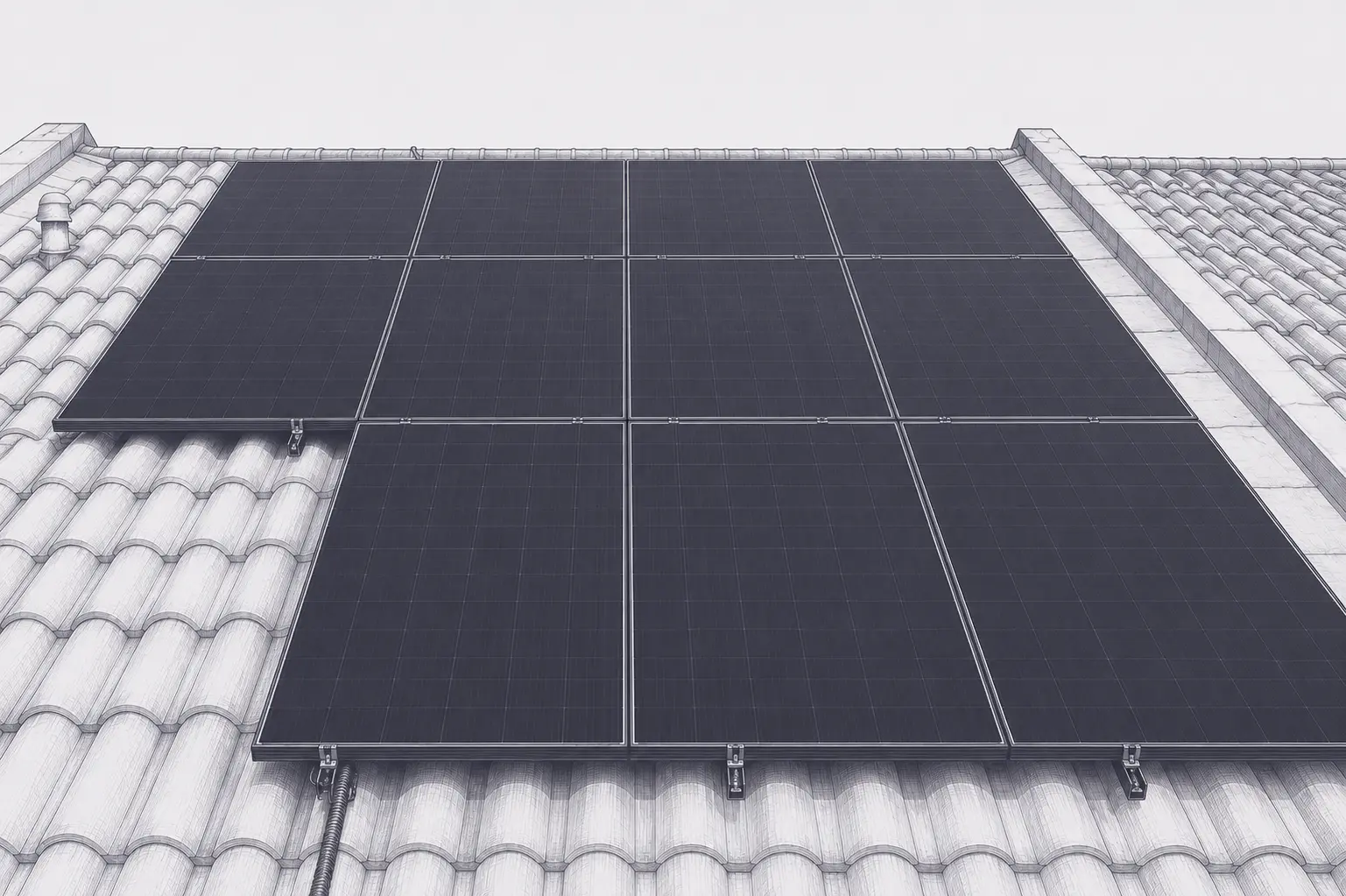
Aesthetics. Some buyers worry about visible rails or conduit. Photos from the street plus a short note on panel colour and layout set expectations.
Roof condition. Provide the installer’s waterproofing method, warranty on roof work, and the age of the roof relative to panel installation.
Maintenance. Explain that PV has no moving parts, that rainfall helps cleaning, and that occasional inspection and inverter checks are normal.
Performance. Show normal year-on-year variation and that tropical yield depends on cloud, haze, and shading. Monitoring data beats hand-waving about “free electricity.”
Frequently Asked Questions
Do solar panels always increase my home value in Singapore?
Not always by a fixed percentage. International studies suggest positive premiums for well-documented, owned systems. Treat solar as a quality improvement that appeals strongly to some buyers and neutrally to others, provided documentation is good.
Is an owned system better for resale than a lease?
In most cases, yes. Owned equipment avoids transferring a third-party contract. If you have an ongoing arrangement, get legal advice and prepare a plain-language summary for buyers.
What documents should I hand over on completion?
At minimum: warranties, technical summary (kWp, inverter, panel types), grid correspondence, and monitoring access.
Solar on a Singapore landed home is best positioned as a transparent, well-documented upgrade. Evidence from mature markets supports modest sale premiums for owned, clearly transferred systems. Prepare the paperwork once, and your agent can repeat the same accurate story every time the door opens. For the full context on solar myths and facts, read our 15 Solar Myths guide.