Comparing Solar Quotes Singapore: How to Read Beyond the Price Tag
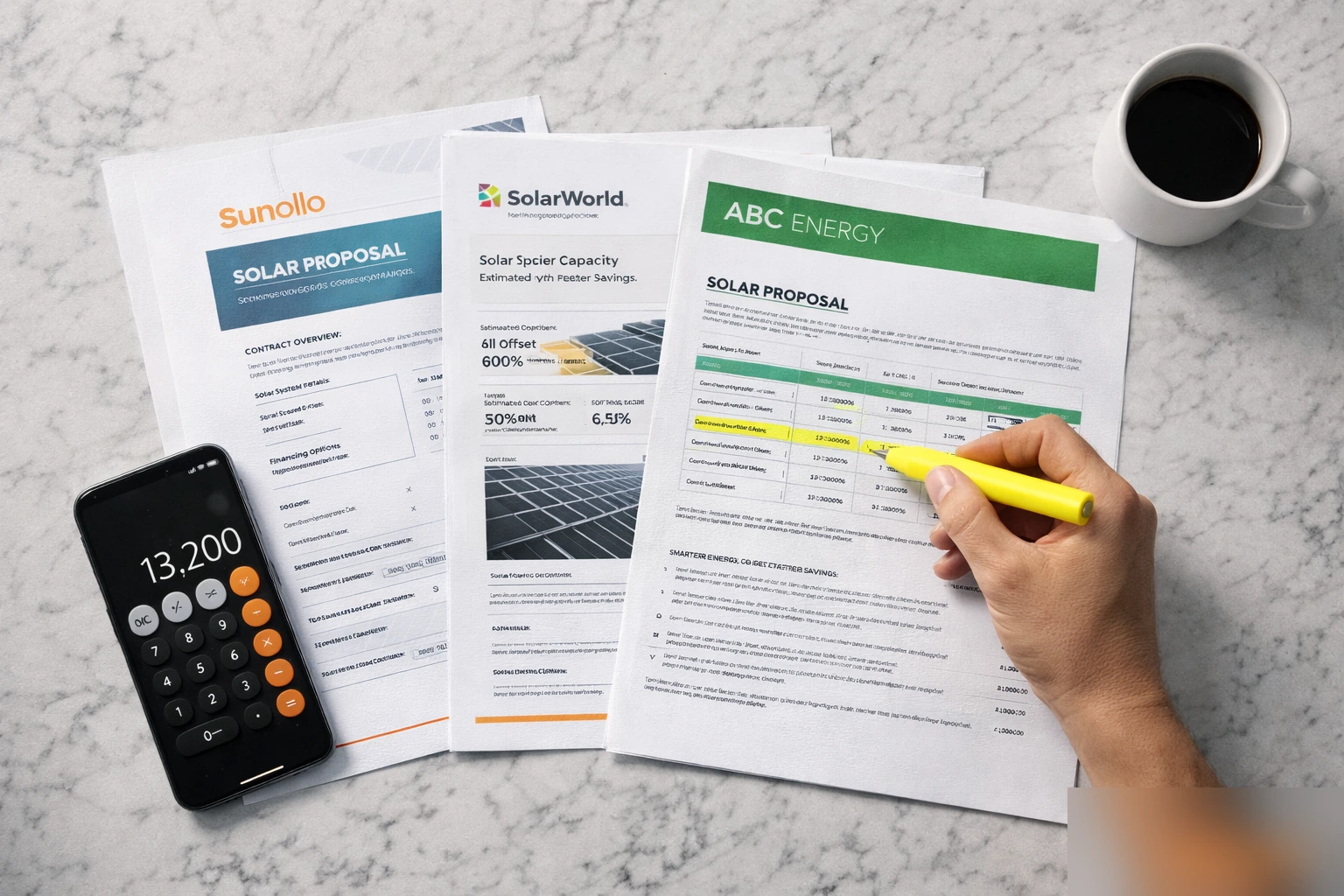
If you have requested two or three solar proposals for a similar roof, you have probably seen a wide spread in pricing. It is common to see quotes from roughly S$12,000 to S$30,000 for systems that sound “about the same size.” That gap is not random. It reflects differences in equipment, design quality, warranties, service scope, and what is actually included.
This guide explains how to compare solar quotes in Singapore in a fair, like-for-like way. You will learn which numbers matter most, which cheap quotes leave costs out, and how to spot red flags before you sign. For broader context, see our 15 Solar Myths guide, contract and warranty guide, guide to choosing the best solar company, and Solar Panel Cost guide.
Why solar quotes vary so much in Singapore
Several legitimate factors push prices apart, even when headline system capacity looks similar.
Equipment tier and efficiency. Premium modules and inverters cost more upfront but may produce more energy per square metre, which matters on space-constrained roofs.
Structural and electrical work. Some roofs need reinforcement, longer cable runs, or upgraded breakers. A quote that assumes a standard install may rise after site assessment.
Design and engineering quality. Shading analysis, stringing logic, and compliance with local installation practice affect long-term yield and safety.
What is bundled. One quote may include SP Group application support, monitoring setup, and handover documentation. Another may list only hardware and basic installation.
Warranty depth. Longer product warranties, stronger workmanship coverage, and clear response processes have a real cost but reduce lifetime risk.
Eight elements every solar quote should include
Price per watt versus price per kWh
Price per watt (S$/Wp) divides total quoted price by installed DC kilowatts-peak. It is useful for normalising quotes of the same design quality and scope. If one proposal is dramatically lower but also thinner on warranties and scope, the metric can mislead.
Implied price per kWh connects cost to expected production over time. A slightly higher S$/Wp system with better shading handling, lower degradation, or higher annual yield can deliver a lower effective cost per kilowatt-hour over 25 years.
Use S$/Wp as a sanity check between proposals with matched equipment and scope. Then stress-test with conservative production to compare lifetime value.
Hidden costs cheap quotes often exclude
Cost AreaWhy It MattersWhat to AskPermits and complianceLocal requirements must be metWho prepares submissions and pays fees?SP Group applicationGrid connection adds time and coordinationIs liaison and paperwork included?Monitoring hardwareFaults can go unnoticed without alertsIs monitoring hardware and app access covered?Maintenance and cleaningSoiling and debris affect yieldIs a maintenance plan included or optional?
How to build a like-for-like comparison table
Create a single matrix and force every vendor into the same rows. Keep columns to three or four for readability.
Line ItemInstaller AInstaller BInstaller CTotal price (incl. GST)———kWp and module/inverter models———P50/P90 annual kWh———Warranties (product/performance/workmanship)———Monitoring and O&M scope———Payment schedule and timeline———
Red flags in solar quotes
Total cost of ownership: a 25-year view
Solar economics in Singapore should be evaluated over the full useful life. A simple ownership model includes:
When you map these over 25 years, two quotes with a S$3,000–S$5,000 gap on day one can invert rank if the lower-priced system underproduces or carries weak warranties. This is why like-for-like tables matter more than a single bottom-line number.
Frequently Asked Questions
Why do two companies quote very different prices for the same kWp?
kWp is only one input. Module and inverter tier, roof complexity, electrical upgrades, warranty depth, monitoring, and whether grid paperwork and after-sales are bundled all move price. Match scope before comparing S$/Wp.
Should I trust a single annual kWh number on a quote?
Only if the method is shown: orientation, tilt, shading, and loss factors. Prefer P50 and P90 scenarios so you are not optimising decisions on a marketing estimate.
What payment schedule is reasonable in Singapore?
Milestone-based schedules are standard good practice. Be cautious of very high upfront percentages before equipment is on site.
Are permits and SP Group application always included?
Not automatically. Some quotes exclude administrative support or treat certain fees as pass-through. Ask for explicit inclusion or line-item fees.
For the full picture on evaluating solar proposals, read our 15 Solar Myths guide and guide to choosing the best solar company.