Solar Panel Insurance Singapore: How to Protect Your Investment
Solar PV systems can cut electricity bills and support Singapore’s energy transition, but panels, inverters, and mounting hardware sit exposed on your roof for decades. When people ask whether their home policy already covers solar, the honest answer is often “partially, or not in the way you expect.” This guide explains why standard home insurance may leave gaps, which Singapore insurers explicitly include solar equipment, what risks you should insure against, and how HDB flats differ from landed homes. For broader context on system quality and expectations, see our 15 Solar Myths guide and our contract and warranty guide.
Why standard home insurance often excludes solar panels
Many Singapore homeowners assume that because solar is “part of the house,” it is automatically covered under a standard fire or home contents policy. In practice, insurers treat solar PV as a distinct class of property: it is a fixed installation with high replacement cost, outdoor exposure, and specialist repair paths. Policies may cover the building structure but define “building” in ways that do not clearly include mounted modules, or they may cap outdoor fixtures differently from the main roof.
Another common gap is valuation. Home policies often insure the dwelling at reinstatement value, but solar may need to be scheduled separately so the sum insured matches the cost to remove damaged equipment, replace like-for-like, and recommission the system. Without that, a claims adjuster might pay only a generic roof or electrical allowance.
Finally, operational risks such as electrical surge damage to inverters, or theft of roof-mounted equipment, may fall outside standard peril lists unless explicitly endorsed. Warranties from manufacturers and installers cover defects and workmanship for defined periods, but they are not a substitute for insurance against fire, lightning, or extreme weather.
Which Singapore insurers cover solar
| Insurer / Product | Solar Feature | Notes |
|---|---|---|
| OCBC GREAT Home Protect Premier | Coverage for solar panels up to S$25,000 | Confirm sub-limit and perils that apply |
| Great Eastern GREAT Home Protect | Up to S$25,000 solar coverage; 5% green discount | Check eligibility criteria for green discount |
Other insurers may cover solar under general building or all-risks extensions, but the critical step is to obtain written confirmation that modules, inverters, and balance-of-system components are insured for replacement value and named perils. If your broker cannot point to a clause or endorsement, assume the risk is uninsured until clarified.
What risks need coverage
| Risk | Why It Matters | Question for Your Insurer |
|---|---|---|
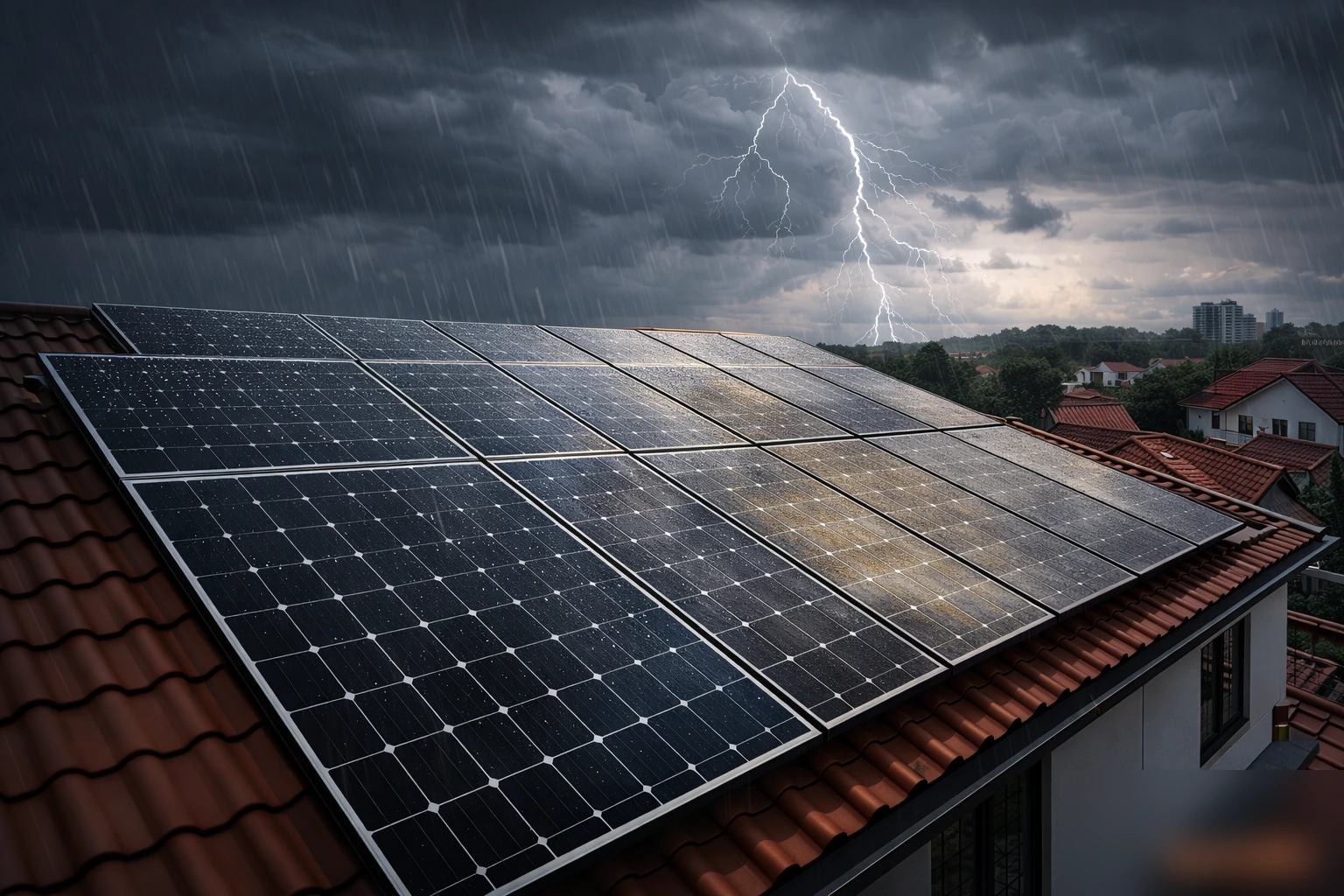
| Lightning / surge | Can destroy electronics in minutes | Are inverters and DC optimisers covered for surge? |
| Storm / wind / rain | Mechanical and water ingress damage | Are roof-mounted panels part of the insured building? |
| Theft / vandalism | Loss of modules or cabling | Is outdoor fixed equipment included? |
| Fire | Building and system loss | Is reinstatement cost for solar included in sum insured? |
HDB vs landed property insurance differences
For HDB flat owners, the building shell and common areas are managed under HDB’s framework; your personal insurance focus is usually contents, renovations, and fixtures you are responsible for. Solar on an HDB roof must comply with HDB technical requirements and approved installers. Insurers may ask for proof of approval and compliant installation before extending cover.
For landed properties (terrace, semi-detached, detached, GCB), you typically insure the entire dwelling and outdoor structures. Solar arrays may be larger with higher replacement value. Landed owners should pay particular attention to sum insured, debris removal, and whether ancillary structures tied to the system need scheduling.
How to document your system for claims
Claims move faster when you can prove what was installed, when, and by whom. Maintain a digital folder with:
- Serial numbers for each module and the inverter, copied from nameplates and purchase documents
- Photos of the array after commissioning: wide shots, close-ups of labels, inverter location, and isolators
- Certificates and approvals: LEW endorsements, grid application paperwork, and as-built diagrams
- Invoices and warranties showing equipment model numbers and prices, aligned with your contract and warranty guide
- Maintenance records if your insurer differentiates between wear-and-tear and sudden insured damage
Update the folder after any upgrade, inverter swap, or expansion. If you rely on a specific sum insured for solar, recalculate when you add capacity so you are not underinsured after a claim.
What your installer should provide
Your installer’s insurance protects you indirectly during construction and protects third parties if something goes wrong on site:
- Public liability insurance appropriate to rooftop and electrical work
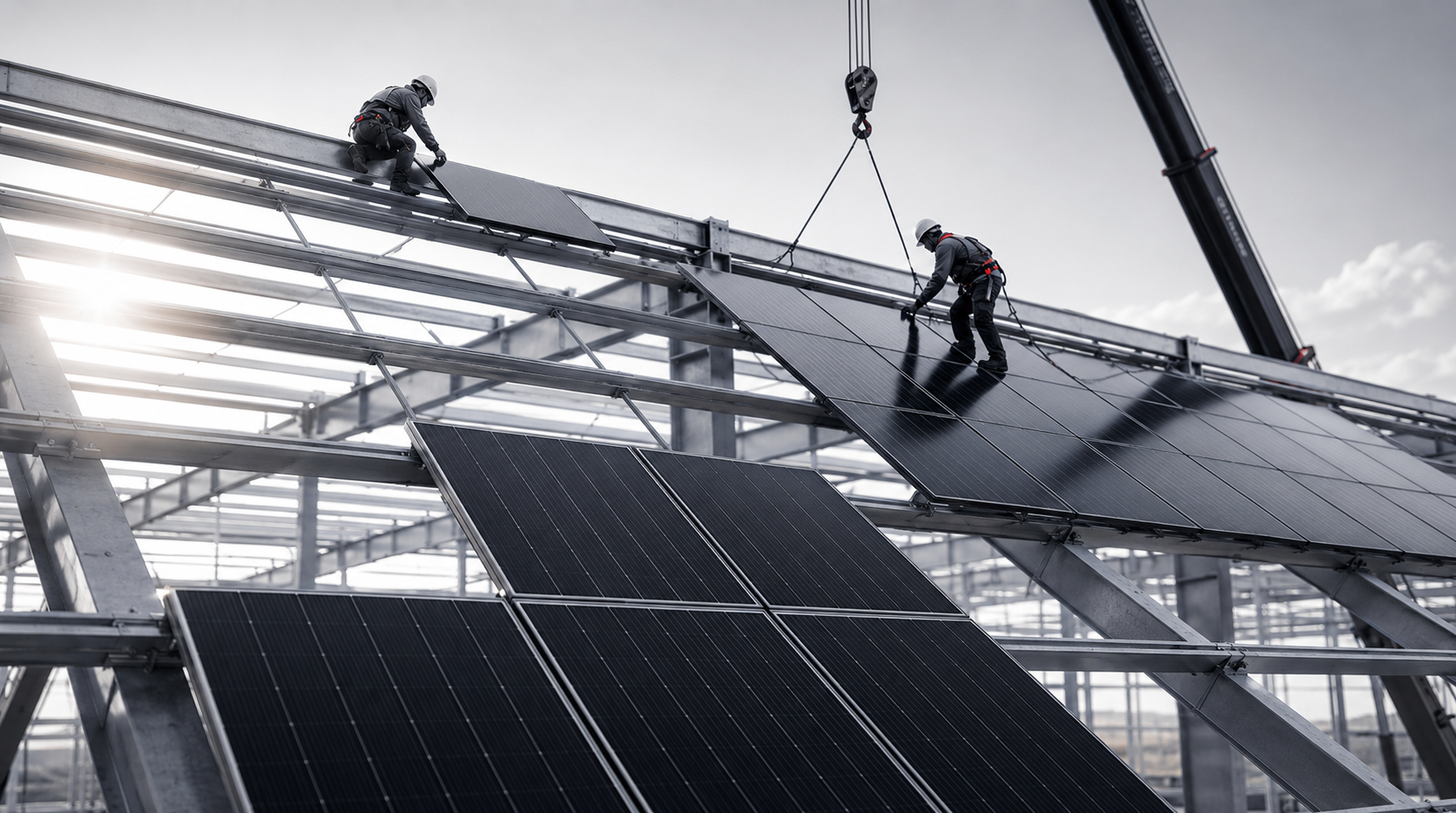
- Contractors’ all risks or installation coverage for materials on site until handover
- Work injury compensation compliance for workers on your premises (statutory requirement in Singapore)
These policies are not a substitute for your own home insurance for the finished system, but they reduce tail risk during the installation phase.
Self-insurance considerations for smaller systems
For a modest residential array, some owners weigh paying premiums against bearing the risk themselves. Self-insurance means setting aside a repair and replacement reserve and accepting that a single lightning event could wipe out several years of bill savings.
Self-insurance may be more plausible when replacement cost is low, when the system is easily accessible for repairs, and when you already have strong manufacturer warranties. It is less attractive when the array represents a large share of your home improvement budget or when your mortgage requires adequate property cover.
Frequently Asked Questions
Does my fire insurance automatically cover solar panels?
Not necessarily. Fire policies may cover the building but exclude or limit solar unless the panels are included in the sum insured or a specific extension applies. Ask your insurer to confirm in writing.
Is a 5% green discount the same as having enough solar coverage?
No. A premium discount rewards eligible green features; it does not guarantee that your module and inverter replacement value is fully insured. Check limits and whether they fit your system size.
Will my installer’s warranty replace insurance?
Warranties cover defined product and workmanship failures within their terms. They generally do not cover lightning, fire, or theft. Use the contract and warranty guide alongside a suitable home policy.
What should I do before the monsoon season?
Review your policy perils for storm and surge, visually inspect mounting and flashing if safely possible, ensure drainage around roof entries is clear, and update your photo documentation so any new damage is easier to prove.
Solar is a long-term asset on your roof; treating insurance as an afterthought can mean paying twice after an event you assumed was covered. Compare products with explicit solar limits, align sums insured with real replacement costs, and keep claim-ready documentation. For more context, read the full 15 Solar Myths guide.