Singapore energy is the only sector in the country where the most regulated company makes the most stable money, the most innovative company has the smallest market share, and the most powerful player is not even a company.
The most powerful player is the Energy Market Authority. EMA writes the rules. EMA sets the vesting contract prices that ultimately determine what your electricity costs. EMA decides who gets to import gigawatts of low-carbon power from Indonesia, Cambodia, and Australia. EMA approved the regulatory sandbox that is right now experimenting with whether your neighbour's home battery can become a tradable grid asset. The five gencos, the wires monopoly, the dozens of retailers, the hundreds of installers, and the hyperscalers consuming a fifth of the national grid all operate inside boundaries that EMA draws.
This piece is a value chain map of those boundaries. Because Singapore energy is not one market — it is five distinct games being played simultaneously, each with different incumbents, different economics, different definitions of winning. And the value pool that determines who captures S$3 billion of annual revenue (and the much larger pool of capital allocation behind it) is in the process of redistributing across those five games as we speak.
The previous piece on this site asked whether Singapore can become energy-sovereign. This one asks the harder commercial question: who wins, who loses, and where is the money going?
Part I — The Map
1. The Five Games
Here is the value chain stripped to its load-bearing layers:
- Game 1 — Sovereign Procurement. EMA, GasCo, and the import-licensing authority. Single player: the state. Stake: national energy security. Value pool: the difference between buying LNG well and buying it badly, at multi-billion-dollar scale.
- Game 2 — Generation. ~10 GW of installed capacity across five major gencos plus the import-project sponsors. Mostly foreign-owned. Heavily regulated through vesting contracts. Value pool: the contracted spread between gas cost (+carbon tax) and wholesale market price, modulated by capacity payments and ancillary service revenue.
- Game 3 — Wires. SP Group as monopoly transmission and distribution operator. Temasek-owned. Regulated returns. Value pool: the regulated revenue allowance that compensates SP Group for its asset base — currently producing S$1.16 billion of net profit at 9.1% RoE.
- Game 4 — Retail. The Open Electricity Market. About a dozen active retailers, three of whom hold ~60% of the residential market. Value pool: the margin between wholesale procurement cost and the retail price the consumer pays — being compressed each year.
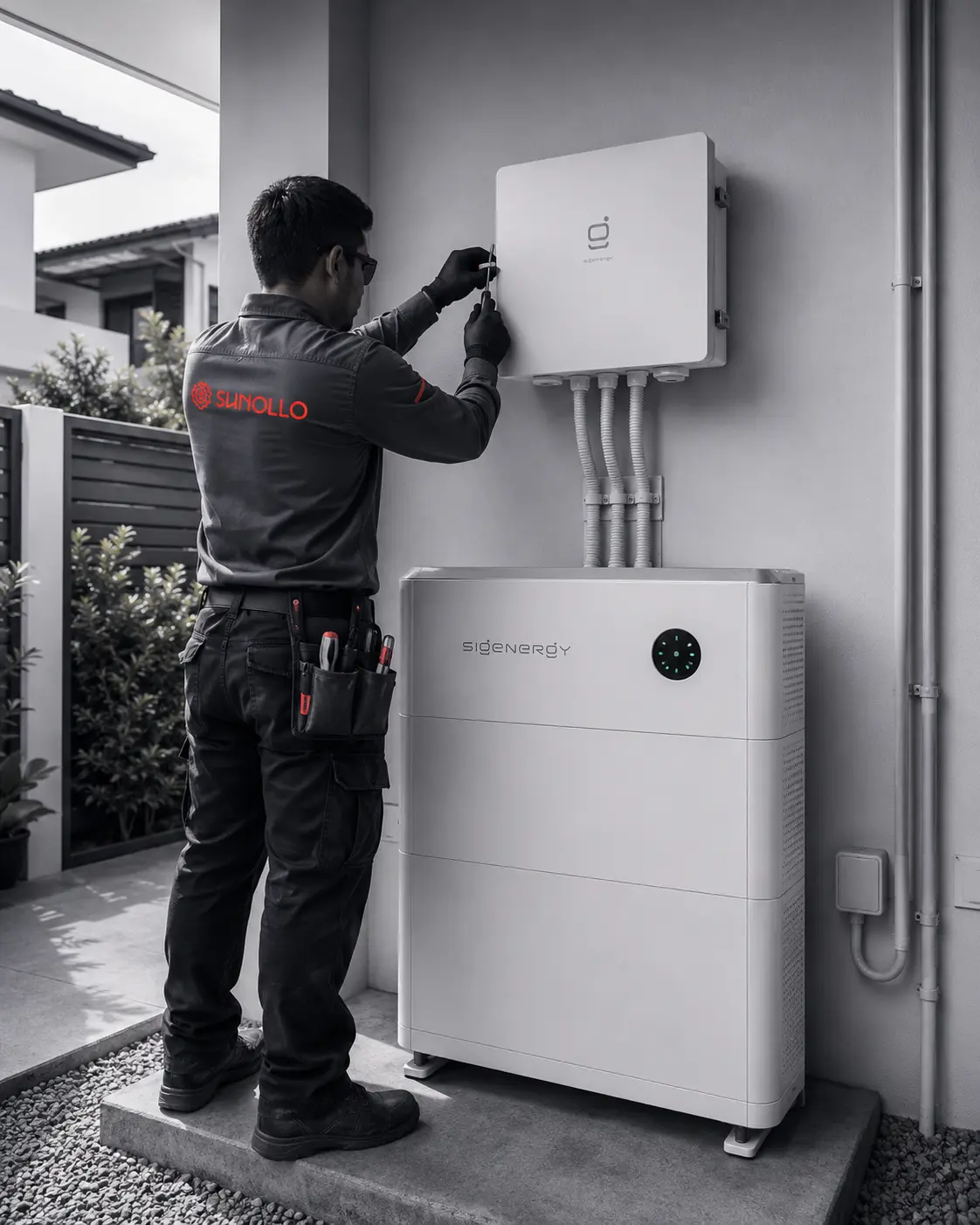
- Game 5 — Distributed Energy. Rooftop solar installers, battery integrators, VPP operators, microgrid sponsors, EPCs. Highly fragmented. Where new market formation is happening. Value pool: a multi-billion-dollar build-out of distributed assets across landed homes, HDB blocks, commercial rooftops, and floating PV — plus the recurring revenue layer from aggregated grid services as VPPs scale.
And above all five sits the meta-game:
- The Meta-Game — Capital Allocation. Temasek (~S$52 billion of total annual investing capacity), GenZero (S$5 billion committed for decarbonisation), Pentagreen Capital (US$1 billion green debt JV with HSBC), MAS green finance frameworks, foreign infrastructure funds, hyperscaler balance sheets. Who funds which layer at what cost of capital determines which players in each game can scale and which cannot.
You cannot understand "winning in Singapore energy" without first understanding which game you are playing. The strategies, time horizons, capital structures, and competitors are completely different.
2. The Questions This Piece Answers
This is the analytical scaffolding. Specifically:
- Who owns Singapore's generation capacity, and why does it matter?
- Why is SP Group structurally the most profitable + most boring company in this sector, and what does that tell us?
- How do vesting contracts actually work, and why do they explain everything about generation economics?
- What does Open Electricity Market consolidation look like, and what comes next?
- How are data centres reshaping the demand side, and which value chain layers do they enrich?
- Where is Sembcorp going (3.2 → 20.4 GW renewables in 5 years), and why is it the most strategically interesting company in the sector?
- What is the structure of the distributed energy game, and what does winning look like at the installer level?
- How does Singapore's capital allocation machinery — Temasek, GenZero, Pentagreen, MAS — choose what to fund?
- What three decisions in the next 24 months will redistribute the value pool?
- If you are a homeowner, a corporate buyer, an investor, or a foreign player thinking about entering — what does this map mean for you?
Part II — Game 1: Sovereign Procurement
3. The Player: The State Itself
Game 1 is unusual because it has exactly one player: the Singapore government, operating through EMA, the new Singapore GasCo, the Ministry of Trade and Industry, and increasingly the Singapore-Australia Cross Border Electricity Trade Framework and the equivalent Indonesia, Cambodia, and Vietnam arrangements.
There is no commercial competitor. This is the part of the value chain that nobody outside Singapore's institutional energy ecosystem can play. Even Sembcorp and Keppel — the most credentialed local energy operators — participate downstream of this game. They sell into a market whose upstream supply contracts are negotiated, hedged, and risk-managed by the state.
The scale is large. Singapore consumes roughly 12-13 million tonnes of LNG-equivalent gas annually for power generation. GasCo will start procuring 2-3 million tonnes in 2026 and grow to roughly 6 million tonnes by 2035-2038. The remaining volume continues to flow through the existing portfolio held by the gencos and Pavilion Energy. The portfolio strategy GasCo has telegraphed — diversified across Brent-indexed, Henry Hub-indexed, and JKM-indexed contracts, mixing spot and long-term tenors, blocked from sanctioned suppliers — is itself a significant piece of policy design.
4. What Winning Looks Like in Game 1
Winning here is not measured in profit. It is measured in volatility absorbed. The Q2 2026 tariff was 27.27 cents/kWh — a 2.1% increase that absorbed a doubling of Asian LNG spot prices following the Hormuz closure. The grid did not blink. There were no rolling brownouts. No emergency procurement. This is what fifty years of procurement excellence looks like.
What the Hormuz crisis exposed is that Singapore's previous procurement model — many private gas-purchase arrangements held by gencos, each negotiated independently — was leaving real value on the table. GasCo's creation is the explicit recognition of this. By centralising procurement, the state can hedge across a deeper portfolio, take longer-dated positions, and act as a single counterparty large enough to negotiate from a position of strength with Qatar, ExxonMobil, Woodside, Shell, and the Indonesian government.
If GasCo executes well, the next Hormuz event will produce a smaller tariff move than 2026's. That is the entire deliverable of Game 1. It is invisible when it works, expensive when it doesn't.
5. The Adjacent Sub-Game: Regional Imports
The other component of Game 1 is regional electricity imports — a 6 GW target by 2035, equivalent to roughly one-third of expected demand. As of October 2025, EMA has issued Conditional Approvals for 11 projects totalling 8.35 GW: Indonesia 2 GW, Australia 1.75 GW (SunCable), Vietnam 1.2 GW, Cambodia 1 GW, plus Sarawak/Malaysia. Six Indonesian projects have advanced to Conditional Licences targeting commercial operations from 2028.
Here Singapore is partly a buyer and partly a market-maker. The 6 GW target was raised from 4 GW in 2024 — a clear signal that Singapore wants to be the demand anchor for the entire ASEAN Power Grid build-out. The ASEAN Centre for Energy estimates ASEAN countries need to invest approximately US$21 billion annually from 2026 to 2030 to update grids for cross-border trading at scale. Singapore's demand is the demand that makes those numbers bankable. EMA chief Kok Keong Puah described SunCable as "very ambitious" but "actually possible" — and that exact stance, multiplied across eleven projects, is Singapore creating the regional renewable market it intends to import from.
For corporate energy buyers and renewable developers in Indonesia, Cambodia, Vietnam, and Australia, Singapore's 6 GW import target is the single largest near-term demand signal in Southeast Asia. The game inside Game 1 is which projects actually clear the Conditional Approval → Conditional Licence → Final Investment Decision → Commercial Operations path. The economics of those projects are subsidised, in effect, by Singapore willing to pay above local wholesale rates for firmed clean electrons delivered to Tuas.
Part III — Game 2: Generation
6. The Big Five-Plus
Singapore's grid is supplied by approximately 10 GW of installed generation capacity, dominated by five major companies. The ownership structure is striking:
- Senoko Energy: ~20% of Singapore's electricity supply. Owned by Lion Power Holdings — led by Marubeni (Japan) and Engie (France), each at ~30%.
- YTL PowerSeraya: 3,100 MW licensed capacity. Wholly owned by YTL Power International of Malaysia.
- Tuas Power: 2,670 MW licensed capacity. Owned by China Huaneng Group.
- Sembcorp: ~1,215 MW across Cogen (Banyan, 400 MW) and Sakra Power Station (815 MW). Majority owned by Temasek (Singapore).
- PacificLight Power: 815 MW LNG-fired, commissioned 2013. Part of the Pavilion Energy / Petronas ecosystem.
- Keppel Merlimau Cogen: Part of Keppel Group (Singapore, Temasek-linked).
Pause on that. The single biggest generator (Senoko, ~20% of supply) is Japanese-French. The next largest (YTL PowerSeraya) is Malaysian. The third (Tuas Power) is Chinese. Only Sembcorp and Keppel Merlimau Cogen are domestically controlled, and together they represent roughly 20-25% of total capacity.
This is unusual among developed economies. Most countries treat power generation as a strategic sector and either nationalise it or restrict foreign ownership. Singapore did the opposite — sold most of its capacity to foreign strategic investors in a privatisation programme dating back to 1995 (when Temasek-linked PUB became Singapore Power). The bet: foreign capital and technical expertise would deliver capacity more efficiently than state ownership, provided the regulator (EMA) and the wires owner (SP Group, also state-controlled) could safeguard system reliability.
Fifty years later, the bet has worked. Singapore's grid is reliable. Capacity is sufficient. The price signal is regulated through vesting contracts and capacity mechanisms. But the strategic question this creates is unavoidable: when the next twenty years requires retiring gas plants, building hydrogen-ready CCGTs, or pivoting to mass renewables, are foreign-controlled gencos with capital allocators in Tokyo, Paris, Kuala Lumpur, and Beijing the right shareholders to make those decisions?
7. The Hidden Architecture: Vesting Contracts
You cannot understand Singapore generation economics without vesting contracts.
Introduced in 2004 as Singapore liberalised electricity, vesting contracts are bilateral Contracts-for-Differences between the gencos and SP Services (the Market Support Services Licensee). They specify a volume of electricity hedged at a regulated vesting price — which is set based on the long-run marginal cost (LRMC) of the most efficient generation technology that accounts for at least 25% of Singapore's demand. In practice, that has meant a Combined Cycle Gas Turbine.
The function: vesting contracts remove the gencos' incentive to withhold supply to drive up wholesale prices. If a genco produces less and prices spike, the genco still pays the difference back through the vesting CfD. The market is structurally hedged against the worst form of generator gaming.
The consequence: genco profits in Singapore are largely contracted, not marginal. The vesting price determines the realisable revenue of about 65% of contracted load. Wholesale market prices and ancillary services contribute the rest. This is why Singapore gencos do not look like Texas independent power producers — there is no boom-and-bust cycle, no extreme weather windfall, no scarcity pricing. There is also no path to capture the kind of upside that scarcity pricing generates. It is a regulated business dressed as a market business.
This matters strategically for two reasons. First, gencos are squeezed when the LRMC reset moves the vesting price downward (which it does periodically as efficiency improvements lower the benchmark). Second, the carbon tax — S$25/tCO2e in 2024-2025, S$45/tCO2e in 2026, headed to S$50-80/tCO2e by 2028-2030 — flows directly through to LRMC and ultimately to the vesting price. Each S$25/tonne carbon tax increment pushes wholesale electricity cost up by ~1.0-1.5 cents/kWh, and the vesting framework propagates that cleanly into the retail tariff while compressing genco real margins.
The genco game in Singapore is a margin defence game. Not a margin expansion game.
8. The Sembcorp Pivot
If the genco game is structurally constrained, the move that interesting gencos make is to pivot upstream and outward. The clearest example: Sembcorp.
Sembcorp's gross installed renewables capacity grew from 3.2 GW in 2020 to 20.4 GW in February 2026 — more than six-fold growth in five years. The 2025 target was 10 GW (already exceeded). The 2028 target is 25 GW. Of that capacity, the vast majority is overseas — China, India, Vietnam, Indonesia, the UK, Oman. In Singapore, Sembcorp manages over 2,000 solar sites and operates Southeast Asia's largest battery energy storage system (326 MWh as of October 2025, expanded from 285 MWh originally).
Sembcorp's strategy is the most interesting case study in the sector. Read at face value, it says: the Singapore gas generation business is a regulated cashflow base. We will use it to fund a global renewables build-out where the growth, the unit economics, and the strategic optionality are better.
The annual report makes this explicit: contracted gas energy provides cash flow visibility through 2028 to support the expansion of Renewables. Translation: Singapore generation is the bank. The bank funds a different bank, which is the future.
Sembcorp's net profit for FY2025 was S$1.003 billion before exceptional items. Its market cap (mid-cap on SGX) reflects what investors think a regulated gas business plus a real renewables growth story is worth. The execution risk now is whether the 25 GW 2028 target is hit, whether project IRRs hold up against tightening Indian and Chinese renewable markets, and whether the gas business can be wound down profitably as Singapore's gas share declines.
Tuas Power, Senoko, and YTL PowerSeraya face the same strategic question with very different ownerships. Chinese, Japanese-French, and Malaysian capital allocators each evaluate the Singapore gas business inside global portfolios with different strategic priorities. The decisions those parents make in Beijing, Tokyo/Paris, and Kuala Lumpur about reinvesting in Singapore generation versus harvesting it are among the most consequential decisions in the entire sector — and they are made offshore.
9. The New Generation Entrant: Hyperscalers
The unusual feature of Singapore generation economics in 2025-2026 is that the largest customers are increasingly building their own supply.
Microsoft signed a 200 MWp 20-year solar PPA via SolarNova 8 covering 1,100+ public and government buildings — operated through EDP Renewables Sunseap. Equinix has signed three Singapore solar PPAs totalling 143.5 MWp since 2024 — two with Sembcorp, one with ESR and TEPCO HD. These are not small adjacencies. They are direct demand-side investments that bypass the wholesale electricity market and lock in long-term green supply at structured prices.
The hyperscaler demand profile is also reshaping the data centre permitting regime. Singapore's 2019 moratorium on new data centre construction lifted in 2022 with strict energy and water efficiency requirements (PUE 1.25 or better, 50%+ green energy). A 2023 pilot awarded 80 MW to Microsoft, Equinix, GDS, and an AirTrunk-ByteDance JV. A second round in 2025-2026 is awarding 200 MW more, with a 700 MW Jurong Island data centre park reserved.
This creates an unusual asymmetry in Game 2. The traditional gencos sell wholesale to the market and earn vesting-anchored returns. The hyperscalers, by signing 20-year solar PPAs, are simultaneously the largest demand growth segment and the largest source of new contracted generation procurement. They are effectively becoming co-gencos at the renewables layer — a new structural participant in Game 2 that did not exist a decade ago. The companies that win solar PPA mandates from hyperscalers (Sembcorp, Keppel CRA, EDPR Sunseap, Vena Energy, ENGIE) capture a different economics curve than the gencos selling vesting-contracted gas-fired electricity.
Part IV — Game 3: The Wires
10. SP Group: The Most Boring + Most Profitable Company in Singapore Energy
SP Group is wholly owned by Temasek. It is the sole operator of Singapore's electricity transmission and distribution network and the sole operator of the gas distribution network. It serves approximately 1.6-1.7 million commercial, industrial, and residential customers. It also holds a 40% stake in Australia's Jemena.
The financials for FY2025 (year ended March 31, 2025):
- Net revenue: S$3.0 billion (7.5% YoY)
- Net profit: S$1.16 billion (4.5% YoY)
- Return on equity: 9.1%
- Credit ratings: Aa1 (Moody's), AA+ (S&P)
The previous year (FY2024): net profit S$1.11 billion, RoE 8.8%. Five-year regulatory reset for the period ending March 31, 2030 already concluded — meaning SP Group's allowed revenue and rate of return are locked in.
SP Group is what economists call a "natural monopoly under regulated rate of return." It cannot dramatically grow revenue except by growing its asset base (i.e., investing in more wires). Its profits are determined by EMA's regulatory framework. It cannot lose money in normal circumstances. It cannot make spectacular money either. It just compounds quietly, year after year, at ~9% returns on equity.
If you were ranking Singapore energy companies by strategic stability, SP Group is uncontested at number one. It is also, importantly, the company that the entire energy transition runs through — physically.
11. Why The Wires Game Matters For The Transition
Here is the structural truth that most analyses miss: every kilowatt-hour of solar, every charge cycle of every home battery, every megawatt of imported electricity from Indonesia or Australia, every demand response signal from a data centre — all of it runs across SP Group's wires.
That makes SP Group's three major operational initiatives the critical path for the entire transition:
- The Grid Digital Twin. Developed with EMA, NTU, and A*STAR. Two models: Digital Asset Twin (SP's network assets) and Digital Network Twin (system impacts from EV charging, DERs). Targeting 2025-2026 deployment. This is the visibility layer.
- Advanced Metering Infrastructure (AMI). The smart meter rollout that enables time-of-use pricing, demand response, and individual VPP enrollment. Not yet at full residential scale.
- The Future Grid Capabilities Roadmap (FGCR). Co-developed with EMA, published April 2025. The strategic priorities: harness distributed energy resources, enhance grid planning through digital solutions, maintain grid stability as renewables scale.
SP Group is also the operator of Singapore's first Virtual Power Plant pilot — the 15 MW regulatory sandbox with Univers signed in November 2025. The VPP operates inside SP's distribution network. If the VPP scales from sandbox to permanent market mechanism, SP Group will be the platform — the technical operator of the aggregation infrastructure that monetises distributed energy assets back into grid services.
In Game 5 (Distributed Energy), the installers and battery integrators capture the customer relationship and the equipment margin. But SP Group captures the platform. Like a payments network on top of which thousands of merchants operate, SP Group sits underneath the entire DER ecosystem.
The unsexy version of "winning" for SP Group looks identical to today: maintain regulated returns, execute on AMI and digital twin, retain platform position. The transformative version looks like SP Group becoming the operator of a national DER aggregation platform that earns platform fees on every VPP transaction — a meaningful expansion of its revenue base outside the regulated wires asset.
Watch this space.
Part V — Game 4: The Retail Layer
12. The Open Electricity Market: A Consolidation Story Written By a Crisis
The Open Electricity Market (OEM) was rolled out nationwide in 2018-2019, giving Singapore residential consumers the choice to buy electricity from licensed retailers at competitive prices rather than the regulated SP Services tariff. At its peak in 2020, twenty retailers competed for residential customers.
Then 2021 happened.
The global LNG crunch following the Russia-Ukraine pre-war positioning and post-pandemic gas demand recovery pushed wholesale electricity prices through the ceiling. Retailers who had locked customers into fixed-price plans found themselves buying wholesale at prices well above what they were selling to customers. Within a single week — 13-19 October 2021 — five independent retailers announced exits, including iSwitch, which was Singapore's largest independent retailer. iSwitch formally ceased retail operations on 11 November 2021. Ohm Energy, Best Electricity, and others followed. The OEM contracted from 20 retailers to roughly 10-12 within a few months.
The lesson the crisis taught the market: the only way to survive an LNG shock as a retailer is to have upstream generation as your hedge. Independents who had no own-generation were structurally exposed; gencos selling through retail arms were structurally hedged. The retailers who survived 2021 were almost all genco-affiliated.
The current structure, per the Open Electricity Market's official statistics as of 1 April 2026:
- 63.08% of residential accounts remain on regulated SP Group tariff
- 36.85% on retail price plans
- 0.08% on wholesale electricity plans
- For business accounts: 67.79% regulated, 24.98% retail, 7.23% wholesale
The current active OEM retailers, per the official OEM website:
- Keppel Electric — part of Keppel Group; longest-standing market share leader since OEM launch.
- Geneco — retail brand of Seraya Energy, a YTL PowerSeraya subsidiary (Malaysia).
- Senoko Energy Supply — retail arm of Senoko Energy (Marubeni + Engie, Lion Power Holdings).
- Sembcorp Power — Sembcorp Industries' retail arm.
- Tuas Power Supply (consumer brand "Save With Tuas") — Tuas Power's retail arm (China Huaneng).
- PacificLight Energy — PacificLight Power's retail arm.
- Sunseap Energy — now part of EDP Renewables after the S$1.1 billion February 2022 acquisition that saw Temasek exit its 12% stake.
- Plus a smaller fringe of independents: Bioenergy, Diamond Electric, Flo Energy, Just Electric, LHN Energy Resources, Union Power.
Three patterns matter strategically.
First, vertical integration won. The retail layer in Singapore is now mostly distribution-channel functionality for the upstream gencos. Sembcorp generates and sells. YTL PowerSeraya generates and sells via Geneco. Senoko generates and sells via Senoko Energy Supply. Tuas Power generates and sells via Tuas Power Supply. This is not a coincidence; it is what the 2021 crisis selected for. The independents who survived (Bioenergy, Flo, Just Electric, LHN, Union, etc.) collectively have modest market share, and most operate with either dedicated trading desks or hedging strategies that learned the 2021 lessons.
Second, the EDPR acquisition of Sunseap is the only recent example of a major non-genco platform entering Singapore retail at scale. EDPR did not acquire Sunseap to compete in residential retail — it acquired the SolarNova/HDB project pipeline and the C&I PPA platform. The Sunseap Energy retail brand continues operating, but the strategic centre of gravity is generation and distributed solar, not retail electricity per se.
Third, the unsold opportunity is enormous. Sixty-three percent of residential accounts are still on the regulated tariff. Most of those customers have never switched. The retail-side competitive battle of the next five years is over who captures those switchers — and what they capture them with. Increasingly, it is not a cheaper cents-per-kWh. It is a bundle.
13. The Retailer of the Future Thesis
The Open Electricity Market today sells one thing: electricity, billed monthly. The retailer of the future sells something more bundled:
- Electricity supply
- Plus solar installation (or solar-as-a-service)
- Plus home battery (sale or lease)
- Plus EV charger (with smart scheduling)
- Plus VPP enrollment (revenue share from grid services)
- Plus carbon offset retirement (where relevant)
- Plus demand-side management (time-of-use optimisation)
None of these bundles exists at scale in Singapore today. Each piece exists in isolation — Sunollo installs solar, EVME and SP Mobility deal with EV charging, the gencos run solar PPA programmes, the VPP is in sandbox. The retailer who first integrates these into a coherent monthly subscription that replaces the "electricity bill" with the "energy services bill" captures the new value pool.
The structural conditions for this are converging:
- Tariff escalation makes self-generation economically meaningful (4-6 year payback on residential solar today)
- BloombergNEF projects battery packs at $80/kWh globally by 2030 (from $108/kWh in 2025), making home storage rapidly more affordable
- EV adoption is rising; chargers create predictable home-charging demand profiles
- The VPP sandbox provides the regulatory framework for aggregating distributed assets into grid services
- SP Group's AMI rollout will eventually enable time-of-use pricing
The retailers who survive will not be the ones with the lowest cents-per-kWh. They will be the ones who own the customer relationship across electricity, solar, battery, EV, and VPP. The economics of one of those products are unattractive; the economics of all five bundled are very attractive — and they create a customer lock-in that pure-play retail electricity cannot.
This is the natural endpoint of Game 4 and the entry point to Game 5.
Part VI — Game 5: Distributed Energy
14. The Game Where The Value Pool Is Migrating
If Games 1-4 are mature and consolidated, Game 5 is the opposite — fragmented, fast-growing, with new entrants forming every year and the rules of the game still being written.
The components of Game 5:
- Solar installers: residential (landed homes, condos with management approval), commercial (rooftops, façades, BIPV), industrial (factory roofs), HDB (via SolarNova programme), floating PV (reservoirs).
- Battery integrators: home batteries (LFP, 9-18 kWh typical residential), commercial behind-the-meter storage, and grid-scale BESS.
- VPP operators: aggregators that coordinate distributed assets and bid them into wholesale markets and ancillary services.
- Microgrid sponsors: Pulau Ubin (EDP Renewables, 328 kWp + 1 MWh), Sentosa (smaller pilots), and the constituency-microgrid proposal raised by NMP Azhar Othman in May 2026.
- EPCs and specialised contractors: engineering, procurement, and construction firms that execute physical deployment.
The competitive landscape is layered. At the top of the food chain are the large vertically-integrated developers — Sembcorp (with its 2,000+ solar sites domestically and 20.4 GW global renewables portfolio), EDP Renewables Sunseap (winner of SolarNova Phase 8, executing the Microsoft 200 MWp PPA), Keppel CRA (now 100% Keppel-owned after the November 2025 buyout of Shell's 49%, with a 1.1 GW solar portfolio focused on C&I), Vena Energy, and ENGIE Southeast Asia.
Below these large developers are specialised players. Sunollo and similar companies operate in the residential and landed-home segment — where penetration remains under 10% of viable rooftops, demand is rising 30-50% year-on-year, and the customer-trust factor MOS Gan named in Parliament is decisive. Smaller installers, EPCs, and specialised solar consultancies compete for project pipeline at various scales.
The financial pool for Game 5 is potentially the largest of the five games over the next decade. Singapore needs to grow from 2.1 GWp solar (end 2025) to 3 GWp by 2030 — and the credible upper bound (per NUS rooftop studies) is 5-6 GWp by combining rooftops, façades, floating PV, and moveable structures. At Singapore's installed cost of S$1,450-2,000 per kWp for utility-scale solar, that is roughly S$5-10 billion of cumulative deployment by 2035 in solar alone, plus a similar order of magnitude in battery storage, plus the VPP service-revenue overlay.
15. The Distributed Energy Economics, Specifically
The unit economics for the homeowner in Singapore today:
- Solar (7-9 kWp residential): S$12,000-18,000 installed. Generates 8,000-11,000 kWh/year. At the Q2 2026 retail tariff of 27.27 cents/kWh, saves S$2,200-3,000/year. Payback 4-6 years on a 25-year asset.
- Home battery (9-18 kWh): S$5,000-14,000 installed. Standalone payback 8 years; with EV pairing 5-6 years. Captures the S$0.22/kWh arbitrage between Net Energy Rebate export rate (~S$0.10/kWh) and retail (~S$0.30/kWh on time-of-use peaks).
- VPP enrollment: when the sandbox graduates to permanent mechanism, an enrolled battery earns additional grid service revenue. Order of magnitude: another S$200-600/year per enrolled home battery, based on early international comparables.
The unit economics for the commercial buyer:
- Commercial rooftop solar PPA: Sembcorp, Keppel CRA, EDPR Sunseap, and Vena Energy will install, own, and operate a solar system at no upfront capex, selling electricity to the building owner at a discount to the retail tariff (~10-25%). Standard 15-20 year contracts. No financial commitment from the building owner beyond electricity purchase.
- Industrial behind-the-meter: similar PPA structures, often with larger systems (500 kWp - 10 MWp), bundled with EV charging or BESS.
The unit economics for the hyperscaler:
- Multi-decade PPAs at scale: Microsoft's 200 MWp at $XX/kWh, Equinix's three PPAs totalling 143.5 MWp. These are bilateral structured deals, not retail-tariff-priced, with attribute certificates and lifecycle hedging.
And the unit economics for the financial sponsor:
- Project finance for utility-scale solar: at SOR-linked debt and 6-8% blended cost of capital, equity IRRs of 8-12% on contracted PPA cashflows. Pentagreen Capital's mandate is precisely to make marginally bankable green infrastructure financeable — meaning solar and storage projects in tougher SEA markets but with Singapore as the demand anchor.
16. What Winning Looks Like At The Installer Level
The installer game in Singapore is currently a trust game more than a price game.
MOS Gan named the two friction points in Parliament: roof waterproofing and solar vendor reliability. Neither is solved by being the cheapest. Both are solved by being demonstrably the most credible — measured in operational years, balance sheet depth, warranty enforcement track record, and willingness to publish actual operational data (which is why the Singapore Solar Data Hub matters as a competitive signal).
The structural winners in residential solar over the next decade will be the companies that:
- Have operating histories long enough to be trusted with 25-year warranty commitments
- Capture customer relationships across solar, battery, and EV charging — not just the panel sale
- Build VPP-ready integration capability before the sandbox graduates
- Demonstrate data transparency in operations and outcomes
- Partner with rather than compete against SP Group on AMI/VPP integration
The C&I (commercial and industrial) game is structurally different — it is being won by the large vertically-integrated developers (Sembcorp, EDPR Sunseap, Keppel CRA, Vena Energy, ENGIE) because the contract sizes (S$5-100+ million PPAs) require institutional counterparty credibility that smaller players cannot offer. Sub-contractors and specialised EPCs operate underneath these primes.
The HDB game is a procurement game. SolarNova tenders are won by big developers with sharp pencils and proven HDB delivery track records — currently dominated by EDPR Sunseap, Sembcorp, and a small handful of others.
The interesting strategic question: does anyone consolidate horizontally across all three segments (HDB, C&I, residential)? Today no single company is dominant in all three. The first to credibly become so would have an unusual position — the only fully-integrated distributed energy operator in Singapore.
Part VII — The Meta-Game: Capital Allocation
17. Who Funds The Five Games
The capital structure of Singapore energy is unusual because so much of it flows through Temasek-related vehicles. The simplified map:
- Temasek: ~S$52 billion of annual investing capacity (FY2025). Direct ownership of SP Group (Game 3, the wires). Majority ownership of Sembcorp Industries (Game 2 and Game 5). Ownership stake in Keppel (Game 2, Game 5, data centres). Investment exposure to many other energy-adjacent companies. Has committed to halving portfolio net emissions by 2030 and net zero by 2050.
- GenZero: Temasek's dedicated decarbonisation platform, launched 2022 with S$5 billion commitment. Invests in technology-based solutions, nature-based solutions, and carbon ecosystem enablers. Released inaugural Sustainability Report in 2024/2025.
- Pentagreen Capital: Temasek's debt-financing JV with HSBC. Appointed manager of the Green Investments Partnership (GIP) with MAS. Deploying approximately US$1 billion for marginally bankable green and sustainable infrastructure across Asia — including renewable energy and storage, EV infrastructure, sustainable transport, and water and waste management.
- MAS (Monetary Authority of Singapore): Operates the Singapore-Asia Taxonomy for Sustainable Finance — the world's first multi-sector transition taxonomy launched December 2023. Covers eight sectors including Energy. Uses a "traffic light system" (green/amber/ineligible) and is uniquely accommodating to transition activities. Sustainable Bond Grant Scheme and Green & Sustainability-Linked Loan Grant Scheme support issuance. Singapore is ASEAN's largest sustainable debt market, accounting for over 50% of regional issuances.
- GIC: Sovereign wealth fund. Less publicly active in Singapore-domestic energy investments but allocates extensively to global renewables, infrastructure, and energy transition assets.
- Foreign infrastructure capital: Macquarie, KKR, BlackRock, Brookfield, Goldman infrastructure, plus dedicated regional infrastructure funds. Major participants in SEA renewables broadly; Singapore-specific exposure typically through Sembcorp, Keppel, or direct PPA-backed project finance.
- Hyperscaler balance sheets: Microsoft, Google, AWS, Equinix, GDS, AirTrunk, ByteDance. Direct counterparty for solar PPAs at scale. Effectively private capital flowing into Game 2 (generation) and Game 5 (distributed solar at C&I scale).
18. How Capital Chooses Which Game To Fund
The capital structure each game suits is distinct:
- Game 1 (Sovereign Procurement): state balance sheet only. GasCo capitalised from government reserves; no private capital required.
- Game 2 (Generation): large-balance-sheet capital. Foreign strategic investors (Marubeni, Engie, Huaneng, YTL). Project finance for new build (e.g., import projects). Temasek for Sembcorp and Keppel positions.
- Game 3 (Wires): regulated infrastructure capital. Temasek's direct ownership of SP Group fits the long-duration low-risk regulated-returns profile perfectly.
- Game 4 (Retail): working capital and customer acquisition spend. The retail margins do not support standalone capital plays; retailers exist as subsidiaries of upstream gencos.
- Game 5 (Distributed Energy): a different shape entirely. Larger PPAs (commercial, HDB, hyperscaler) require infrastructure project finance. Residential is private-pay (homeowners) plus increasingly leasing/financing structures. Battery storage in early stages still requires equity capital and grants. VPP economics are nascent and rely on the regulatory framework graduating from sandbox.
The capital allocation game inside Game 5 is the most interesting. Today, residential solar in Singapore is mostly self-funded by homeowners using cash or green loans. Sembcorp, Keppel CRA, and EDPR Sunseap offer C&I solar via PPA — they take on the capex and recover via long-term electricity sales. But residential leasing at scale (think Sunrun in the US: solar-as-a-service for the homeowner) does not yet exist in Singapore. The market structure to enable it — standardised contracts, AMI-enabled performance monitoring, regulatory clarity, and capital markets familiar enough with the asset class to fund it — is being assembled piece by piece.
If and when residential solar leasing arrives at scale, it will reshape Game 5 substantially. The financial sponsors who learn to underwrite Singapore residential solar performance — likely with Pentagreen-style green debt structures backed by aggregated NER export contracts and VPP service revenue — will create a new category of infrastructure asset.
Part VIII — The Three Pivots
Five games. Six capital pools. About a dozen meaningful institutional players. Hundreds of operating companies. Three decisions in the next 24 months redistribute the value pool meaningfully:
19. Pivot 1: The Vesting Contract Reset
The next LRMC-based vesting price reset will reflect updated parameters: higher carbon tax (S$45/tCO2e in 2026, projected S$50-80 by 2028-2030), potentially higher capital cost assumptions, and possibly a benchmark technology shift if EMA decides hydrogen-capable CCGT is the right reference. Each of these tightens genco economics. The gencos most exposed — Senoko, YTL PowerSeraya, Tuas Power, Sembcorp gas-only assets — face strategic decisions about whether to defend, upgrade (to hydrogen-ready), or harvest the assets.
Watch for: the next EMA consultation on vesting price methodology. It is the most consequential regulatory document in Singapore energy that almost no one outside the sector reads.
20. Pivot 2: VPP Graduation
The 15 MW Univers + SP Group VPP sandbox is the technical proof-of-concept. The strategic question for 2026-2027 is whether EMA graduates VPP from sandbox to a permanent market mechanism with defined revenue streams for enrolled distributed assets (frequency regulation, contingency reserve, energy balancing). The decisions inside this graduation:
- What revenue does an enrolled home battery actually earn per year?
- Who operates the VPP — SP Group as platform, or competing aggregators?
- What is the regulatory protection against asset stranding for early VPP enrollees if rules change?
- Does VPP enrollment require AMI? (Yes, in practice — which makes AMI rollout speed the critical path.)
If VPP graduates with clear, durable economics, residential battery economics improve materially and the case for solar+battery deployment accelerates. If the sandbox stays a pilot, the fifth switch we wrote about in the previous piece remains a thesis rather than a reality.
21. Pivot 3: The Data Centre 200 MW Round
Singapore's second data centre capacity round (200 MW + 700 MW Jurong Island park) is being contested by Microsoft, Equinix, Google, GDS, AirTrunk, ByteDance, AWS, and others. The application window runs through March 2026. The 50%+ green energy requirement is the structural constraint. The winners will need to demonstrate matched supply through PPAs, RECs, or attribute-certificate contracts.
This single procurement decision drives roughly 1-2 GW of contracted renewable demand over the next decade through bilateral PPAs. It is the largest demand-side decision in Singapore renewables outside the regional imports programme. The renewable developers who win these PPAs (likely Sembcorp, EDPR Sunseap, Keppel CRA, possibly Vena Energy) lock in 15-20 year cashflows that anchor their own capacity expansion.
Part IX — What Singapore Has To Get Right
Across the five games, there are four cross-cutting problems Singapore has to solve to win the next decade — and none of them are technology problems.
22. The Cross-Layer Coordination Problem
Each game has a different regulator and incumbent. Game 1 (procurement) is EMA + GasCo. Game 2 (generation) is EMA + gencos + import sponsors. Game 3 (wires) is EMA + SP Group. Game 4 (retail) is EMA + retailers. Game 5 (distributed) is EMA + a fragmented landscape.
EMA is the constant. That is a strength. But it also means a single regulator must simultaneously hold the wholesale market design, the vesting contract framework, the import licensing, the VPP sandbox, the AMI rollout, and the data centre capacity allocation in coherent alignment. Every individual piece is well-managed. The coordination challenge is making sure they evolve together.
The Future Grid Capabilities Roadmap (April 2025) is EMA's most explicit attempt to do this. It is a good document. Execution is the work.
23. The Capital Structure Problem
Singapore has plenty of capital — Temasek, GIC, MAS green finance, hyperscaler balance sheets, foreign infrastructure. What it does not yet have is a Singapore-domiciled vehicle that specifically funds residential distributed energy at scale. The C&I market is well-funded; HDB is government-funded; residential is not yet bankable as an asset class.
Pentagreen's mandate could include residential aggregated solar+storage. SP Group could in principle create a residential solar leasing arm. The MAS Singapore-Asia Taxonomy is permissive enough to accommodate residential solar+storage as a green asset. None of these has yet been productised.
The first organisation that creates a credible residential distributed energy financing product — Singapore Sunrun, basically — captures a structural advantage in Game 5.
24. The Talent Problem
Singapore has world-class energy regulators, generation operators, and engineering capability. What it has less of: installation labour. Germany's Energiewende stalled in part because of electrician shortages, slow smart-meter rollout, and inverter supply chains. Singapore faces a smaller-scale version of the same problem if residential and C&I solar accelerates. Solar installers, EV charger installers, battery integrators, smart meter technicians, and the certification pathways to credential them are not yet scaled to meet 2028-2030 demand.
This is the unsexy bottleneck that most energy strategy documents ignore. It is also the bottleneck that, if unresolved, slows everything else.
25. The Data Problem
Singapore generates excellent data about its energy system internally. EMA publishes statistics. SP Group has a digital twin. Sembcorp's BESS data is detailed. NEMS market data is comprehensive.
What is missing: public machine-readable data at the granularity needed for distributed energy decision-making. A landed homeowner cannot easily compare their roof's solar potential, their actual consumption pattern, their viable battery sizing, and the expected payback under different policy scenarios. A commercial buyer cannot easily compare PPA structures. An investor cannot easily underwrite residential solar performance.
This is partly why we built the Singapore Solar Data Hub at Sunollo — to make the EMA solar capacity figures, tariff trajectories, USEP wholesale spreads, and underlying market data accessible. But this should be a public good provided by EMA at full granularity, not a competitive differentiation for any single market participant.
Part X — Synthesis
26. The Big Picture
Singapore energy in 2026 is a story of one game ending and four games in motion.
Game 1 (Sovereign Procurement) is largely settled. The state has built world-class procurement infrastructure. GasCo formalises the next 10-15 years of gas supply resilience. The import programme is the only growth area, and it is moving on schedule. Winning here means executing what is already designed.
Game 2 (Generation) is in strategic transition. The gas-fired incumbents face a carbon tax + LRMC squeeze, with import-priced electricity arriving 2028-onwards and the hyperscaler PPA market reshaping demand. Sembcorp is the clearest case of forward motion (3.2 → 20.4 → 25 GW renewables target). The foreign-owned gencos face capital allocation decisions made in Tokyo, Paris, Beijing, and Kuala Lumpur. Winning here likely means becoming the bridge — a hybrid gas/renewables/storage operator with global footprint and Singapore-cashflow base.
Game 3 (Wires) is the platform. SP Group sits underneath everything. Its boring, regulated-returns cashflow is the most valuable position in the sector. Winning here means executing AMI, digital twin, and VPP platform operations cleanly. The transformational upside is becoming the operator of national DER aggregation infrastructure — a meaningful expansion outside the regulated wires base.
Game 4 (Retail) is consolidating into a new shape. The single-product cents-per-kWh retailer is being replaced by the bundled energy-services retailer. The retailers that survive will own solar, battery, EV, and VPP relationships in addition to the kWh. The genco-affiliated retailers have the upstream cost advantage; specialised challengers have the customer agility advantage. Winning is being whichever side moves fastest to bundling.
Game 5 (Distributed Energy) is where the next decade is decided. The economics are now favourable enough that adoption will compound. The regulatory infrastructure (VPP sandbox, FGCR, future AMI rollout) is being assembled. The capital structure for residential is incomplete but solvable. The competitive structure is fragmented, with no single player dominant across all three segments (residential, C&I, HDB). The first vertically-integrated distributed energy operator to credibly own customer relationships across solar, battery, EV, and VPP captures a category position that does not yet exist.
The Meta-Game (Capital Allocation) is the lever above the games. Temasek, GenZero, Pentagreen, MAS, hyperscaler balance sheets, and foreign infrastructure capital each have to decide which layer to fund and at what cost of capital. The capital that flows into Game 5 distributed energy in the next 24 months — particularly into the residential financing gap — will determine how much of the 3 GWp 2030 target is hit, and whether the upside scenario (5-6 GWp + multi-GW storage) becomes achievable.
27. Who Wins, Reading Tea Leaves
This is forecasting, not prediction. With that caveat:
- SP Group wins Game 3, structurally. The boring path of compounding regulated returns plus the upside option of becoming the national DER platform. There is no realistic loss scenario for SP Group in this decade.
- Sembcorp is the most likely Singapore winner across Games 2 and 5. The renewable pivot is already executing. The 25 GW 2028 target, if achieved, makes Sembcorp a regional-scale renewables platform with a Singapore cashflow base. The risks are execution and project IRR pressure in Indian/Chinese renewables markets — real but manageable.
- Keppel wins through optionality. CRA's 100% ownership + the 300 MW sustainable energy project with 2 GWp solar and 4 GWh BESS + Bifrost subsea cable + floating data centre + Keppel Electric retail position creates a portfolio that is more diversified than any single competitor. The risk is focus — Keppel does many things.
- Foreign-owned gencos (Senoko, YTL PowerSeraya, Tuas Power) face the hardest strategic question. Each has parent capital that could fund a Singapore renewables pivot. None has yet announced one at Sembcorp's scale. The path of least resistance is to harvest the gas assets; the path of greater strategic value is to reinvest. The decisions will be made overseas.
- Hyperscalers are net beneficiaries. Their demand pulls in renewable supply, their balance sheets fund 20-year PPAs, and their ESG mandates align with Singapore's data centre policy. Microsoft, Equinix, GDS, AirTrunk, Google, and AWS will each consolidate substantial green-supply positions in 2026-2030.
- Specialised distributed energy operators — Sunollo and peers in residential, EDPR Sunseap in HDB and C&I, Vena Energy and ENGIE in C&I — capture the segment-specific market growth. The one that successfully integrates across segments first creates a new category leader.
- Retailers bifurcate. Keppel Electric, Geneco, iSwitch, and Tuas Power Supply will likely persist via parent gencos and consolidation. Smaller pure-play retailers will exit or be acquired. The first retailer to credibly bundle energy services beyond the kWh becomes the next category leader.
- Temasek wins the meta-game by default. Its direct portfolio (SP Group, Sembcorp, Keppel) plus its strategic vehicles (GenZero, Pentagreen) give it positions across all five games and the capital allocation layer. The strategic question for Temasek is whether to operate any of the games more actively — particularly residential financing, where a structural gap exists.
- MAS wins by enabling. The Singapore-Asia Taxonomy creates the framework that makes green capital flow at lower cost. As taxonomy adoption matures and Pentagreen-style products scale, the cost of capital for Singapore green infrastructure drops meaningfully — benefiting every player in Games 2 and 5.
- EMA wins by holding the system coherent. EMA's expanded role under the FGCR, the VPP sandbox, the data centre allocation, and the import licensing makes it the most influential institution in Singapore energy. The risk is regulatory bandwidth — running so many parallel workstreams demands organisational depth.
28. What This Means For The Reader
Depending on who you are:
If you are a landed homeowner: you are a participant in Game 5. The economics are favourable today, will be more favourable each quarter, and the VPP infrastructure being assembled will eventually layer additional value on your installation. The decision is which installer you trust to be operating in 2040, not which one offers the lowest first-year price.
If you are a corporate energy buyer: you are a Game 5 demand anchor. PPAs with Sembcorp, Keppel CRA, EDPR Sunseap, or Vena Energy provide structured discount to retail tariff with credible counterparty risk. The decision is contract structure (15-20 years, attribute certificates, hedge mechanics) and ESG reporting alignment.
If you are a foreign infrastructure investor: Singapore is the demand anchor for the entire ASEAN clean electricity supply story. The 6 GW import programme creates project pipeline in Indonesia, Cambodia, Vietnam, and Australia. The Singapore Solar Data Hub, MAS taxonomy alignment, and Pentagreen co-investment provide the credibility layer. Project IRRs are tighter than emerging-market frontier markets but de-risked by Singapore offtake.
If you are a startup or new entrant: the structural gaps are in residential financing (no Singapore Sunrun yet), bundled energy services (no integrated retailer-of-the-future yet), specialised VPP aggregation (the sandbox creates the door), and data products (the Singapore Solar Data Hub is the proof-of-concept but the category is wide open).
If you are a regulator or policy maker: the four cross-layer problems — coordination, capital structure, talent, data — are the unfinished work. None of them is technology. All of them are institutional.
29. The Question We Started With
What does winning in Singapore energy really take?
The answer depends on which game you are playing. Procurement is won by Singapore as a state — and is largely already won. Generation is won by becoming the bridge between gas and renewables, at scale, with global footprint. Wires is won by executing the platform role inside regulated returns. Retail is won by bundling. Distributed energy is won by trust, integration, and capital structure. The meta-game is won by allocating capital faster and cheaper than other markets allow.
What no single player has done — and what would be the most strategically valuable position in the sector — is win across all five games simultaneously. Temasek, through its portfolio, comes closest. Sembcorp is the most credible single operating company attempt. Keppel is the most diversified. SP Group is the most defensible. EMA is the most powerful.
The Singapore energy sector in 2026 looks like a tightly choreographed system of state-aligned capital, foreign strategic operators, regulated utilities, and a small but rapidly growing fringe of distributed energy entrepreneurs. The next decade will determine whether the fringe becomes the centre — whether Singapore's energy future is owned in roughly the same places it is owned today, or whether the value pool migrates meaningfully toward the homes, businesses, and aggregation platforms that constitute Game 5.
The numbers point clearly toward the latter. Whether the institutional structure moves fast enough to capture it is the question we will be answering for the next several years.
Sunollo operates in Game 5 — designing and installing residential and commercial solar, battery storage, and grid-tied energy systems across Singapore. Our Singapore Solar Data Hub publishes live electricity tariff data, EMA solar capacity statistics, USEP wholesale market analysis, and the underlying data inputs to value chain analyses like this one. For an assessment of your specific roof, energy consumption pattern, or commercial PPA opportunity, talk to us. The fifth switch — and the value pool migrating toward it — is being built one installation at a time.