This is some text inside of a div block.

Build Your Installation Profile

Select your home details below. Each section of the guide will highlight what applies specifically to your home.

What type of home do you live in?

Terrace House

Inter-terrace or corner terrace with flat or pitched roof

Semi-Detached

Shared wall with one neighbour, typically pitched roof

Detached Bungalow

Standalone home with more roof area and flexible layouts

Good Class Bungalow

Premium standalone on 15,000+ sqft with extensive roof options

What type of roof does your home have?

Tiled Pitched

Clay or concrete tiles on a sloped roof — the most common in Singapore

Metal Roof

Corrugated or trapezoidal metal — common on extensions and carports

Standing Seam

Premium raised-seam metal roofing — no drilling required for mounting

Flat Concrete

Flat RC roof common on terrace houses — uses tilt frames for optimal angle

What is your electrical supply type?

Single Phase

Standard household supply — most Singapore landed homes. Typically up to 5–8 kWp system size

Three Phase

Higher capacity supply — larger homes, GCBs, or homes with EV chargers. Supports larger systems

Not Sure

That’s okay — Sunollo will check this during your free site assessment

Where is your main distribution board?

Under the Stairs

Most common in terrace homes — may require longer AC cable routing from inverter

Near Main Entrance

Often near car porch or front door — shorter AC runs, simpler cable routing

Another Floor

Sometimes found on upper floors or in utility rooms — routing assessed during site visit

Not Sure

No worries — Sunollo locates and assesses your DB during the free site assessment

Where would you prefer the inverter?

Side Wall

Exterior side wall — close to roof, good ventilation, easy service access

Car Porch Area

Near the car porch or driveway — sheltered, convenient for EV charger pairing

Backyard

Rear exterior wall — hidden from street view, weather-protected in many layouts

No Preference

Let Sunollo recommend the optimal location based on your roof and DB position

Your Installation Profile

Based on your selections, the guide below highlights what applies to your home. Scroll down to explore each section.

Home
/
Solar for Homes
/
How We Install

How We Install Solar on Your Home

A clear, visual guide to roofs, mounting systems, inverter placement, cable routing, and finishing standards — designed to help you understand what to expect before your site assessment.

Every home is unique. Final design always depends on your specific roof, structure, and electrical layout — confirmed during Sunollo’s detailed site assessment.

Personalise This Guide →Personalise This Guide →

Why We Created This Guide

Many homeowners want to visualise how solar will actually look and work on their home — before committing to anything. This guide explains the decisions, standards, and care that go into every Sunollo installation.

Every home is different. But the principles we follow are consistent: safety, neatness, durability, and respect for your home’s architecture. Understanding these principles helps you feel confident about the process ahead.

Roof Types

Your roof type determines the mounting method, panel layout, and cable routing approach. Here are the most common roof types we work with on Singapore landed homes.

Tiled Pitched Roof

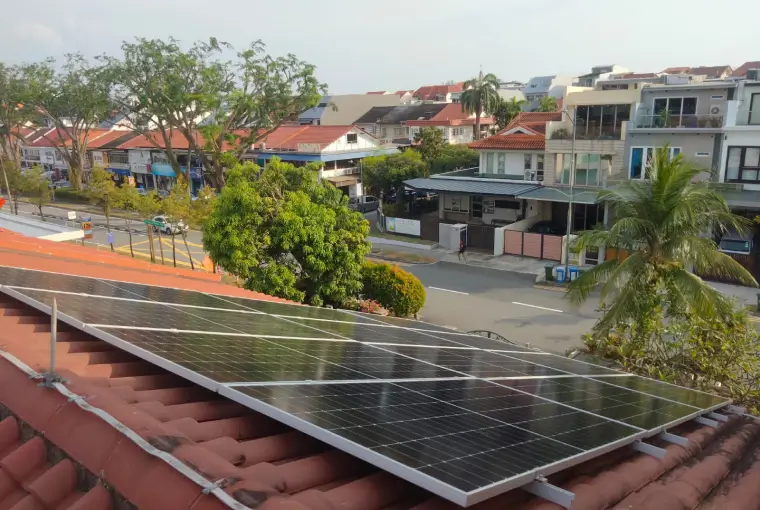
The most common roof type on Singapore landed homes. Requires rail-based mounting with tile hooks that slip under existing tiles without damage.

Metal Roof

Found on some modern landed homes and extensions. Allows direct clamp mounting without roof penetration, making installation faster and waterproof by design.

Flat Concrete Roof

Common on terrace houses and some semi-detached homes. Uses weighted or ballasted mounting frames that can be angled for optimal sun exposure.

Standing Seam Metal

Premium roofing with raised seams. Panels attach with non-penetrating seam clamps, preserving the roof’s integrity and clean architectural lines.
Solar panels on a tiled pitched roof in Singapore — Sunollo installation

Mounting Methods

How panels are physically attached to your roof. The method depends on your roof type, structural conditions, and aesthetic preferences.

Rail-Based Tile Hook

Tile hooks slide under existing tiles, supporting aluminium rails where panels are secured. No tiles are removed or broken. Waterproofing is maintained throughout.

Direct Metal Clamp

Clamps grip directly onto metal roof seams or ribs without drilling. Fast to install, inherently waterproof, and ideal for standing seam or corrugated metal roofs.

Panel Types

The panels themselves vary in appearance, efficiency, and suitability. Your choice affects both performance and how the system looks on your roof.

All-Black Monocrystalline

Premium appearance with black cells, frame, and backsheet. High efficiency and minimal visual clutter on your roof. Sunollo’s most popular choice for design-conscious homeowners.

Silver-Frame Monocrystalline

High-efficiency cells with a silver aluminium frame. Slightly lower cost than all-black options while maintaining excellent performance and durability.

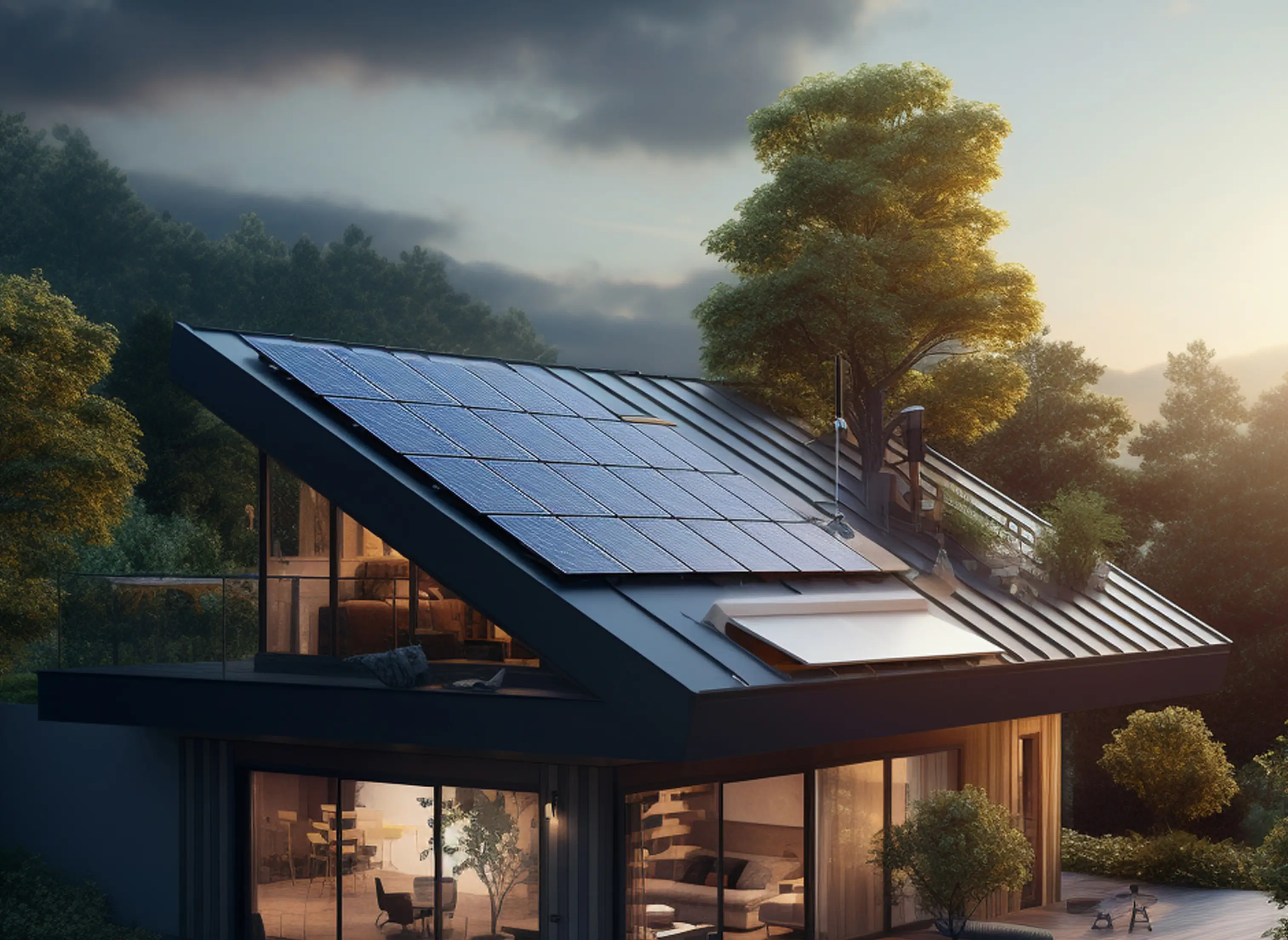
Premium solar panels — 3D illustration of photovoltaic technology

Inverter Types

The inverter converts DC electricity from your panels into AC power your home can use. Different inverter types suit different roof layouts and future expansion plans.

String Inverter

A single unit that converts power from all panels. Cost-effective and well-suited to roofs with consistent sun exposure and minimal shading.

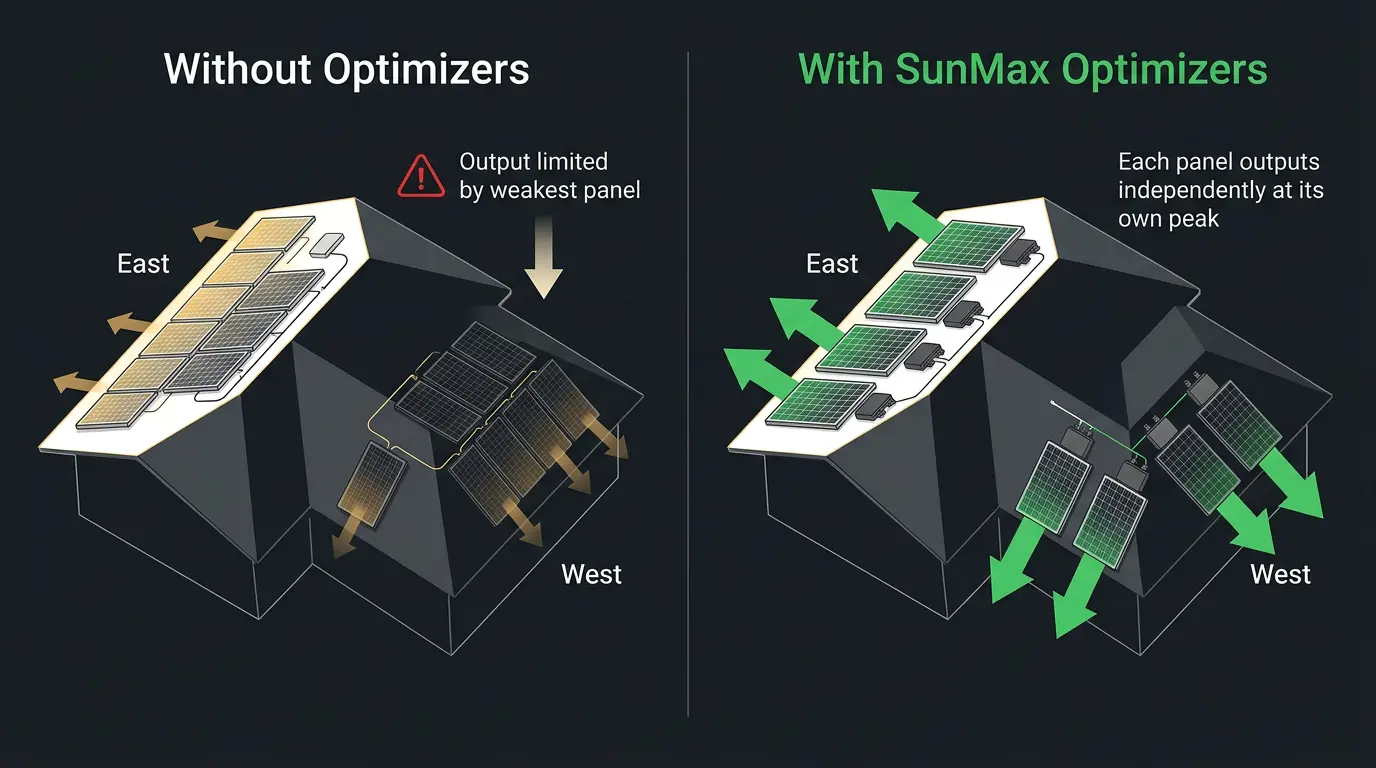
Optimiser-Based System

Individual optimisers on each panel maximise output even when some panels are shaded. Ideal for complex roof layouts or partially shaded conditions.

Sunollo inverter installation — string and hybrid inverter options

Main Distribution Board Locations

Your main distribution board (DB) is where the solar system connects to your home’s electrical grid. Its location directly affects how AC cables are routed from the inverter.

Under the Stairs

The most common DB location in Singapore landed homes. The AC cable from the inverter needs to penetrate the building wall to reach the interior DB, typically via a single clean entry point that is sealed and waterproofed.

Near Main Entrance

DB located outside or just inside the main entrance, near the car porch. The ideal scenario for solar — the AC cable runs directly along exterior walls in conduit without ever penetrating the building envelope.

Utility Area (Another Floor)

DB on a different floor from the inverter, requiring a longer vertical AC cable route. Sunollo maps the exact path, using existing risers and concealing cable runs behind walls where possible.

How Inverter Location Is Chosen

Where the inverter sits on your home depends on proximity to the roof, distance to your distribution board, ventilation, weather protection, and aesthetics. Here are the most common placements.

Side Wall (Ground Floor)

The most common inverter location. Mounted on an exterior side wall near the roof edge, in the passageway between your home and the boundary wall. Short DC run, good ventilation, discreet placement.

Car Porch Area

Mounted on the car porch wall or pillar. Often close to both the front roof and the DB. Sheltered by the car porch roof, with excellent access for servicing. Modern inverters integrate neatly.

Backyard Exterior Wall

Hidden from street view on the rear exterior wall. Ideal when the main roof faces the back or when zero visible equipment from the front is a priority. May require a longer AC cable run to the DB.

DC Cable Routing

DC cables carry electricity from your roof panels down to the inverter. The route is planned carefully to minimise visual impact, protect cables from weather, and ensure safe, accessible connections.

DC Roof-to-Inverter Run

DC cables carry raw solar power from each panel on the roof down to the inverter. They run along the mounting rails, converge at the roof edge, and drop through conduit or the ceiling void to the inverter below.

Under-Tile & Cavity Routing

On tiled roofs, DC cables run beneath the tiles along the rail system — invisible from the ground. Where ceiling cavities are accessible, cables drop internally and route through the void to eliminate all visible runs.

On-Roof Cable Management

Cables are clipped to mounting rails at regular intervals, bundled neatly, and protected from UV. No loose loops, no dangling cables. The roof remains clean and visually uncluttered from any angle.

AC Cable Routing

AC cables run from the inverter to your main distribution board. Some routes are short and simple. Others may require visible conduit along walls — always finished neatly and aligned with Sunollo’s visual standards.

AC Inverter-to-DB Run

AC cables carry converted household electricity from the inverter to the main distribution board. The route length depends on where each is located — from as short as 2 metres to a longer multi-wall exterior run.

Short vs Long AC Routes

When the inverter and DB share a wall, the run can be just a few metres of conduit. When they’re on opposite sides of the house, Sunollo routes along the least visible path — base of walls, under eaves, or through ceiling voids.

Interior vs Exterior Routing

For some homes, routing the AC cable through ceiling voids or under-floor spaces eliminates most visible exterior conduit. Sunollo evaluates this during design and recommends it where practical and cost-effective.

Conduits and Visual Finish Standards

Where cables must run along visible walls, Sunollo uses rectangular white conduit with neat corners, disciplined alignment, and clean penetrations. This is where obsessive attention to detail becomes visible.

Rectangular White Conduit

Sunollo’s standard for visible cable runs. UV-stabilised PVC with a flat, clean profile against the wall — more like architectural trim than industrial trunking. Corners mitered at precise 90° angles with matching corner pieces.

Corner & Transition Finishing

Every corner uses purpose-made pieces that maintain a continuous clean line. No gaps, no silicone fills, no improvised joints. All runs are perfectly level or plumb, checked with a spirit level and secured at consistent intervals.

Colour Matching & Concealment

Standard white conduit suits most homes. For specific wall colours, conduit can be painted to match — making it virtually invisible. Under-eave routing keeps conduit in shadow, largely hidden from ground level.

Sunollo Installation Standards

Every installation reflects our belief that solar should be as beautiful as it is functional. These are the principles that guide every decision our team makes on your roof and around your home.

Panel Alignment

Every panel is aligned precisely to your roof geometry. No uneven gaps, no misaligned rows.

Cable Discipline

All cables are secured, clipped, routed through conduit where visible, and labelled at junction points.

Minimal Visual Clutter

We plan routes to minimise visible runs. Where conduit is needed, it follows architectural lines.

Architectural Respect

Your home’s design language is considered at every stage. Equipment placement respects façade lines and proportions.

Service Access

Components are installed with future maintenance in mind. Nothing is buried or inaccessible.

Weather Detailing

Roof penetrations are sealed, cables are UV-protected, and all exterior components are rated for tropical conditions.

Scenario Explorer

See how different combinations of roof type, inverter location, and cable routing come together in real installations. Browse scenarios to find one that resembles your home.

Most Common

Tiled Roof + Side Wall Inverter

Roof Type
Tiled Pitched
Inverter
String Inverter
DB Location
Under the Stairs
Inverter Loc.
Side Wall
Modern Homes

Metal Roof + Car Porch Inverter

Roof Type
Metal Roof
Inverter
Optimiser System
DB Location
Near Entrance
Inverter Loc.
Car Porch
Future-Ready

Flat Roof + Backyard Inverter

Roof Type
Flat Concrete
Inverter
Hybrid Inverter
DB Location
Utility Area
Inverter Loc.
Backyard

Standards and Compliance Notes

Solar installations in Singapore follow specific technical standards. Here’s what they mean in plain language — and how Sunollo applies them with discipline.

Key technical requirements and compliance standards for residential solar in Singapore.

Singapore’s primary standard for solar installations. It covers system design, wiring, protection, and connection to the electricity grid. Sunollo designs and installs every system in full compliance with SS 638, ensuring your system is safe, efficient, and approved for grid connection.

Every installation meets SS 638 wiring standards and EMA grid connection requirements.

The Energy Market Authority oversees how solar systems connect to Singapore’s electricity grid. Sunollo handles all EMA documentation and ensures your system qualifies for net metering — meaning excess energy you produce is credited back to your electricity account.

Sunollo handles all permits, inspections, and EMA registration on your behalf.

Before installation, Sunollo assesses whether your roof can safely support the additional weight of solar panels and mounting hardware. This includes reviewing structural drawings where available, and conducting on-site structural checks to ensure long-term safety.

Frequently Asked Questions

Practical answers to the questions homeowners ask most about solar installation, cable visibility, inverter placement, and finishing standards.

Will there be visible cables on my home?

It depends on where your inverter and distribution board are located. In many cases, most cabling runs through the roof space or along hidden areas. Where cables must cross visible walls, Sunollo uses neat rectangular conduit that follows architectural lines — always white, always aligned.

Where is the inverter placed?

Typically on an exterior wall near the roof — such as a side wall, car porch area, or backyard. The location is chosen to minimise cable runs, ensure good ventilation, and keep the inverter accessible for future servicing.

Where is my distribution board (DB) located?

Many Singapore homes have the DB under the stairs or in a utility area. When the DB is inside, the AC cable route is usually longer and may require conduit along an exterior wall to reach an entry point. Sunollo plans this route carefully to minimise visual impact.

Does mounting damage my roof?

Yes. Tiled roofs use tile hooks and rails. Metal roofs use clamps. Flat roofs use weighted frames. Each method is specifically designed for that roof type to ensure structural safety, waterproofing, and long-term durability.

Will cables be hidden or visible?

In most cases, DC cables on the roof and inverter connections can be concealed. Some AC cable runs may require visible conduit depending on your home’s layout. Sunollo always plans to minimise visibility, and uses premium white rectangular conduit where exposure is unavoidable.

Is every installation customised to my home?

The exact panel layout, inverter placement, cable routing, conduit requirements, structural adequacy, and shading analysis are all confirmed during Sunollo’s site assessment. This guide explains the general principles — your specific design is tailored to your home.

See How This Could Work on Your Home

Share your roof photos or schedule a site assessment. Our team will show you exactly how solar could look and perform on your specific home.

Get Your Free Assessment

Why Sunollo

Every Sunollo installation reflects a commitment to precision, safety, and respect for your home. Our standards are not just technical — they’re a promise.

80,000+

Panels installed across Singapore

25 Years

Warranty on every installation

SS 638

Full compliance with Singapore standards

Your Installation Summary

Based on your selections above, here is what a typical Sunollo installation on your home would involve.

This is some text inside of a div block.

Finalised during your site assessment

This is some text inside of a div block.

Route planning depends on your specific home layout

This is some text inside of a div block.

Confirmed after detailed roof survey and shade analysis