Start with the surface.
Assess the roof, its coating, drainage, remaining life and structural capacity. Choose a compatible mounting approach.
Solar. Lightly.
Remarkably thin. Beautifully light.
A new possibility for the roof you already love.
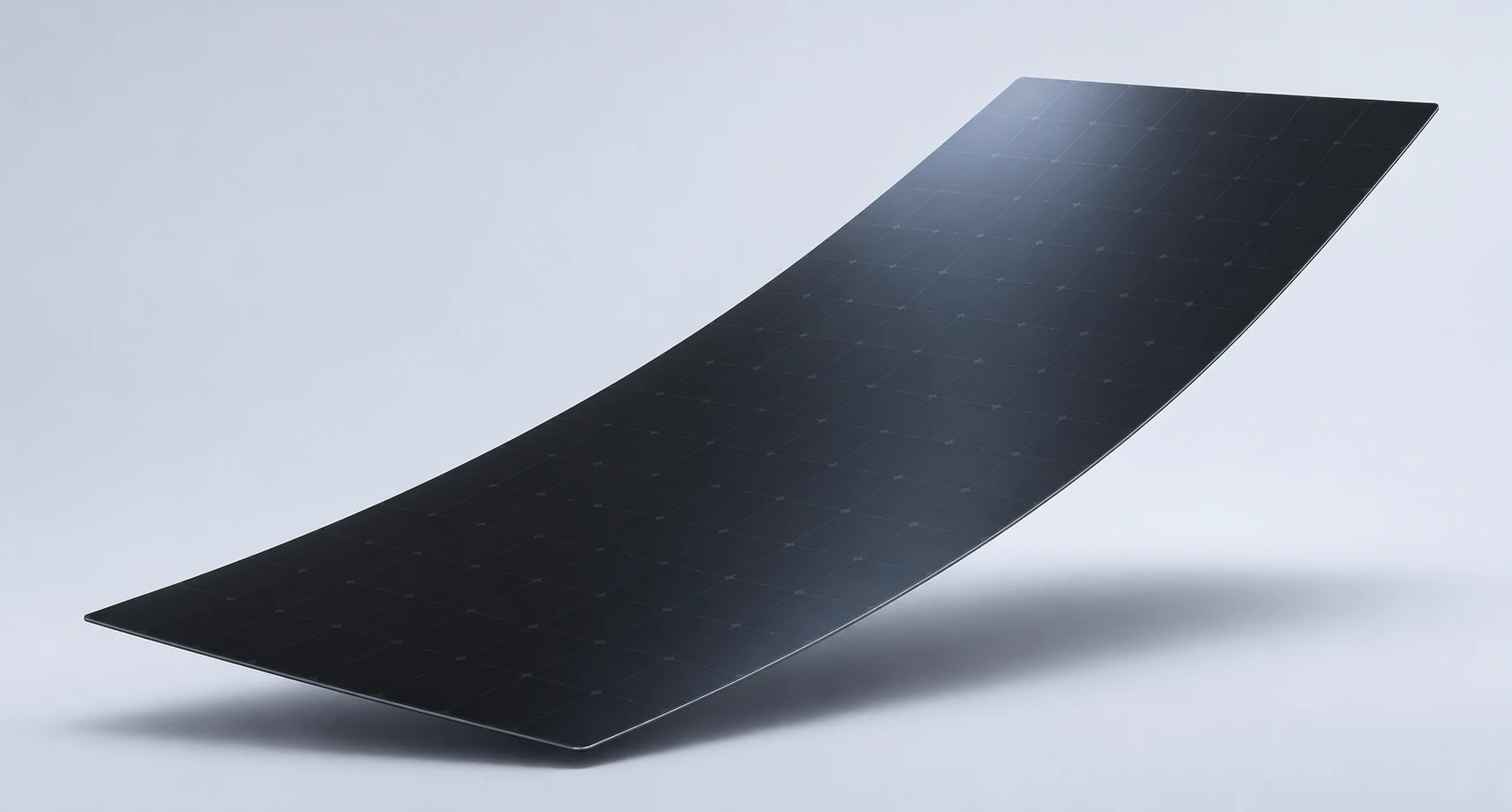
Some roofs ask for a different kind of solar. A lighter touch. A slimmer profile. A shape that follows their own. Flexible, frameless solar opens up new options for selected roofs where conventional glass modules may be difficult to install.
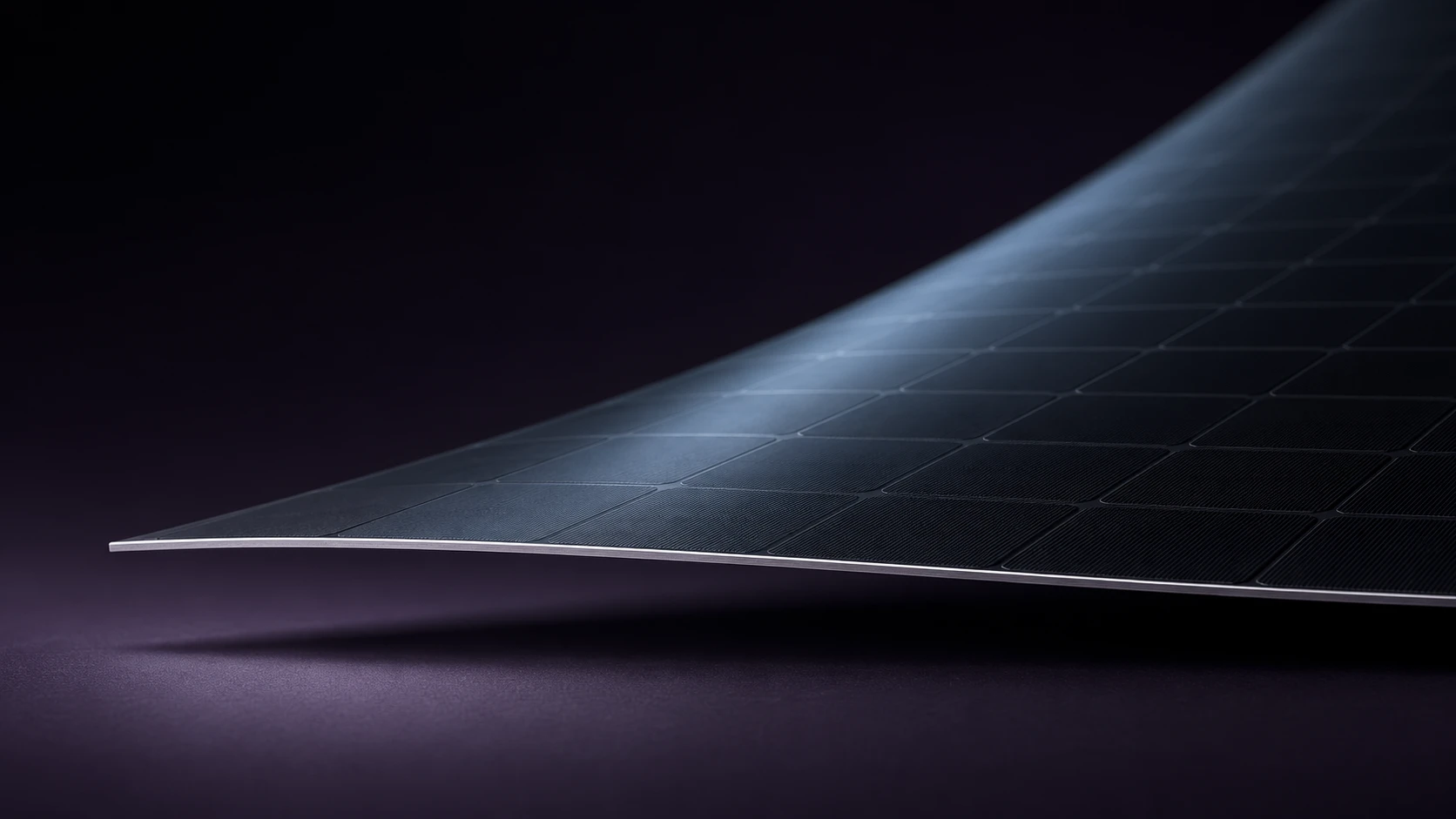
Thinner than a typical smartphone. A solar surface that sits close to your roof, with an elegant all-black finish.
Body thickness excludes junction boxes, cables and mounting. Phone comparison is illustrative. Concept render; not to scale.
At a nominal 6.6 kg per 550 W module, there is less module weight to lift, handle and add to your roof. That can make a meaningful difference when roof loading is a constraint.
Compare with your conventional panel’s actual datasheet. The 25–35 kg range is an illustrative benchmark, not a matched power or area comparison.
less module weight
at this comparison setting
Module-only comparison using 6.6 kg nominal weight (±0.5 kg). Mounting, adhesive, cabling and other system components add weight. Roof assessment remains necessary.
Explore surfaces that may be suitable for Eclipse Air flexible solar. Every project begins with the roof itself.
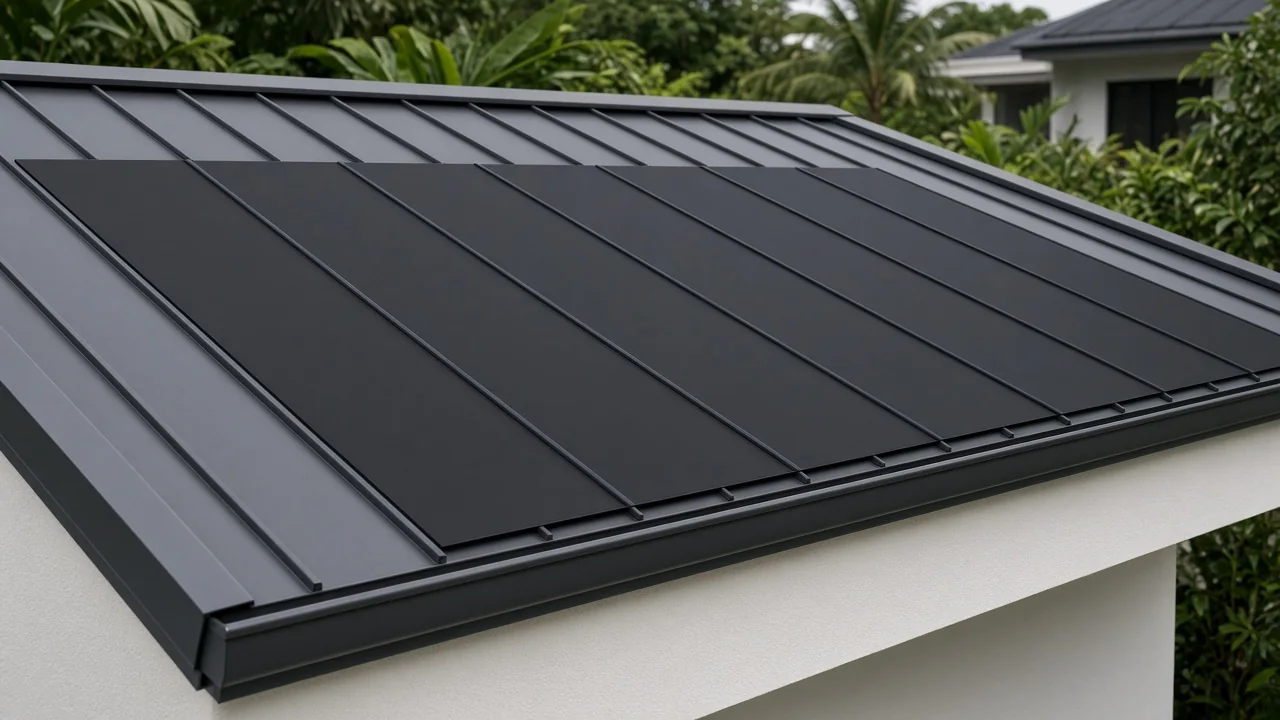
Low-profile mounting can complement suitable metal roof sheets and canopies. Coating condition, available bonding area, thermal movement, drainage and wind uplift determine the right attachment design.
Suitability depends on substrate condition, structural capacity, waterproofing, fire classification and attachment design. Existing tiles, shingles or corrugations do not automatically provide a suitable bonding surface.
On compatible surfaces, an engineered adhesive mounting system can reduce the need for roof penetrations and bulky supporting hardware.
Assess the roof, its coating, drainage, remaining life and structural capacity. Choose a compatible mounting approach.
Prepare and prime where specified. Apply the approved adhesive system or mounting supports, respecting layout, cure time and roof requirements.
Secure cables and connectors, inspect the attachment, then complete electrical testing and commissioning.
Back-contact cells move electrical contacts behind the cell, creating a clean black surface without front-side busbars.
PEC technology uses planar conductive connections instead of conventional soldered ribbons, reducing soldering stress in the module.
An IP68-rated junction box and three bypass diodes are specified in the 550 W datasheet. Roof waterproofing remains a separate design requirement.
European and international test documentation brings substance to the story. The exact module and complete roof assembly still matter.


The BROOF(t2) classification covers a tested 2.5 mm construction; the supplied product datasheet states 2 mm. Exact supplied-model coverage and the roof build-up must be confirmed before specification. These are distinct classifications, not a “fireproof” claim or automatic Singapore project approval. TÜV model coverage must be matched to the supplied SKU. Full certificates are available on request.
¹ Manufacturer datasheets supplied 12 November 2026, available on request. STC is a laboratory rating, not a guarantee of rooftop output. Thickness is the module body; total installed height and weight depend on the mounting system. “White” describes the backsheet, not white solar cells.
Manufacturer-stated. Subject to final warranty terms.
Manufacturer-stated. Terms and degradation schedule to be confirmed.
Potential applications include compatible metal, curved, membrane and load-constrained roofs. We first assess the roof’s condition, load capacity, attachment options, waterproofing and fire requirements. A lighter module can create an option; suitability depends on the complete design.
Approved adhesive systems can avoid module-fixing penetrations on compatible surfaces. Some roofs require supports, mechanical fixing or a different method. Cable routes and other system components may still require penetrations. The project design determines the approach.
The manufacturer states a minimum bending radius of 0.3 m. That is a handling and design limit, not permission to fold, crease, roll tightly or repeatedly flex the module. The actual roof curvature and attachment must follow the installation manual. These panels are not intended to be walked on.
BROOF(t2) concerns external fire performance of a specified roof construction. IEC 61730 Class C is a separate module fire rating. Neither means fireproof. The module, substrate, separators, gaps and attachment must match the applicable evidence and local project requirements.
550 W is the module’s rated power under standard laboratory test conditions. Actual power and energy depend on sunlight, shade, roof orientation, temperature, system design and operating conditions. A site-specific design establishes the expected energy yield.
Sunollo is exploring pilot applications, beginning with the 550 W all-black option. Share your roof details to discuss suitability, the proposed specification, availability and next steps. Final supply and installation are subject to technical review and quotation.
Tell us about your roof. We’ll explore what a lighter approach to solar could make possible.
Explore my roof on WhatsAppPilot enquiries welcome · Subject to roof assessment and final specification